Hello, Alameda. Welcome to the Island City Beat Podcast. I'm your host, Angie Watson-Hajjem. On today's show, I'm talking to Alameda City Council candidate, Tyler Savage. We'll learn a little bit about Tyler's background, a little bit about his personal history, and get his take on a number of topics that I'll be throwing his way.
Angie Watson-Hajjem:And I'll also hear why he wants your support in his quest to serve you on the Alameda City Council. With that, let me say hello to Tyler Savage. Hi, Tyler. Welcome to the Island City Beat Podcast.
Tyler Savage:Hey, Angie. Good to be here. Thanks so much for the opportunity to connect.
Angie Watson-Hajjem:Oh, glad to have you. I know you're very busy. Thank you for making time to talk with us today. So a lot of people may not be familiar with you, Tyler. So why don't you give us a little bit about...
Angie Watson-Hajjem:A little history about you, your personal bio?
Tyler Savage:Yeah. Of course. Let's see here. Where to start? There's...
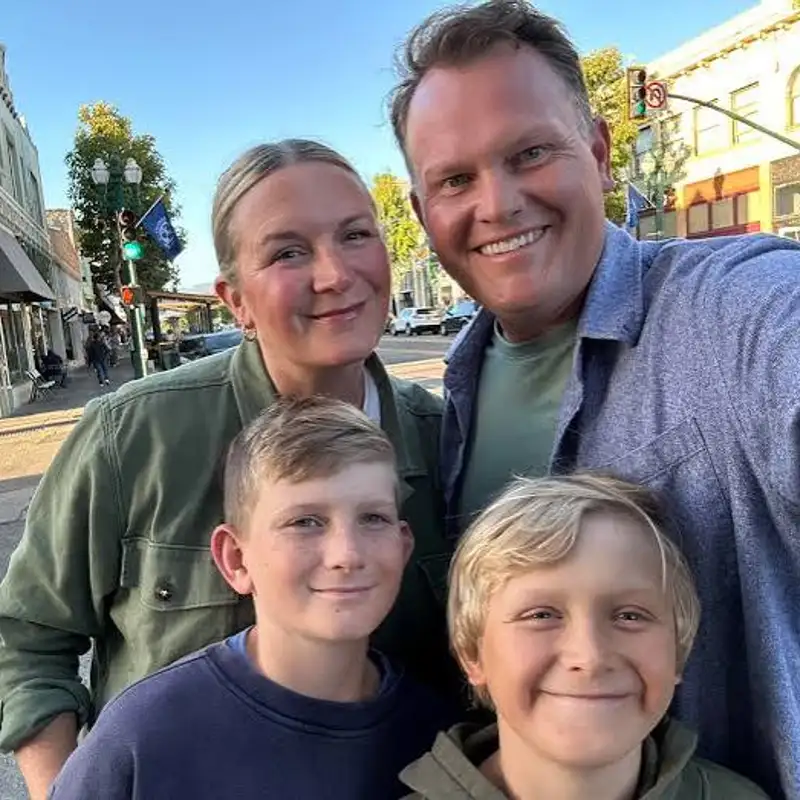
Tyler Savage:I'm I'm 46 years old. There's a long story to tell, Angie. But my family, we moved here in 2014. My wife and I have been married for thirteen years. We've raised two boys here in Alameda who are 11 and eight attending AUST public schools, and it's, you know, such a wonderful community to live in.
Tyler Savage:But before I came to Alameda, my background is in policy. I studied energy environmental policy at Carnegie Mellon. I have a policy background. I spent some time also working for the state of California. Let's see.
Tyler Savage:I was choral fellow, much like Amos was many years ago in San Francisco, and what a wonderful program that was to to engage with the community and learn about how to build policy through the lens of the the community and the different voices that we have. And then came back to California actually after I finished graduate school in in in Pittsburgh. I came back to California where I'm from. I'm originally from the East Bay. I grew up in Castro Valley.
Tyler Savage:And I found a job working for a clean tech startup called Opower. And, that was back in 2012, or so. And since then, I've been in tech in in various roles. And, yeah, the last couple years, since we've been in Alameda, our family has volunteered our time at different organizations. I love coaching basketball and baseball.
Tyler Savage:Both our boys are active in the local Alameda sports scene. And as you might hear from other people who are in the sports scene, a lifestyle. People really focus and give all of their attention to sports these days.
Angie Watson-Hajjem:Well, she's very busy. I know that. So thank you for that intro into you. So let's just jump right into housing, housing, housing, as always the big topic, and we need more of it.
Angie Watson-Hajjem:We need more of it here in The Bay Area, here in Alameda. We have a housing element goal that we are nowhere near getting to complete it. I know that the question is complicated, but what can you, if you were on the City Council, what can City Council do to bring more affordable housing to Alameda?
Tyler Savage:Yeah, that's a good question, and particularly around affordable housing is the question. Yeah. Well, I mean, I think probably our listeners are very well aware of when we build new housing in Alameda that there's a requirement for you know, certain level Which of affordable housing. I think is absolutely critical. There's no doubt about it that our community is made up of a variety of people with various backgrounds and and various needs.
Tyler Savage:And I think it's important that as a community, we come together to support those who need it. My wife works for the food bank. And for those of you who know, I mean, food bank since it opened many, many years ago, but they have seen the need grow over the years. They are serving anywhere from six to 900 families a day. And that's multiple days a week.
Tyler Savage:And so the need continues to grow. As you probably are aware, Angie and many of the listeners are aware that there are people in our community who are paying a significant amount of their income towards housing. And so the need is real, right? The need is real that we need to be able to support people in our community so that they have access to a high quality of life, so the question what could city council do I mean I think there's a number of things practically that city council can can push for. One is making sure that our zoning is appropriate to allow for the housing we need, especially in areas that we might find opportunities for it.
Tyler Savage:So in commercial areas that may not be zoned for residential, making sure that those are rezoned to allow for housing to develop in those areas. I think making sure that we are fast tracking or streamlining processes within the city for permitting and allowing development to not be delayed. For many of the listeners, maybe they had heard the gubernatorial forum earlier this year in, I think it was May, Ezra Klein hosted a housing forum. And one of the things that came up out of that conversation was this need for permitting and fast tracking and streamlining a process because the longer things take, the more expensive things become. And so I think if our goal is affordable housing, I think what we need to do is put our best foot forward to ensure that we are ensuring that things can be built on time and are not delayed to increase cost.
Tyler Savage:But I think the other thing that the city could do, and I've seen some wonderful examples with our current mayor, Marilyn has done a fantastic job and others as well advocating at the state level and the regional level for the right policies so that we as Alameda residents can benefit from those policies. I think there's practical things that we could do on the ground, but there's also advocacy because the state policies will certainly allow us to take advantage of fast tracking and streamlining building down the road. So I think there's a couple of different approaches that we can take there. But, yeah, I think that's a good place to start, at least. I know it's a complicated issue.
Angie Watson-Hajjem:It is. I know it always is. Almost half of the Alamedans who are here in our island are tenants. They rent their homes, and we do have some pretty good tenant protections, better than a lot of cities here in the East Bay, but tenants are still I think feeling vulnerable, and I know stories about some landlords trying to circumvent the tenant protections laws that we have, ordinances that we have here. I'm just wondering, as a city council, what would you do to make sure that our tenants here in Alameda are able to keep their housing and they're protected by the ordinance that's in place and so forth?
Tyler Savage:Yeah, I mean, think it's absolutely critical that the city staff and us, the city council members and other community leaders raise awareness for this situation. We were talking about earlier, Angie, there's so many families who are struggling, and we need to make sure that we're giving them a high quality of life. I mean, there's no doubt about it. I think if there's policies already established that many of our leaders like Malia Vella helped and Jim Oddie have put in place a number of years ago with community advocates like Tony Grimm to ensure that the protections that renters have today continue to remain. I think that's absolutely critical.
Tyler Savage:If there are examples of property owners who are trying to get around or evade what those policies are, I think it's important that the city and community leaders raise that to leaders to let them understand what is happening, and then hold the city accountable that they need to enforce either consequences or fees or whatever it might be for those landlords who may be circumventing what those policies are. Those policies are in place for important reasons. As I've met with and talked to people in the community, as I said before, many are paying, you know, sometimes 50% of their income on rent. Some... Many of them are senior citizens in our community who have lived here for many years.
Tyler Savage:Many of them are making decisions on whether to put food on their table or pay for their prescription medicine. And so I think it's it's our obligation as residents of Alameda and and the greater sort of world to be able to look out for our neighbors. That's one of the reasons why we chose to live in Alameda because we really did feel that there was a very strong sense of community. And I think it would be an injustice if we let that purpose of community erode.
Angie Watson-Hajjem:Great. There was recently a little bit of a tug of war between the city of Alameda and the housing authority about housing folks, tenants on the Alameda Point, the Stardust Gardens project there around Section eight project based vouchers, and it looks like that all kind of got worked out for now, which is good. But some people have called for the city of Alameda to kind of take ownership of the housing authority, and I'm just wondering if you had any thoughts about that.
Tyler Savage:I don't have any immediate thoughts on whether or not the city should take over and bring in the housing authority under their their purview. I think there are some examples where, you know, having a checks and balance with the city and, and other entities, think can be a good thing. I think in this particular case, though, where you had an opportunity, I may attend to the City Council meeting and was there to hear a lot of the public comment. And it seemed like on the surface, probably a very complicated issue. I think even that, as you said, the housing authority in the city were divided on how to interpret the HUD policies and what was allowed and what wasn't.
Tyler Savage:And I think it may have just been an example of a bit of a broken system and maybe a breakdown in communication and lack of collaboration. And so I don't know if bringing it into the city would solve some of that. I think what our goal should be is to find areas where we can, number one, collaborate and build community and put our... And I'm not saying anyone had this particular motive or or or perspective, but I think making sure that as city leaders, we're doing what is right for the community. And the way I looked at this particular issue with the 25 vouchers that needed to be, I think, reclassified to be able to be used for this this development.
Tyler Savage:I think the right decision is exactly what city council did, which was to move forward with unblocking this and reclassifying those vouchers so that they could be used to to kick start this next phase of development. I think we've seen at Alameda Point over the last number of years, some development... Residential development opportunities stall and stop. And that's been unfortunate because I think the people who lose out on that are the people, the residents of Alameda, who are looking for a place to call home. And so I think our our north star, so to speak, is like, what's what's what's the goal?
Tyler Savage:What's the objective that we align on? Great. And let's find a path forward. Let's come together and find a path forward. And I think what I saw in this particular case was unfortunately maybe more division than I would have hoped for.
Angie Watson-Hajjem:I'm glad the city council was able to find the money to fix that issue of disagreement, and those folks will get housed. So that's a good thing. Let's talk about what's happening on a federal level. We know that ICE has come to Alameda, it may show up again. A real concern for a lot of us, a lot of vulnerable residents who live here in Alameda.
Angie Watson-Hajjem:And I'm just wondering what you think is the role or responsibility of city council members to protect our most vulnerable residents against ICE raids and ICE detentions and so forth.
Tyler Savage:Yeah. I mean, this one's personal for me, Angie, and I'll tell you why. We had friends of ours who were living here in Alameda for many years. Our children went to school together at City Campus Preschool, a cooperative preschool, which is down near the base. And their family moved to Minnesota about a year or so ago.
Angie Watson-Hajjem:Out of fear of
Tyler Savage:No. They moved there for job opportunity.
Angie Watson-Hajjem:Oh. Mhmm.
Tyler Savage:Yeah. So they they they were renting in Alameda, and they were looking for a home. And they had an opportunity to to relocate for work and be able to buy their first home. And that's why moving to the Twin Cities was something that they wanted to do for their family. They felt like it was the right move for their two boys.
Tyler Savage:And so they moved, and they're... The two boys right now are my youngest son's age, so they're eight. And so last year, they were seven, and I think they were in the second grade. And all of this was happening around them, and they were targeted because of their race and their last name. And these children were scared to death to go to school.
Angie Watson-Hajjem:Is this here, Tyler,
Angie Watson-Hajjem:or is it Minnesota ?
Tyler Savage:This is in Minnesota when the ice raids were happening in the Twin Cities.
Angie Watson-Hajjem:Mhmm.
Tyler Savage:Yeah. And and so I I... Angie, I was just telling the the story that it it hits home. It's personal because we... I'm sure many of the listeners have heard stories or have friends or family members who have been impacted or whose heart just goes out because of the injustice.
Tyler Savage:But for us, it just hit a little bit different because of hearing it firsthand from someone we knew. I also have a coworker who lives in the Twin Cities, and he was one of the community members who wore a whistle and was on a community rotation where they would walk areas in the neighborhood, keeping a lookout for ice. And hearing stories from him just broke my heart. But I think what what gave me some hope, I guess, in the midst of all of it was how the community came together in in the Twin Cities area, how they advocated, how they rallied around each other, how they rose above the fear to do the right thing. And so as you asked the question about Alameda and ICE's presence here, I mean, I hope that we would see the same.
Tyler Savage:We would hope to see the community coming together to protect our neighbors because that's the right thing to do. Some of the things that the city could do, I mean, I think there's been a recent development where the city council is considering, and I think this is recent. Was actually surprised to know this wasn't already in place, but not allowing ICE agents to use public property, you know, city owned property for staging. So I think that's a right move that the city has made to ensure that this is not a friendly place for ICE to be. You're not welcome here.
Tyler Savage:I think the other thing that I... I've heard other cities question or look into is ensuring that police officers in off duty are not working for ICE on a contractual basis. I think there's been some discussion in LA recently, and and making sure that, those police officers are there to serve and protect our community, aren't aren't getting paid on the side for for work with ICE. And so I think as a city council, think I we we should explore, if that's a risk or a vulnerability that we have for our society, our community, that we should address that. Absolutely.
Angie Watson-Hajjem:One of the things that, we've been doing on our podcast is going out talking to local businesses about business ownership here on the island, the ups and downs of owning a business. And throughout the state and throughout Alameda, businesses are struggling. The tariffs and the customer base decreasing and so forth. And I'm just curious as to what you could do as a member of the city council to help promote our businesses, help support them, help them to thrive here. I was walking today on my lunch walk, walking up Park Street, and I was amazed at how many storefronts were empty.
Angie Watson-Hajjem:I've seen them, but I was counting to go, oh, that's empty, that's empty. So yeah, it was kind of a dismal look to see that. I wanna see that change.
Tyler Savage:No. I I I agree. I think as I've walked up and down Park Street over the years, and I think the the time during COVID did did not help small communities. It did not help small business. And so I think it's just been a few years coming out of COVID.
Tyler Savage:And I think that the city with very much the help of Daba, the Downtown Alameda Business Association and Waba with what the executive directors Kathy and Alyssa are doing to advocate on the behalf of small businesses, I think that has made a tremendous impact. I mean, since COVID, you've seen festivals coming back to Park Street and Webster. You've seen strolls. You've seen farmers markets. You know, you've seen life come back to these areas.
Tyler Savage:And so I think bringing people into their... Into our districts, I think, is number one. Because when we have people there, they're gonna spend time at the restaurants. They're gonna spend time shopping. And I think that is that is such a great effort, and and I applaud anyone who's been involved.
Tyler Savage:I I will mention just briefly, my wife worked for for Daba for for a few years, and so we saw firsthand and built relationships with many of the business owners on Park Street. We we saw the challenges that they face. We we know the the high cost of rent. We know how hard it is to keep a business running. And I think some of the things that the city could do is is be their champion.
Tyler Savage:I think we've seen some great things coming out of COVID with the with the city come along... Coming along and helping build the parklets. I think that's been a great addition for many of our businesses who needed the support. We've seen the the facade grants that have been made available over the last number of years. I think they're about $20,000 to allow businesses to make improvements to their buildings and bring life to their business.
Tyler Savage:I think those are all wonderful measures. I think as I was talking actually to a business owner who's on Park Street just yesterday, I think what he mentioned was that when you have vacancies, like your point, Angie, people may second guess, like, is this a thriving district, and do I wanna spend more time here? And so I think we need to continue to address those vacancy issues. And I think for me, there's there's really two two issues. There are two underlying issues that are part of vacancies on Park Street in particular, and it may be the same for Webster.
Tyler Savage:There are businesses on Park or buildings on Park that are are not infrastructurally sound. One... There's one Pauline's, which is... Was a secondhand store for many years.
Angie Watson-Hajjem:Yeah. Many years. Pauline's antiques. Yeah. Yep.
Tyler Savage:It it sold some years ago, I think post COVID, with the hope of it being turned into a business. What the business owner or property owner didn't realize was that the basement was flooding. And so it totally changed for them the opportunity and the financial return on investment for their business. And so then they didn't pursue... Continue to build out.
Tyler Savage:And I think that's why that building is back on the market now. So there's that challenge. A lot of the infrastructure is aging. The other, of course, which is these buildings have been owned by the same property owners for many, many years, and there's not really a financial incentive for them to lease or rent them at a rate that is beneficial for the community. And so I know that the city already has, I believe, a policy.
Tyler Savage:I think it's one of their blight. It's a blight fee or a blight tax that they can levy on property owners if they're left vacant and there's graffiti and all of those things. I think that was a good first step, and I think that's something that the city needs to continue to push for. I don't know how effective imp... Or how effective policing that policy has been over the years, But I think if if that effort doesn't demonstrate that it's enough of a stick to to get property owners to make their businesses available for for renting at a reasonable rate, I think we do need to have a discussion about the vacancy tax.
Tyler Savage:. I think business owners down there, the business owner I spoke to yesterday said he would be in favor of a vacancy tax because we need to bring businesses back to Park Street. But I think when we frame a vacancy tax, I think we just have to thoughtfully frame it and... So that it's doing the most good. I think there are cities like San Francisco who have implemented vacancy taxes, and I think, you know, there might be some uncertainty about its effectiveness.
Tyler Savage:And so I just think we want to be thoughtful about how we implement it.
Angie Watson-Hajjem:Be looking to ask some more questions and just get some information about it. What are your thoughts about public banks? Cities, Oakland, Richmond, Berkeley, LA is looking into public banks as a way of us, the government, only needs banks and the money that's invested comes back to us. We can use it for our local businesses and transportation and schools and all that good stuff. What are your thoughts about public banks?
Angie Watson-Hajjem:Is that something that you think is feasible here to create in Alameda?
Tyler Savage:Yeah, I think it's a wonderful question to ask. I'll say that because I'll be honest with you. Up until a couple of weeks ago, I didn't really know too much about a public bank. And it'd be curious to know from your listeners how many of them are really aware of the history of public banking in The United States or abroad.
Angie Watson-Hajjem:There's only one public bank. I think it's in North Dakota.
Tyler Savage:North Dakota Public Bank. That's exactly right. Yeah. And I really do encourage your listeners, Angie, to do some reading and listening on just the the effectiveness of the North Dakota Public Bank that was founded back in the, I think, late nineteen... Early nineteen hundreds, the teens or early twenties.
Angie Watson-Hajjem:Yeah.
Tyler Savage:And just quickly, the history of that was that farmers in North North Dakota were struggling and they were almost forced to sell their land and they were going be forced to sell to banks that did not have the community's interest in mind. And so they set up a public bank that allowed farmers in those times of struggle to sell those farms back to the public bank, which the public bank then leased or rented their land back to the farmer at a very low rate. And then when the farm business came back, they sold those farms back to the original owners of the farm. And it's hard to really come up with really any recent examples of big banks doing something like that out of Out of the goodness of their heart.
Tyler Savage:And I don't want to paint all banks in that way, but the housing crisis into that or the financial crisis of two thousand and eight because of the housing market is not that far back. I think it's very fresh on our minds that the banks aren't always looking out for our best interests or looking out for their return on investment. And so I think the concept of a public bank is powerful, and it's something that we should consider. I think as I've thought about it, a public bank model for me probably makes the most sense regionally, where we can...
Tyler Savage:As cities across Alameda County, there's 14 cities, we can collaborate and work together. I think we share a lot of the same concerns, a lot of the same problems, a lot of the same challenges, housing, environmental climate change issues. Think these are all things, investing in schools. These are all of the same struggles that we face. It's not just within our small little island of 70 or so thousand people.
Tyler Savage:And so I think this is a wonderful example where we can partner with Oakland and Berkeley and all the other cities to let them take advantage of the opportunity. And I think we're stronger together with that. I think the amount of money that the city of Alameda might be able to contribute to a public bank pales in comparison to maybe a larger city with more retail, more economic development. And so I think coming together and building an institution for the region is probably, in my mind, the most efficient and most impactful way for us to think about public banking.
Angie Watson-Hajjem:You mentioned that your wife works for the food bank, and I think our food bank, Alameda, is awesome. Serves, I think it's something like 10% of the population here. I mean, like you mentioning, lots of people are using it. With this very, we're living in a time where there's a lot of unrest around the economy. As you said earlier, Tyler, people are struggling and we could get to a situation, I hope that we don't, but we could get to a situation where we have massive severe food insecurity here in Alameda.
Angie Watson-Hajjem:And I would just love to hear you talk about what the city could do, what you would propose to do if you were to be on City Council to mitigate the horrible effects of not having enough food.
Tyler Savage:Yeah.
Tyler Savage:That's a... Yeah. No. I... We we love the food bank. Teal, the executive director, the the staff there, they are amazing people, and they're doing some amazing work. Not only the staff, but the hundreds of volunteers. I really do give so much credit to them. That organization can't run without volunteers.
Tyler Savage:Many nonprofits in Alameda really can't succeed and thrive without volunteers. And so we've volunteered over the years. And I think if we can encourage as many people in our community to continue to volunteer, whether it's Meals on Wheels or the warming shelter or the food bank or FOS, you name it. All of these organizations need need our help. And so, yeah, we we we love the food bank and and love what they're doing because as you said, Angie, there's so many people in our community who do need help.
Tyler Savage:I met someone many years ago, and he was someone who was he grew up in the Great Depression, and he grew up in Michigan. And he was telling me a story, this is twenty years ago when he told me this story, but it's always it's always stuck with me. And that was that his family had moved to the big city, a big city after it was Detroit, but they moved to out of their their rural, you know, countryside farm, and they moved to the big city, and it was during the great... Prior to the Great Depression. And when the Great Depression hit, the only way that his family survived was because they had gone back to their family farm and and could live off the land.
Tyler Savage:And, you know, I I think about that story because I wonder for us, like, how how are we thinking about protecting our interests here in Alameda? You know, if there's if there's a real economic crisis and businesses are are truly impacted and and we can't get produce or, you know, food here to Alameda, how how might we address that? I know this is a very sort of doomsday doomsday scenario. I... I'm hoping that we don't actually get there.
Tyler Savage:But I think one of the things that we could do is really start investing in more community gardens. And I know that we would really have to do that at a at a mass scale to to support 78,000 people. And I know there are some already wonderful examples of of community gardens already, and I know with Gene Sweeney, hopefully, we'll get another community garden online. But I think it's taking it a step further. Like, we, over the years in Alameda, we've grown produce in our yard.
Tyler Savage:There's wonderful nonprofit organization here in town, Alameda Backyard Growers. I mean, there is a community of people who love growing produce, and they donate that produce to their neighbors or they donate that that produce to the food bank. And I think an initiative that the city council could take on is, well, how can we do more? How do we really invest in a farming system, an urban farming system that allows us to grow our food locally and allow that food to go into our restaurants, allow our food...
Tyler Savage:That food to go into schools, allow that food to go into our food bank. And and I know land is precious, but but food is the one thing that really sustains us. And so I think that as as we think about that, I think making an investment in in urban agriculture, I think, is important. And you've seen communities here locally make investments, but I think it's something that we can we can think more about. You know?
Tyler Savage:And I think just, you know, broadly, I think there's some wonderful people in our community who who are are... Who have the resources to to donate to the food bank and allow the food bank to do the work that they're doing. And so I encourage any of your... Any of the listeners to... Who who feel like they have the ability to give, to find a way to give.
Tyler Savage:I think, you know, without us contributing our resources to nonprofits like the food bank, they won't succeed. And the power of donating a dollar to the food bank, it... Has a multiplier effect. They can go and spend 6 or $7. It's it's equal to 6 or $7.
Tyler Savage:That's the purchasing power they have for every dollar that we give. And so I think those are things that that us, you know, residents and community members should be aware of so that we can we can help to continue to support those efforts.
Angie Watson-Hajjem:Yeah. Neighbors helping neighbors right here in Alameda. Right? That's what it's about, coming together. Yeah.
Tyler Savage:Absolutely right. Yeah.
Angie Watson-Hajjem:So let's talk a little bit about crime. I think most people have a sense that Alameda is a relatively safe city. Of course, there are things that happen, as they do everywhere. What is your perception of crime here in Alameda, Tyler?
Tyler Savage:Yeah. I had this conversation with a wonderful gentleman just during the candidate forum at the Mastic Center just two weeks ago, and he asked me this question. He goes, what do you think about crime? Does Alameda have a crime problem? And I said, well, it depends on how you define problem because I think everybody has a little bit of a different perspective on it.
Tyler Savage:You know, I... A personal story, Angie. Our house got broken into last year. And I... It it it...
Tyler Savage:You know, we have two kids, and I think that that rattled us a little bit. You know? We don't have security cameras. We we we don't take any extra precautions other than locking our door at night. And that's because we feel generally Alameda is a fantastic community and quite safe, I think, on the whole.
Tyler Savage:I think over the years, I think our neighborhood and other neighborhoods around Alameda have certainly been impacted by crime. We've heard stories of catalytic converters being taken, cars being stolen, wheels being taken off of Honda Accords, homes being broken into. There's been, I'm sure your listeners are aware, some more gun violence, I think recently in the last couple months. And I think these are all very unfortunate circumstances. And I think these are things that in many ways we should have zero tolerance for.
Tyler Savage:I think we need to be empathetic that these are people in our community who feel the need to commit a crime. And I think it's for various reasons, and maybe that's because they're trying to provide for their family. And I think that's that's unfortunate that they're in that position. I I think that as a society, we need to go above and beyond to find a way to help people in our community so that they're not maybe faced with that moral dilemma of of doing that for their families. And, of course, I'm not saying that everyone who has...
Tyler Savage:Commits a crime does that in... For those reasons. Some of them are are truly bad actors. But, you know, I think that some of the things that that we could do as a community, think, are to, you know, be be kind to people who come into our community. I think that's number one.
Tyler Savage:I think kindness goes a really long way to setting example, to breaking down barriers, to reducing hate. And I think, hopefully, that will decrease crime. I think the other thing that our society community could do is making sure that we're investing in community policing, the right kind of policing that that means that our our police officers are present and building relationships with people in the community, that they truly are seen as as community advocates. And I know many of them are, and I very much appreciate their efforts to serve our community. And I think we just need to continue to move forward in that way.
Tyler Savage:I think I would certainly be a fan of of supporting our police officers, making sure that they have the resources they need, the training they need, bringing more police officers on the force to make sure that they can be empowered to be thoughtful, compassionate servants within our community. I think I've heard stories of people who've lived in Alameda for many years that the level of policing has come down over the years, and I think maybe that has something to do with perhaps increased crime. But I think a lot of people are struggling with, as I talked about before, the economic conditions. And I think when people are faced with hardships, I think they start to make decisions that aren't aren't necessarily reflective of who they are as a person. And I I think that's something that I think we need to be mindful of as a society and and find a way to support them in ways that may not be obvious.
Angie Watson-Hajjem:Yeah. Yeah. Great. So let's talk about energy. I know you have a background in energy, actually.
Angie Watson-Hajjem:So we have our own electric company, Alameda Municipal Power AMP. Now many customers are actually very satisfied with AMP, and there's some that aren't, and think of it as a mini PG and E that lacks vision. I would love to get your take, especially as someone who has a background in energy. What do you make about our electric company?
Tyler Savage:Yeah, I'm a big fan of AMP. I think that well, just my my background in in energy is... You know, I said this before, maybe I I work for technology, a clean tech startup, and we were partnering with utility companies to help educate customers, consumers of energy on their energy consumption and how to change their behavior on reducing energy. And so that was the company I worked for, and that was their mission. We worked with the likes of PG and E and Southern California Edison and other large utilities around the world.
Tyler Savage:And I look at the model that AMP has set, and I think they really are a wonderful example for other utilities to follow. They've made positive investments in clean energy, solar, wind, hydro. I mean, these are all wonderful resources for us to draw for our power. And so I know I have to give a lot of the city council members over the years credit for advocating for that and many of the people at AMP to have the foresight and vision to make that investment. So my understanding of AMP is that I have no complaints on my side.
Tyler Savage:And even the level of service, we recently had some service done on our house to upgrade our panel as we're electrifying our home, and they were wonderful. They responded quickly. Their service was great. It was affordable. So at least I've heard stories where PG and E, not so much.
Tyler Savage:I mean, fact that AMP is a public utility, it's not privately owned, it's not looking out for shareholders. I think that in itself is really a benchmark that hopefully other utilities could follow.
Angie Watson-Hajjem:Yeah. Now some environmental activists here have made the complaint that AMP has not really embraced solar rooftop as strongly as they could.
Tyler Savage:Yeah, I think that's a
Tyler Savage:good question. Think, and I could probably dive into this a little bit more just to be more educated. But I think what I've heard, and Angie, you can correct me if I'm wrong, AMP is offering Alameda residents 100% clean energy. Yeah. I mean, is that your understanding as well?
Angie Watson-Hajjem:That's what I've heard. Yes.
Tyler Savage:Yeah. And so I think that in itself for me is a wonderful thing. Could we do more? Could we advocate for more solar on the island? I think we could.
Tyler Savage:And I think for many individuals, that's for them to make that decision to invest in either solar panels aren't necessarily inexpensive. I think most families might pay 20,000 to $30,000 for solar installation on their home. And I know that that might be a financial burden for them. Are there public spaces that we could put solar panels on?
Angie Watson-Hajjem:Maybe on the point?
Tyler Savage:Perhaps. Perhaps.
Angie Watson-Hajjem:Maybe open to that.
Tyler Savage:Happens. I think what would be the net benefit? If we already have 100% clean energy, and maybe the issue here is that it's not 100% renewable because hydro is not classified as renewable. It's just considered clean, maybe that's what some of the detractors are are concerned about. And and so, yeah, maybe maybe it's worth having a conversation about how we can thoughtfully implement more renewable infrastructure.
Tyler Savage:Whether that needs to be on the island or off the island, I I don't know. I think there's an argument that could be made, which is, you know, what sort of infrastructure are we as a city investing in so that if we did have a major blackout and major impacts to the grid, has Alameda invested in an infrastructure that would allow us to keep the lights on? And so if we invest in infrastructure where there's more solar, maybe we're investing in battery backup systems that are clean and reliable, maybe that's an opportunity for us just so that our society can... Our community can continue to keep the lights on when when some of these power outages or or national disasters, may happen. I think that might be a good reason for it.
Tyler Savage:So, yeah, it's worth it's worth exploring. Absolutely.
Angie Watson-Hajjem:Yeah. We're most looking into I don't know if there has been a topic in recent times that I've brought so many people together, and this is the fight against data centers. And there was this fear a few weeks ago, I know, the rumblings about a data center possibly coming to Alameda. People were really outraged by that. What is your take on data centers?
Angie Watson-Hajjem:And do you ever see yourself supporting one coming to Alameda?
Tyler Savage:Yeah, that's a really good question. I was chatting with a close friend of mine just the other day about this one. I think there's one thing to maybe clarify or maybe just make a distinction within the question, Angie, and that is data centers versus being AI data centers. And I think we've had data centers in our society and our community for decades. Many of us rely on cloud computing, AWS, Amazon Web Services, and Google Cloud or Azure.
Tyler Savage:Many business owners rely on that. Many individuals consume services that require data centers. So I think as a society, those things aren't necessarily new. They've been a part of our economy for many years. Should we work to make sure that those existing data centers around the world rely on clean, renewable power?
Tyler Savage:Absolutely. And and I think that's one thing that we need to continue to fight for. On the issue of of AI and and artificial intelligence, I I think it's it's it's really a point of... We're at the tipping point, I guess you could say, for our society on on what the the role that technology plays in our lives. And I think we've seen some recent examples where AI is not something that will have a positive impact on our lives, where AI becomes uncontrolled and they are running loose and can can take over systems and and societal structures that have a negative impact.
Tyler Savage:I think that's a very valid concern. I think that there are perhaps positive examples, though, where we're talking about cancer research or other areas where AI can help speed up development of research and finding solutions to things. And I think we need to be mindful of the pros and cons. And I think we need to be careful about the guardrails and the frameworks that we as a society construct to make sure that we are getting the best out of any technology that we as a society choose to support. Bringing a data center to Alameda, I would not support that.
Tyler Savage:But I think it's important that as a society, we think through what we choose... How we choose to consume products. And I say that because perhaps many of our listeners use AI in some way, in some form. They may use it at work. They may be on their phone doing research, or they might just be Googling something, and Gemini prompts them a response.
Tyler Savage:It's so easy to consume the technology that sometimes we don't stop and make a decision as to whether or not we want to do that. There's no consumer protection, so to speak. There's no surgeon general warning that says, you're using an AI product. Please make sure you're educated about the implication of that.
Angie Watson-Hajjem:Yeah, know, it's funny because sometimes I'm using ChatGPT. I just started using it just a few months ago, actually. And I almost feel guilty. I'm thinking, well, how much water am I wasting by asking this question, ChatGPT, because that's in my mind now about the environmental implications of, you know, AI. And
Tyler Savage:I think that's true, Angie, right? Many of us, and I'll admit, I'm included in that. We do use AI. AI is being used in our schools in some form. And so I think to ourselves, okay, well, if we're making a decision to...
Tyler Savage:And I know not everybody does this. The person I spoke to, the friend of mine the other day, they do not use AI because they're taking a stance against that. I applaud them doing that for them and their family. But for those of us who do use it in some form, I think it's on us. It's our responsibility then to not pass a problem onto another community to carry the burden of our AI technology consumption.
Tyler Savage:For the very reason why we've invested in clean to clean renewable energy with AMP, It's because what we're trying to do is offset other unclean energy forms. And I sort of take the same approach with AI is maybe we have an opportunity to really be thoughtful about building a framework and what that means for our communities. Another friend of mine recently wrote an op ed in the Alameda Post just about how we need to be thoughtful about this decision and how we need to bring the community members together to be educated and informed and making sure that we build a framework that is going to meet where we are in the moment. Meaning, if something like a data center comes, maybe we just need to make sure that it is 100% renewable, that it is a closed loop system, meaning that the cooling mechanisms that these data centers operate on are not polluting our environment. There are some examples, Angie, where data centers can be built with renewable energy.
Tyler Savage:They can be built with a cooling system that is not polluting our waters. I don't profess to be an expert on all things data centers, but all I'm saying, and much like Christina who wrote the op ed piece, is that it's possible that we will need to find a path forward in our society for us to consume AI. And if we choose to consume AI, what infrastructure then do we need to invest in? And what role can we play as Alameda residents to frame that and structure that in a way that is in the best interest and greatest good for the community? And I think that's the approach that I would take holistically.
Angie Watson-Hajjem:Yeah. AI is here. I don't think it's going anywhere. I think I learned to live with it. Right?
Tyler Savage:Right.
Angie Watson-Hajjem:Yeah. So, Tyler, this is my... Probably my most profound question to you. I know that you are a busy dad.
Angie Watson-Hajjem:Got two young boys you're raising. I'm sure you've just got a lot going on. What do you do in your downtime? What do you do for fun? Tell us.
Tyler Savage:I don't have much free time these days.
Angie Watson-Hajjem:You guys have been very busy. I know. Talking to the city council on candidates, guys have been here and there, lots of forums and talking to people. Yeah. I
Tyler Savage:would say as a family, I I mean, we we spend a lot of our free time at the sports field. Yeah. We've we've been playing baseball through Alameda Little League. What a great organization that is and and how that has brought our community together. And there's so many other examples.
Tyler Savage:Alameda soccer and Alameda youth basketball and so many others. And so I've spent much of my free time coaching. I'm coaching right now, my oldest son. So that's where my free time goes. But what we as a family love to do is we love to go camping.
Tyler Savage:We're actually camping this weekend up in Bodega Dunes with friends that we've had for years here in Alameda. We've met through the Kitty Campus Cooperative Preschool, which is one of Alameda's only and longest running cooperative preschools You're in Alameda, and we built so many friendships there over the years. And so we're we're camping with a handful of friends this weekend just to get out of town and unplug and be in nature and let the kids run around. That that for us is such a such a good way to restore ourselves and fill up the battery bank.
Angie Watson-Hajjem:That sounds wonderful. Have a great time. God, sounds fun. Well, Tyler, I have so enjoyed our conversation. I feel like I've learned a lot about you.
Angie Watson-Hajjem:I didn't know much at all about you before this interview, so it's just been really nice. I really appreciate. Thank you so much for coming on our program and talking to our listeners. We appreciate it.
Tyler Savage:Yeah. Angie, thank you so much for the opportunity, and thank you for what you're doing to raise the level of conversation within our community. Very much appreciate what doing.
Angie Watson-Hajjem:Thank you so much. And thank you all out there listening to our podcast. Please come back and tune into another episode of the Island City Beat Podcast. Until then, I'm your host Angie Watson-Hajjem. Take care everyone.
Angie Watson-Hajjem:Goodbye.