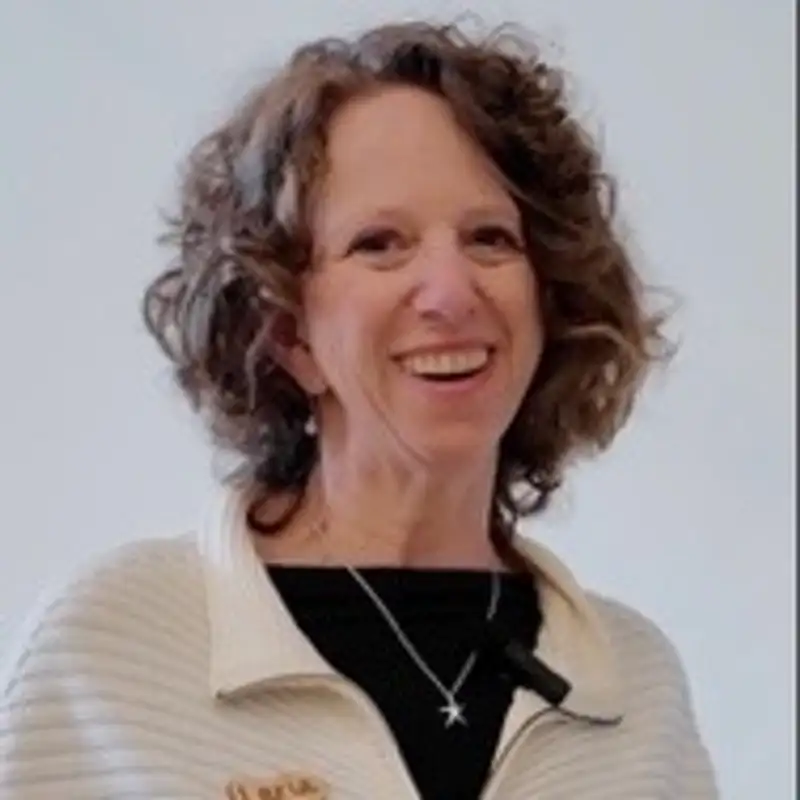
Hello Alameda, welcome to the Island City Beat Podcast. I'm your host Angie Watson-Hajjem. Today I am on location at Replenish, Alameda's first refill and reuse store right here on Webster Street. I'm here talking to the co owner, Laria Pippen. Hi, Loria.
Angie Watson-Hajjem:Welcome to the show.
Laria Pippen:Hi, Angie. Thank you so much for having me. I'm excited to be here.
Angie Watson-Hajjem:Taking, I know you're so busy taking time out to talk to me. So tell us about Replenish.
Laria Pippen:Okay, well, it kind
Laria Pippen:of goes back. I actually grew up in Berkeley with a single mother and I think that that made me a pretty independent person. Some of it may have been genetics, don't know. And all my life I knew I wanted to have my own business. It was only about a half century later that I figured out what that was. Basically as I grew up, I always had a curiosity about where things ended up at their end of life so whether that was like a plastic hair tie or a toothpaste tube or socks with holes in them.
Laria Pippen:I always wondered, okay, where are these things ending up and what are they doing to our ecosystem? And I think out of that came some waste anxiety, if you will. I think I made up that term.
Angie Watson-Hajjem:Waste anxiety, okay. Yeah, yeah.
Laria Pippen:It has made me become a very intentional consumer for most of my life. Now I don't wanna create a picture like I don't buy things that have plastic or I don't waste or it's just impossible. It's just impossible. It's really about intention.
Laria Pippen:And so when I discovered this model of business where you could reuse a container by refilling something over and over and over again without using single use plastic that was going to the landfill, it was like The gates of bulb went out.
Angie Watson-Hajjem:The light bulb went out.
Laria Pippen:I mean, yes, fireworks, light bulb, you name it, the flood gates opened, I said to myself, This is it. Now, in the midst of that, you mix waste anxiety with becoming a nurse. I would say it's not necessarily the best combination for that waste anxiety.
Angie Watson-Hajjem:You're a nurse also.
Laria Pippen:I am also a nurse, I'm a pediatric nurse and I have been for twenty years.
Laria Pippen:And since I started my job in the hospital, I have tried to affect change in how we deal with disposable equipment. I actually started an environmental stewardship program at the hospital where I work and I have done things that I think have been impactful at the hospital. However, healthcare is a bureaucracy and it's a business and it is very difficult to affect change and feel like one has an impact or a voice. Therefore, when again back to discovering this model of business, I said to myself, you know what, I need to do something that feeds my soul. And this was it.
Angie Watson-Hajjem:Wow, wow.
Laria Pippen:So this was born.
Angie Watson-Hajjem:Wonderful. So a customer would come to your store, they would bring in their own glass container and they would fill up, you have, I was looking at your store earlier, you have like shampoos and hand soaps and detergent, they just come in just fill it up basically and then you charge them by the ounce assume how much it's going to cost for them to take it out the store.
Laria Pippen:Right, right so people walk in and they say oh I don't have a container with me and are we supposed to bring our own? That's a common question. To that I say bring any container you want, size, shape, material, brand. It doesn't matter if it's glass, it doesn't matter if it's plastic. If you're reusing it, it's something that's staying out of the landfill.
Laria Pippen:I mean, I shouldn't say obviously, we will get to this, but glass is healthier than putting something in plastic. But that said, if you're reusing a plastic container, I'm happy. It's one less container going to the landfill. So you bring your container in, you weigh the container empty, and one of the beauties of our model is that you are not required to fill that container all the way. You can put in as much or as little product as you actually need and want.
Laria Pippen:When you come to check out, we reweigh the container with the contents in it, we subtract the weight of the container and all you pay benefit from. That's Yeah,
Angie Watson-Hajjem:Wow, yeah. So
Laria Pippen:that's how it works. As far as the products we sell, we carry home and personal care products without plastic, without microplastics, without phthalates, harsh toxic chemicals. Examples would be a few you mentioned: hand soap, dish soap, laundry soap, personal care, hair care, skin care, oral care, and self care. We carry local items such as Julie's Tea from
Laria Pippen:Julie's Coffee and Tea Garden. We sell that in a reusable refillable jar. We sell Alameda Candle Company candles because those also are refillable believe it or not which is pretty neat.
Angie Watson-Hajjem:Well it is.
Laria Pippen:So yeah that that's what we sell.
Angie Watson-Hajjem:Yeah you know I was reading that we generate Americans, US, about 60,000,000 tons of plastic every year. I was astonished by that. And very little of that is recycled, less than 10%.
Angie Watson-Hajjem:What is the problem with that?
Laria Pippen:There are numerous problems with that, Angie. Where do I begin? You are correct. Millions and millions of tons of plastic go into the ocean and the landfill every year. Most of what goes into our waterways is from land.
Laria Pippen:It's not something that's dumped over ships. It comes from land, it comes from people. And about six to 8% is actually recycled.
Angie Watson-Hajjem:Only six to 8%.
Laria Pippen:Yes, yes.
Laria Pippen:And it's complicated, right? We have these little symbols on the bottom of plastic containers that lead us to believe that they're recyclable, but it's a complex system where different containers, different plastic containers are made with different types of polymers that are very difficult to separate in the recycling process and to break down. So that's the main reason that it's very difficult to recycle most plastics, even though that's what we've become ingrained to do, is to recycle it.
Angie Watson-Hajjem:And you see like in my neighborhood, people have their recycling bins out filled with plastic and they go, oh great, but like you're saying it's more complicated than that as far as really recycling them. So who is your typical customer? Tell us about the people that come to Replenish.
Laria Pippen:Oh my gosh,
Laria Pippen:our customers. I love our customers. Why do I love our customers and who comes to us? So many people come to us. We have people who are just walking by, who are here for...
Laria Pippen:In Alameda for the day
Angie Watson-Hajjem:Mhmm.
Laria Pippen:Often celebrating a milestone of some sort of birthday or anniversary. They go to our local restaurants like Cafe Jolie or Bhan Mae Vane right down the street and they wander by and they fall in love with our shop.
Angie Watson-Hajjem:Your shop smells so good.
Angie Watson-Hajjem:Smells so good. The first thing I know is I came, I go, Oh my God, it smells so good. I could just stay here all day and just smell the beautiful scents here.
Laria Pippen:We hear that a lot. We hear that a lot. It's really sweet. I love hearing that because for Stephen and I, we're here all the time. So I think we've kind of run out of the smell.
Angie Watson-Hajjem:Yeah, yeah.
Laria Pippen:The smell factor. So people like that. We do have customers that will intentionally come from San Leandro, Hayward, Oakland, and then North as well. But I would say our most loyal and typical customers are from the island, from Alameda, particularly the West End, though we have many who come from the Central Island, East End, and even quite a few from Bay Farm. Yeah, which is pretty cool.
Laria Pippen:And I would say that people who shop here want to be intentional. They are being intentional. They're being thoughtful about making an impact, about what they put on and in their body, what they put in the environment, in the waterways, into the air. They want affordability. They want flexibility.
Laria Pippen:They want it to be easy. And I think we provide all that, as well as a community space of non judgment. We're not here to judge. We don't proclaim, like I said before, to not buy anything in plastic. It's just impossible.
Laria Pippen:But what you can do is think about it.
Angie Watson-Hajjem:Yeah, do what you can do, small actions that you can do.
Laria Pippen:Exactly and those small actions have an impact.
Angie Watson-Hajjem:Yeah, they really do, people don't realize that but they actually do. You know we always say that our small businesses are really the engine of our economies, I'm really curious to find out just how you're doing, you know, as a business and what kind of support are you getting or not getting from a city? What would you need now to, you know, help your business grow and so forth?
Laria Pippen:I love that question because the funny part about it is, it's not funny, but it's funny, ironic in the sense that I guess I didn't realize how important small business is in any community, in any city, in any area. How much small businesses give back to the community, how the tax revenue feeds our schools and all of the, you know, a lot of the infrastructure and resources that we have in our community. And I've really taken that to heart. And that's another way I'm trying to be more intentional as well. And I think a lot of people shop here for that reason.
Laria Pippen:They're trying to move away from the big box stores and the delivery models and so forth. And, you know, we're providing a way to do that and still meet their needs.
Laria Pippen:I feel like the community has been really supportive, right? I feel like we've had a lot of customers who've come in who are familiar with the refill model, who have shopped at other refill stores off the island and we're just so happy to finally have something in Alameda.
Angie Watson-Hajjem:Right here, yeah. yeah,
Angie Watson-Hajjem:we know how it is about going off the island for many people. We want people to support refill no matter where they go. Yeah.
Laria Pippen:But you do need to provide an element of convenience for people to continue to do it and we recognize that. So we have a pretty large number of very loyal customers who have come back over and over again who we're just so grateful to and who want to share our business with other people. They bring family, they bring friends, they tell other people, they tell their neighbors, their community groups. That's one of the beauties of this community, right, of Alameda. In terms of the city, you know, honestly I know it's not everyone's experience, but we found things to go pretty smoothly when we were moving in here In terms of like the permitting process, we got a facade grant which was fabulous and the city was helpful in walking us through that. Waba, West Alameda Business Association, which we're part of, was also very helpful with that.
Laria Pippen:Yeah, I mean we've found it to be supportive.
Angie Watson-Hajjem:That's great. And how long have you guys been here? Since you guys opened?
Laria Pippen:We've been open about a year and a half. We opened February 2025. So
Angie Watson-Hajjem:pretty new.
Laria Pippen:Yeah, so pretty new. And the other way I want to say that the city is supportive is that, you know, we have this Climate Action Resiliency Plan, the CARP, and part of that is another acronym, the ZWIG, which is the Zero Waste Implementation Plan. Yeah, and a big part of that is getting people to make behavioral changes and to really engage people in reuse activity in order to try to meet their goal, is an 86% diversion rate, so away from the landfill and into either green waste or actual recycling.
Angie Watson-Hajjem:That would be wonderful if we could make that happen.
Angie Watson-Hajjem:Right? Yeah.
Laria Pippen:Right. And there's a number of ways to do that. And we're just one of the cogs in the wheel. Yeah. We're part of a larger system of ways in which you can impact...
Laria Pippen:Have a positive impact on climate change. Did I say that right? Yes or take climate action. So
Angie Watson-Hajjem:so outside of coming to Replenish what are some small steps that people can take to reduce plastic intake to the Island?
Laria Pippen:I our love that you're asking me
Laria Pippen:this and I'm actually gonna move my curtain here because I'm gonna cheat a little bit. Right now we have up in our shop a bingo board and it's called Play for the Planet. Everyone wins. And each square, like a bingo card, has a different climate action And that you can
Laria Pippen:encouraged people to try to see how many they can get. And if they get a bingo, they get win a prize. So they're entered to win a gift certificate to replenish. And actually, in fact, if you get the whole board in one play, our tree planting partner, Amos White, the founder of one hundred thousand Trees for Humanity, has generously contributed a $50 gift card to a local business.
Laria Pippen:So we are trying to encourage people to take actions, and whatever it is and again it doesn't have to be all at once. Thse are things that maybe you've done over time. A long period of time, a shorter period of time. Okay, so what are a few of them there? Refill a reusable container.
Laria Pippen:So that's one. That's reducing waste. That's reusing and refilling. Give toothpaste tabs a try. What are toothpaste tabs?
Laria Pippen:It's one of the most zero waste products we sell. You put it in your mouth, you chew it and you brush your teeth and you spit it out. And it works just like toothpaste. It's fabulous.
Angie Watson-Hajjem:Yeah, yeah. I'm gonna take a picture of this so I can see something that I can do myself.
Laria Pippen:Absolutely, we have plastic free dog shampoo in a bar. We have solid hair care products, so shampoo and conditioner in bars. We encourage people to use reusable bags and especially reusable produce bags at the farmer's market which is right down the street.
Angie Watson-Hajjem:Wonderful. Yeah. So, so many things that we can do, mean, much and just simple little things that can make a difference. So, you're a pretty new business, been here for a year and a half.
Angie Watson-Hajjem:Do you have any plans to maybe expand? Because I mean, this is such a great model and I'd love to see more Replenishes around maybe outside of Alameda. Absolutely, absolutely.
Laria Pippen:So in terms of expansion, I think the first step is going back to that ease and sort of convenience in shopping that people have come to expect, especially after COVID when drive up and pick up and curbside and delivery all kind of morphed. I think that's going to be our first next step in order to be more accessible to the island.
Angie Watson-Hajjem:Makes sense.
Laria Pippen:So we are working on a delivery model. I can't say exactly when that will roll out we're at the very very early phases
Angie Watson-Hajjem:People can call and get things delivered to their home
Laria Pippen:Right. So we will start with refillable products and then probably move on to other products in the shop but that's the plan so far. Again, the very, very early stages. That's exciting. Yeah and then we do talk about another location on the other side of the island or maybe more Central Alameda. While I'm still a nurse, that probably won't be possible.
Angie Watson-Hajjem:Only twenty four hours in a day, right? Right,
Laria Pippen:exactly. Exactly.
Laria Pippen:So I have hopes. I'm really loving this a lot.
Angie Watson-Hajjem:Sounds like you're really loving your business and what you're doing I could just see that and feel that energy here yeah so as we end our interview Loria is there anything you like to tell people about you about your business as you say goodbye?
Laria Pippen:Yes what I want to tell people is that refilling is affordable, it's easy, and it's impactful. Yeah. So those three things.
Laria Pippen:It's pretty simple.
Angie Watson-Hajjem:Pretty simple. Yeah.
Laria Pippen:And we're here to contribute to a circular shopping experience, which is guided by reuse and refill. And we wanna cultivate that. We wanna cultivate the idea of shopping intentionally and maybe reducing our reliance on new materials which are resources from our planet, our earth, right? You don't need to do a whole lot to have an impact. I mean, you don't have to have solar and have a, you know, an electric car and have a windmill in your yard and do reacycling ...
Laria Pippen:It would be great. Yeah. But the capacity for that is very difficult.
Angie Watson-Hajjem:Yeah.
Laria Pippen:So baby steps.
Angie Watson-Hajjem:Yeah.
Laria Pippen:Baby steps. Both steps. We are here without judgment. Yeah. And we're here to to engage with people, to teach people, and to connect and grow together.
Angie Watson-Hajjem:Oh, that sounds great. Well, I've so enjoyed coming to your business and talking to you and I wish you continued success. People come out to Replenish. You're at 1503 Webster. Is that it?
Angie Watson-Hajjem:Okay, come on down.
Laria Pippen:We are right near Santa Clara.
Angie Watson-Hajjem:You got it. Great products and everything. Thank you so much. Yeah,
Laria Pippen:I really appreciate it.
Angie Watson-Hajjem:You're more than welcome.
Angie Watson-Hajjem:And I hope that you enjoy listening to this podcast. Stay tuned for another one coming your way very soon. Until then, I'm your host, Angie Watson-Hajjem. Take care everyone.
Angie Watson-Hajjem:Goodbye.