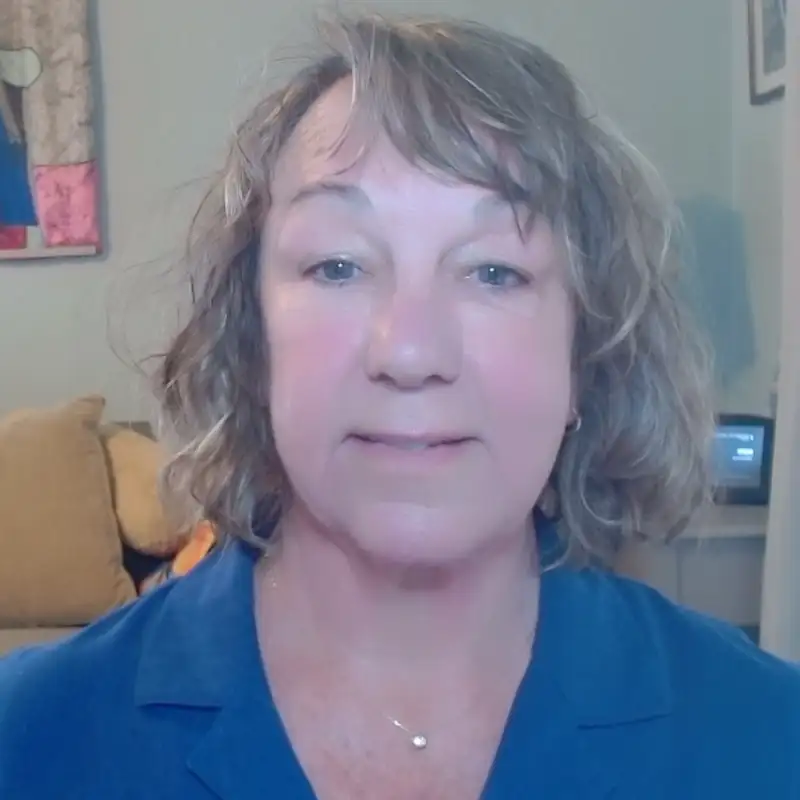
Hello Alameda! Welcome to the Island City Beat Podcast. I'm your host, Angie Watson-Hajjem. Well, my guest on today's podcast is someone that many of you are familiar with, Tracy Jensen. Since 2022, Tracy has served on our Alameda City Council.
Angie Watson-Hajjem:But before she stepped into the role of council member, Tracy held various positions on the federal, state, and local level. She once worked in the office of former Vice President Al Gore. I didn't know that. And locally, she was a trustee of the Alameda School Board as well as a member of the Alameda Health Care District Board. This November, Tracy hopes to become our next mayor.
Angie Watson-Hajjem:And I'll talk to her about her vision for Alameda, what we can expect from her if she does become our next mayor in November. I'll talk to her about some of the challenges we face here on our island, her approach to solving those challenges. So with that, I would like to welcome to our show Tracy Jensen. Tracy, welcome to the Island City Beat Podcast.
Tracy Jensen:Thank you, Angie. It's great to be here.
Angie Watson-Hajjem:Yeah, I'm really happy to have you here. So my first question is, as a city council person, you've been there for almost four years, what have been some of the biggest challenges that you and the city council members have had to deal with during your time there as a member of the City Council?
Tracy Jensen:Well, I can say I can start by saying that the council prior to my joining in 2022 got a lot of the hard work done with regional housing needs assessment. That was submitted just before I joined the City Council in December 2022 and it was approved pretty quickly after that by the state housing housing agency. I feel like that was a really good start and I think housing though remains kind of a challenge. That continues to be one of the challenges that I faced as as a council member because although the City Council prior to my joining had established changes in the general plan and changes in the zoning requirements to to support and encourage housing it unfortunately. It's remains still a challenge for for developers and for new housing development to be done.
Angie Watson-Hajjem:Yeah.
Tracy Jensen:Although I will say that our Alameda Housing Authority has done a great job and that's been a lot of the the new housing that's been done since I've joined the City Council. Other challenges I think have been at Alameda Point primarily. The Other thing that that happened before I joined the City Council and kind of was winding down was the pandemic and during that time. There were a lot of a lot of businesses and other things that were that were happening in Alameda Point that were able to receive compensation from the city, lowered leases or consideration because of the pandemic. And so I think when I joined the City Council, that was when all of those things were winding down and we were having to work closely with many of the the lessees that Alameda Point to ensure that they could remain to it to support them, but while ensuring that they were also going to pay the original and approved lease payments that had been delayed or deferred since the pandemic had happened.
Tracy Jensen:So those were a couple of things that happened while early in my tenure on the City Council.
Angie Watson-Hajjem:Let's go back to housing, because that's always the big issue on all of our minds. We live in one of the most expensive housing markets in the country, and I know that we have this housing element where cities are mandated to build a certain number of units of housing. And Alameda actually has done better than a lot of cities here in California, but we still lag behind. We still have a lot more units to build. And so I would love to just get your vision of how we meet our housing element goal to create housing, including affordable housing, because know affordable housing is a piece of that housing element mandate.
Angie Watson-Hajjem:How are we going to make this happen? We have like 5,000 units we're supposed to have by 2031, something like that. How are we going to make that happen, Tracy in Alameda?
Tracy Jensen:That's a great question, and I consider that and ponder that myself often, Angie, because right now there are opportunities to build new housing in Alameda, but developers are not building. And what I hear from developers is that economic conditions are making it challenging, if not impossible to proceed with residential developments, even those that are already entitled and approved. You know, as you said, we well as we know before, and I won't take any responsibility because I wasn't on the City Council, but the City Council made it made housing development easier and easy and changed the general plan and zoning and other requirements so that that there could be housing built throughout Alameda that measure A was repealed, which was huge. And that makes it possible for 5,353 new units to be built in eight years. And that was starting in 2023.
Tracy Jensen:But after two full years of adoption, less than 400 units have been have come on the market. So this is not addressing the need for housing and it's it it's probably well, I shouldn't say probably, but it's it's it's unlikely, if not impossible, that there will be that many units coming on the market as required or as established and encouraged by the rena.
Angie Watson-Hajjem:Yeah, you know, some housing advocates are proposing that outside of the housing element goes that we have another program that is just for affordable housing, 100% affordable housing. What is your take on that?
Tracy Jensen:Well,
Tracy Jensen:if there were to be funding for 100% affordable housing, I would be all in.
Angie Watson-Hajjem:You support that.
Tracy Jensen:Exactly. It's an issue. The city of course, even now I mean housing authority has limited funding and and the Alameda Housing Authority has done a tremendous job in especially at the Northern housing and with the potential new popular development to to find sites and to build housing. But and and most of it is almost entirely affordable, especially at the North housing, but. The city of Alameda and my role as a council member is to address and make the financial picture of the city work.
Tracy Jensen:We actually don't have the resources to build housing, but we what we have done and what we will continue to do is to make it feasible. And if the state were to or other sources, I understand that there may be some federal dollars. There's some federal legislation being considered for for low income housing and for affordable housing. That would be tremendous and we do have potential sites in Alameda that where it could be built, but we have fewer sites than other cities because we are an island and there's a lot of it has been developed for residential already.
Angie Watson-Hajjem:Yeah. One of the things that we've talked about doing here on our podcast is spotlighting local businesses. So either we go out with our cameras, and we talk to them at their location where they do their business about the experiences that they're having as business owners. So they come to us and we talk to them. And I know I was talking to a business owner recently.
Angie Watson-Hajjem:He had this really adorable little shop on Central Avenue near Webster called Goobers, and I would pass by there all the time. And one day I passed by and he had a sign out saying that he was going to be closing up shop. And I walked in and said, hey, why are you leaving? What's going on? And he said, oh, rent is too high.
Angie Watson-Hajjem:I just can't afford it. It's not tenable for me to stay here. And I'm sure a lot of business owners have that same issue where just the rents are too high and they have to leave. And I'm just wondering, is there anything that you would propose as mayor that the city can look at as a way of helping support our local business owners here, helping them to be successful, having them to just be able to keep their doors open? Because say, you know, small businesses, they're the engine of the economy, but so many of them are struggling.
Angie Watson-Hajjem:And how would you go about helping those struggling business owners here on our island?
Tracy Jensen:Well, you're absolutely right. I Think that it is a struggle and I I know that businesses it it it takes it takes sometimes often at least a couple years for our business to become stable and to become established in order to be able to to thrive and and especially in Alameda, and especially in this economy.
Tracy Jensen:I would support and I think there are things that they've they've suggested to me like grants and like like helping to address transfer tax issues in the city. So there are things that we can do to support small businesses. And I agree with you, Angie. Small businesses are really the driver for our community.
Angie Watson-Hajjem:I remember there was some talk a while ago about Alameda looking into maybe getting a public bank. I know some cities in California, including San Francisco and Los Angeles, are looking at that model of having a banking system that's owned by the government, where money going into that bank would go to helping small businesses, helping to build affordable housing, helping to give money to people to buy homes. Would that be something you would be interested at looking closely at?
Tracy Jensen:Absolutely If we could find if we had a partner to do something like that, a financial partner, I think that would be a tremendous resource for small businesses as well as you say for for housing development. Have a lot of small landlords that are technically they're small businesses. They landlords with smaller multi unit buildings and they often can't afford to do the capital improvements that they need to do because the not because we have a a strong rent control program, which I completely support, but because, you know, even if we didn't have even if in the absence of rent control, it's just not feasible and and and landlords for small and multi unit buildings don't. In my experience, don't tend to to get into that business in order to make a huge profit. And so they the the people that I know that own small buildings would totally benefit from low interest loans and and easy terms of credit to improve their buildings and and make it better for their tenants.
Angie Watson-Hajjem:Yeah, great. And there's a city in North Dakota that they've had their public bank since 1921, and it's been very successful in that state. It's kind of amazing. Let's talk a little bit about food insecurity. I know that maybe, I think it's about 10% of people here in Alameda actually use our food bank, and we have a great food bank here in Alameda.
Angie Watson-Hajjem:So we do have a lot of people who are using the food bank because they need to. They don't have the money to supply food for their families, And some advocates, food security advocates, think that community gardens would be a very helpful way of bringing more food to our community. And I know some people were really hoping that when we built the Jean Sweeney Park, that community garden would be placed there, and it's not. And so I would love to get your thoughts about community gardens as a way of bringing more food security to the people here in Alameda and maybe even somehow having one at Jean Sweeney Park. Maybe that could actually happen.
Angie Watson-Hajjem:I don't know what do you say to that?
Tracy Jensen:Absolutely, just for background, am when I worked for the city of Oakland in in human services. I worked with vulnerable senior populations and and that was a huge issue. It's a huge issue throughout the Bay Area. It's an issue for on Bay Farm Island where there are seniors who've lived in their homes for thirty or forty or more years, and they find it a challenge to leave Bay Farm Island to get to another Safeway or Nob Hill in order to do their shopping. Food deserts are huge issue and and and we are fortunate because we have not only the food bank, but we have Meals on Wheels and friendly friendly visitors, and that's a tremendous resource that Alameda.
Tracy Jensen:It's kind of an undiscovered and unreported, I guess, but I know a lot of people that use it and it really keeps them independent in the community. I am I also have a little experience with this because I was on the board of the Alameda County Community Food Bank for about five years in from twenty two thousand and nine to about 2014. And there's there's so much need for food and so much need for fresh produce. And so I'm glad really glad you bring this up because especially now, you know, where 50% of residents are renters, Where do they have a garden? Where can you know you can you have a garden on your patio?
Tracy Jensen:Maybe not. Or in your on your balcony? That's not very likely, and we need a community garden. I am. I when we had a recent strategic plan retreat and we the city council decided what priorities we would have in our strategic plan.
Tracy Jensen:I made it. I made it a priority. I I. Told directed staff and I I think I'm got my colleagues to support it as well on the city council and it is a priority in our strategic plan to do to build that community garden at Jean Sweeney Park. The garden is it's been proposed.
Tracy Jensen:It's been identified. It will be right next to the Aquatic Center. And the other thing is there will be some parking spaces for especially for renters, especially for seniors, especially for people who are going to be have to be carrying bags of mulch and things to over to the the community garden, and it'll be a resource. I I just see so much outreach happening from the Alameda Backyard Growers and the Alameda Community Food Bank out or excuse me, the Alameda Food Bank and all of these other community resources to to ensure that not only that it's it's utilized, which I have no doubt that will happen, but but that people can learn from it, that people can come for classes, learn how to grow things if they have options available in their own near their own residences. So this is it.
Tracy Jensen:It's amazing to me with all of our green space, all of our parks, know that we don't have a community garden already, I'm completely 100% supportive of that.
Angie Watson-Hajjem:I'm so excited we're going to get a community garden at Jean Sweeney. That's wonderful news to hear. So I want to talk about police surveillance. And you know, Tracy, that a lot of folks here in Alameda are very concerned about license plates, readers and cameras and drones. I don't know if we have drones here that we're using in Alameda.
Angie Watson-Hajjem:Know they do in Oakland. Tell me about your philosophy, the balance between privacy and public safety.
Tracy Jensen:Well, we do have drones in Alameda. We have drones since the city council approved it. Since I joined the city council, we approved purchase of of drones initially in 2024, early twenty twenty four, and these drones are used in from what I understand and from the information that I received from Alameda Police Department, they're put into use about two times a month, probably average. Sometimes the drones have been used for mutual aid in other, especially in Oakland, and the the most the most often that in from what I have seen and from the reports that I get that drones are used, it's when someone who is a suspect in a crime that has immediately happened, usually retail crime or a theft or sometimes even a violent crime where the the drone is used to to find the person, the person who is who is trying to evade officers. And so it's never been used as far as I'm aware to find someone or in any case of support for a federal agency of any kind.
Angie Watson-Hajjem:That's the fear people have though that the information from some of these surveillance tactics may be used to give to the federal government and putting people in danger.
Tracy Jensen:Right, and those is you're you're right, and that has been an issue in in in other cities. I I completely agree. I it's been an issue in some agents, local agencies and some cities have have eliminated their automated license plate readers, which Alameda also has automated license plate readers. It's it's a challenge and and I think about it a lot, Angie.
Tracy Jensen:I I don't want any information to be shared on any person regardless of their immigration status with any other agency. If someone is in Alameda and commits a crime in Alameda, I want them to be arrested in Alameda and and prosecuted to the extent necessary locally. And so I I really don't believe that any of that information should ever be shared and I've been assured that are in Alameda, the automated license plate reader information on anyone is only shared when there's when there is actual evidence that a crime has been committed. So for any kind of civil case or any kind of immigration, any immigration type of activity that is just looking for people who are undocumented that would never be there would never be any ALPR data that would be shared from Alameda. And the other thing that that I that is first I know for sure and I and I'm very confident is that no one's the automated license plates at least do not take pictures of any person.
Tracy Jensen:They take pictures of the license plate, so there's no there's no ongoing record or data or information that includes people's identity, their face or their their head or their body or anything like that. Is just the license of the vehicle. And so those are things that don't make it completely acceptable, I guess, or or don't address all of the privacy concerns that that Alameda residents and others have, and and even some that I have. But the the thing to be aware of is that these the automated license plate readers have they continue to solve crimes and they continue to protect Alameda. It I always am reminded of a an incident that happened in early twenty twenty five where a mom had just gotten out of her car.
Tracy Jensen:It was on Santa Clara near Broadway and her kids were in the car in their car seat and her car was carjacked with with her kids in it. If it hadn't been for ALPRs, who knows? The the suspect, the carjacker was apprehended quickly outside of Alameda, but quickly and the children were were not harmed. But those types of things are. In my opinion, probably less likely to be solved so quickly without ALPR automated license plate readers.
Angie Watson-Hajjem:So we know
Tracy Jensen:it's true. Let me just I'll I'll go on in Alameda. Know we it's almost easier to use that type of technology in Alameda because we have limited entry and exit opportunities.
Angie Watson-Hajjem:Yeah,
Tracy Jensen:so you know our Alameda Police Department can use a license plate reader to know when a suspect has entered or exited the island, and that's kind of unusual. I'm not sure how it would work or how supportive I might be in a city like San Leandro, where there are so many that's so porous and there's so many ways to enter and exit the city.
Angie Watson-Hajjem:So many cities, as we all know, have had ICE come to them, making their presence known, including here in Alameda. And my question is, what is the city council willing to do? What can they do to make sure the vulnerable residents here are safe? Because there's a lot of fear here about ICE and about their presence and about what they can do. How can the city protect us?
Tracy Jensen:Absolutely. And what I have told Alameda Police Department, the chief and I have met often and talked about this and I would never support the sharing of information with any federal agency. I've reviewed and I can send you later, but I reviewed the police policy manual and we've updated it to to establish that this is a sanctuary city and there will be no information shared randomly with with federal agencies, federal marshals or ICE or any federal agency. So that's one thing. A federal agency cannot just submit a request for information about any person in Alameda without evidence without providing evidence that a crime has been committed or that that person is a suspect in a crime.
Tracy Jensen:So that's one thing. The other thing that we have in Alameda that I believe can be strengthened and I I I talked to the city attorney about this as well is our rent program. I think that our rent program could be strengthened by really sharing information more broadly and more directly with all tenants, not singling out any tenants, but making tenants aware that their landlord or property manager cannot take any action to based on their nationality, based on any suspicion of their immigration status. I think that we have a database. We know who the renters are.
Tracy Jensen:We know where the buildings are. We know that this is the And we have the ability to reach out to renters in Alameda. I think that we need to do that to make sure that renters know because I'm I'm I'm not I don't have direct evidence of any specific examples, but you know it probably is the case that a landlord or a property manager or someone could intimidate a renter because of their immigration status. I think that that there's more that we can do in our rent program to address that.
Angie Watson-Hajjem:And with that, that you mentioned is because I work for a nonprofit housing agency, one of my other world works that I do. And we investigate discrimination complaints in housing. We've been telling people, no matter what's going on in the federal government, if you do have a situation where your landlord is threatening you, telling you that they're going to call the police, have deported, call ICE. That's illegal, and you can call us. And so I'm glad you mentioned that, that we do have still housing protections for all of the residents
Tracy Jensen:Angie, I'd love to talk to you more about that and think about ways that we can make it work better here really protect your interest here in Alameda.
Angie Watson-Hajjem:I'd love to do that. Wonderful. So back in January 2024, or after the war broke out in Gaza, many people wanted to have Alameda support a ceasefire in the Gaza Strip. And there was a very contentious board meeting in January, many fierce dialogue, people who were for the ceasefire, people who were against it. The resolution failed that evening in 2024 at the City Council.
Angie Watson-Hajjem:You voted against the ceasefire resolution. Many people, many voters were really angry, really upset about that. I would love for you to take a moment to just talk about that and why you voted the way that you did that January evening. Might have been early morning by that time. I know the meeting went for a long time.
Angie Watson-Hajjem:But why did you take that vote of no?
Tracy Jensen:Well, first of all, I didn't feel that it was that that that sending a letter to the White House opposing the war would would make a difference. I I I felt like it was a a gesture and I wanted to do something more. I actually proposed in that meeting that that we It that we send a letter to all to our local representatives legislators because there was a. Resolution that was it was bipartisan, I believe, or at least it was it was well a number of legislators in Washington representatives had had signed on to it to to take make a statement in Congress about this. And so I I I can't remember.
Tracy Jensen:I think it was five. Six, eight maybe. And what I wanted to do was to, it wasn't that I didn't support taking action. I just didn't really feel that issue that we were being that was being discussed, was to write a letter to the White House was going to have any impact. So, you know, the bottom line is that that there is I I I'm not a Israeli or Palestinian nor am I expert on international relations, but but basically the UN has said that Israel has committed genocide.
Tracy Jensen:And and even since the the quote unquote ceasefire 700 more than 700 Palestinians have been killed by Israel by by live fire. So there is much more that we can do and I'm not I I hope and I I you know I I hope that that our leaders will do something, but I I want to do something here and what we can do here is to have a sanctuary city to to ensure that we don't have space available or or options for ICE to come into Alameda to to harass or arrest or target Alameda residents. And so I I am kind of focusing on that right now, but other things that the
Tracy Jensen:White House can do or our leaders in Washington can do. Certainly I would support that if it is an actual actual action that can make a difference.
Angie Watson-Hajjem:For almost probably a decade now, an organization here in Alameda called the Friends of Wadi Foquin have been trying to have a city sister relationship with Wadi Foquin, which is a small village in Palestine in the West Bank. And the proposition came long before you came on the council, Tracy. It came to the city council, and it died.
Angie Watson-Hajjem:It didn't go anywhere. And there's been some chatter about maybe bringing it back up again, maybe in the future for the City Council to consider having Alameda be a sister city to Wadi Foquin. I'm wondering if you would support that initiative. Would you support that proposal if it came to you as mayor?
Tracy Jensen:Well, before I answer that, wanted to add one more thing about with regard to to what we have done and what we can do in Alameda related to support addressing the war in Gaza and and wars throughout the world. And I just want to point out that the thing that I did do that was a concrete action that Alameda took and that was supported by the City Council and and passed was to change our investment policy. We changed the policy of investment of Alameda funds being invested in any weapons of any kind. And and that was huge because this was divestment issue. You know, there was there are a lot of at least about a year to two years ago, and right after the war started, especially, there were a lot of of actions both locally and statewide and in other places to to have investment accounts, especially public investment accounts, divest from from any weapons or from any company that provides support to Israel.
Tracy Jensen:And what we did, and actually Alameda was the first the first in California, I believe, kind of like our Reno, or at least we were the first in Northern California to adopt a investment policy that that does not allow for investment in weapons. And I say this because I worked closely on this with Reverend Michael Yoshi, who is one of the people who's behind the effort to establish a sister city with Wadi Faquin in yeah in the West Bank and I've had an opportunity to meet people who've come to Alameda from Wadi Foquin. I've spent many afternoons at Buena Vista Methodist Church to learn more about Wadi Foquin and and this is really an investment that the city can make to to be as a partner and to be a supporter of a part of the world that needs support and and investment. I think it's not a huge effort and Alameda has been long had sister city relationships in other parts of the world. I had some questions as other council members did when it came forward about last year or late twenty four, early twenty five.
Tracy Jensen:And I think that it will come back to your question, Angie. It will come back and and I moved forward after the initial discussion about what if I can I move forward with with supporters of what if I can especially revenue she to to change the investment policy, and I think that we have opportunities now to work within the sister city requirements and policies and and move forward with what if I can and other as well as in other parts of the world? We've thought about Ukraine as potential area to have a sister city. I mean, are places that Alameda that we can just teach our kids about these places and with a real human, the human aspects of parts of the world that that they may not. They may be nervous or scared of, and and it's the everyone's human, and there's families and kids and and grandparents everywhere, and we just need to recognize that and support that, I think.
Angie Watson-Hajjem:So you would support assist sister city relationship with Wadi Foquin? You would support that.
Tracy Jensen:Yes. Okay. Well, I haven't seen any changed in any updated policy. I haven't so there's been a number of questions that were asked, and it went back to staff some time ago. So if it comes back, there'll I have if my questions are answered, I will support.
Angie Watson-Hajjem:Okay, all right. So we're to talk about climate change, especially because we are on an island and we're so vulnerable to the horrific effects of climate change. We could be flooded. We've had floods. We're so vulnerable.
Tracy Jensen:Yeah. Have you looked outside today?
Tracy Jensen:It's great rain and I hope for more.
Angie Watson-Hajjem:Yeah, know. I know. And so I would love to hear your climate change action plan that you would take on as mayor to help us eradicate some of the issues that come with climate change. And we still have a lot of people driving cars here on the island.
Angie Watson-Hajjem:Still have a lot of people who are using you know, gas ovens and so forth. How do we change that? What do we need to do to really improve our climate change mandate?
Tracy Jensen:Well, that's it's a really I'm glad you you ended with driving cars and using gas ovens and things because that's kind of one of the things that we have been trying to do, and it's really the the the stick approach, you know, saying if you if you have a residence and you have to replace your oven, you can't put in a gas appliance. So that's something that is happening, and it will be happening for at least for gas dryers and gas appliances starting in 2027. And that's a state mandate. We in Alameda, we passed a law that was subsequently like Berkeley's that was subsequently overturned by the California Supreme Court requiring that all new all new buildings be gas or be electric only. And that, unfortunately, I completely support that, but that was overturned and we can be encouraging.
Tracy Jensen:What we can do is to provide a carrot. We can encourage developers to not use gas appliances or and, use electric, but that if if it's cheaper, then we don't have a lot of we can't provide the incentive to make that happen. So in some ways we're we're at we just have to allow for compliance with state law. But I think in Alameda we've made electricity cheaper. So in Alameda we have we have other carrots as well.
Tracy Jensen:I would I'll call it carrots and sticks, but we have other carrots because amp our Alameda municipal power is the cheapest utility, the cheapest electric utility in the Bay Area for sure, and probably in a wider, much wider region. We have all green energy and it's it's reasonable. And I'll just as an aside, just let you know you may have recall that that Pacific Fusion was looking to build a development site here, and one of the reasons they wanted to build an Alameda was because the electricity for their for their modeling and for their project was so cheap. So we're that's one way that we're helping to address environmental issues is with Alameda municipal power and ensuring that we have green and and cheap electricity. The other thing is we have a completely robust and an extensive climate action and resiliency plan and policy, and that is making us attractive for not only for investment, but for for grant makers.
Tracy Jensen:We are able to to get grants to address sea level rise. In fact, last Tuesday, the City Council approved the grant of over $1,000,000 I don't know the exact amount right now. Was in the millions and to address sea level rise right by the Bay Farm Island Bridge, where it's been very challenging with a hot king tides and rainfall to to keep people safe, to allow for access to certain parts of of our community. And so I think that we're we're we're doing a lot and we're becoming kind of a model in at least in California for addressing these problems because we are surrounded by water and we have to address them. And we have a lot of really good leadership in in our city that is is on the cutting edge here, so to speak for climate change, and I'll just end by letting you know if you don't know that I'm the chair of the Alameda County Waste Management Authority Stop Waste, which is the which is all of the elected REIT cities and the county and elected water agencies for Alameda County.
Tracy Jensen:And we are the agency that supports and provides policy and provides direction to cities and other agencies to for for recycling, for green waste green waste recycling and to make sure that the landfill is healthy as a matter of fact. So there are so many things especially with that we can do especially with regard to food waste and not not using making sure that food isn't discarded that it is used and if it's discarded that it's discarded correctly and doesn't go into the to the landfill and in other ways as well. One of the things that we're doing at stop waste and that Alameda is adopting is regulations around construction debris because that often is just being discarded into the landfill or being being not being reused. And so those are those are things that we can do that can make the address to address global warming, to address pollution, and to make our city more stable for for future generations.
Angie Watson-Hajjem:And we're on the forefront of that, mitigating climate change. I'm really proud about that. I want to see more bike lanes. I know we've got this wonderful new bike lane on Central. I'm a biker, and so I love that.
Angie Watson-Hajjem:And so that's definitely going to be something that was going to help our environment where people on their bikes and more bike lanes. That's what I'm going be rooting for in Alameda.
Tracy Jensen:Oh, Angie, I'll just share something. One of the challenges right now is that people want to ride their bikes to the ferry. And what what I've heard recently is that the ferries don't have the capacity to have all the people who are riding bikes to get all the bikes onto the ferry. I mean, that's kind of a good problem. I think that you know those are if we can have problems like that, I think I'll be very happy as the mayor to figure out ways to address that.
Angie Watson-Hajjem:Okay, that's wonderful. So my last question actually comes from a member of one of our members of our podcast team. He used to serve on AMP, our electricity panel, the Alameda Municipal Board. He was a member of that board, and he wanted me to ask you. I know that as mayor, you have the privilege of appointing members to serve on AMP.
Angie Watson-Hajjem:He wanted me to ask you if you would make it part of your consideration that whoever you appoint has an environmentalist heart, I should say. So someone who supports clean energy, rooftop solar, someone who really is focused making sure that we have a healthy environment. What do you say to that?
Tracy Jensen:Of course, I mean that would be my first priority. Can't it's not happening. Unfortunately, it's not happening in Washington. Our our climate change is not recognized or addressed or even even there's no belief that this is a problem. Unfortunately, in our nation's capital, it seems like.
Tracy Jensen:So we have to do it locally. Have to at the local level, have to have programs in place like solar and and solar wind power. We have to have green energy available and we have to make it easier and more feasible for people to use electricity to. I I have to say I I made my coffee this morning on my induction stove and that water boiled within less than a minute. So if people just could understand how how easy and feasible and how how much easier your life will get when you get into your electric car, which I do and I pass the gas station and look at the $5.50 gas prices that you know we are a unique place in so many ways, but really with regard to energy availability and energy consumption and the ways that we make it easy to be green.
Tracy Jensen:I think Alameda has has a strong strong place for for everyone who's an environmentalist and and to your friends point. Yes, definitely. If you're if it I'm not going to make. I'm not going to ask if you have a an e bike, but I would hope that you have an e bike or an e vehicle. Definitely.
Angie Watson-Hajjem:Or support those that do. So lastly, Tracy, I want you to speak directly to our listeners. Why are you running for mayor, and why should voters support you in November?
Tracy Jensen:Well, just to piggyback on what we just talked about, because Alameda is unique. Alameda is such a unique place. It's unique in terms of our families that we have here. It's unique in terms of of the the amount of parks. I started, as you mentioned, on the school board, and we have amazing schools from elementary, amazing public schools, as well as private schools options from elementary through high school.
Tracy Jensen:And we also have the College of Alameda. I'm in many ways, we have small businesses as we discussed, so I'm not gonna say that nobody should leave the island ever, but we we don't have to leave the island because it is such a beautiful and amazing place to be. I am running because my experience in government, especially in federal, state, and local government gives me the ability and the understanding of how to make partnerships and make it work for Alameda, for Alameda businesses and Alameda families. I'm running as my friend, Laria said from Replenish. She said Tracy, your motto should be I show up and it I'm running because I show up because I care about our community.
Tracy Jensen:I show up and I don't always have the best. I don't always have the best idea or I don't even always make the best decisions I'll say, but I want to hear from other people because it informs me and I and I'm not making a decision. I live here as you do, but I'm not making a decision for me. I'm making a decision for everyone when I'm on the City Council and we I'll just end by saying the other reason I'm running for mayor. I've been on the City Council for three years and I've been on various other boards and commissions and the City Council has a huge role to play in our city and but we can only do that if we are working together, if we're working as a team and if we're working with staff.
Tracy Jensen:We have in Alameda a tremendous staff resources and we just hired a new city manager, Jerry Boudin, who's going to be joining us in about six weeks. We have a tremendous resources and opportunities, but without leadership that can it won't be utilized and it won't be utilized as effectively as it can be. So that's why I'm running and I'm I will be. I will be the most effective person to be in the mayoral job and I will because I'll listen and because I'll act when when I can and I'll act with partnerships throughout all of the people you know that I know regionally and statewide and even nationally. I'm there's a reason that I'm supported by the several Board of Supervisors members and and my endorsements go back to former legislators and and and outside of Alameda as well.
Tracy Jensen:So this is a huge job and it takes someone who knows Alameda and someone who knows how to get things done and that's me.
Angie Watson-Hajjem:Tracy Jensen, thank you so much for spending time with me this afternoon and talking. I really appreciate our conversation. I really did. Thank you so much for your time. And thank all of you for joining us for this edition of Island City Beat Podcast.
Angie Watson-Hajjem:Hope that you come back and listen to upcoming episodes coming your way very soon. Until then, I'm your host Angie Watson. Take care everyone. Goodbye.
Tracy Jensen:Thank you.
Angie Watson-Hajjem:Thank you, Tracy.