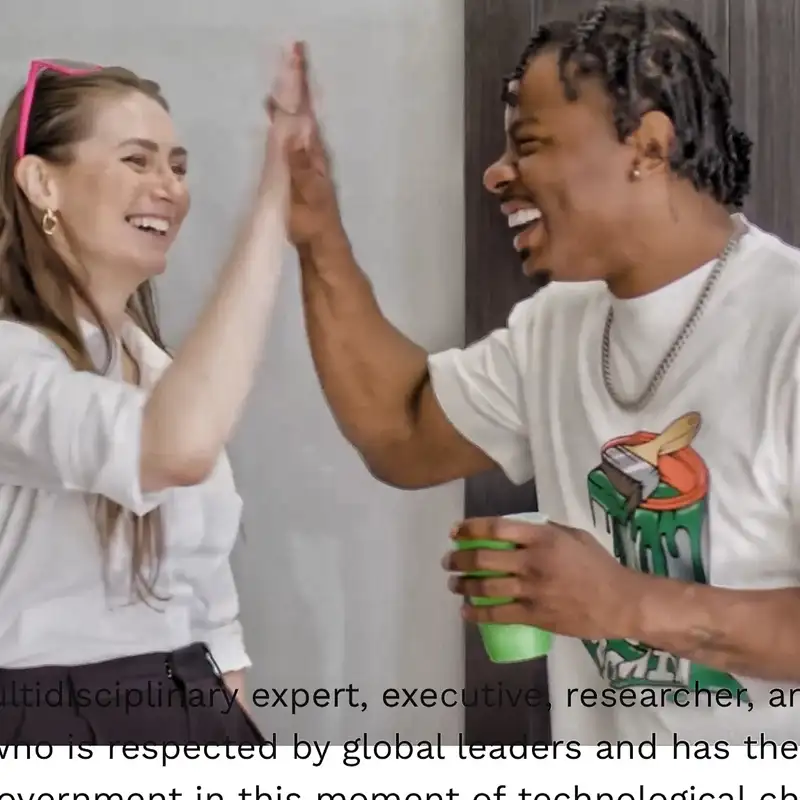
Hello Alameda. This is the Island City Beat and it's Laura Thomas, your host today, and I'm here with Jamie Joyce. We're in Berkeley where she lives and we're talking about the fact that she's running against Lateefah Simon this November for the California's 12th Congressional District seat. You came in second in the June primary with 15% of the vote. You're a Democrat.
Laura Thomas:Before you tell us why you decided to challenge Simon, can you tell us something about yourself? Are you from the Bay Area?
Jamie Joyce:Yeah, so, no, I'm originally from a tiny town in New Hampshire. My family moved to Florida when I was a tween. And I really started my career in Florida, where I got into international humanitarian sustainable development, where I managed climate projects and environmental projects and humanitarian projects in over 20 countries. And this was through partnership with local leaders who developed their own projects and then I would help them measure the impact and fund it for scale. And these projects took place in everywhere from Iraq to throughout Sub Saharan Africa and Nepal.
Jamie Joyce:So I have just been someone who's been dedicated to service for the majority of my life, but as a career at least a decade.
Laura Thomas:So you started that in your twenties? Yeah. Really? Did you go, you went to college?
Jamie Joyce:I'm a dropout. Okay. I'm one of those. I had severe health challenges too, my I very early was chronically hospitalized. I had to get intravenous feeding.
Jamie Joyce:I wasn't able to eat or drink water for five days at a time, which is like I have great empathy for people who have health challenges, because I know what it's like to have a body that just will not cooperate and you don't know what to do. And I was following all of the recommendations in terms of protocols, Those protocols were actually what were making my condition worse. It was a very misunderstood condition at the time, but I started doing my own independent research and I found one pescatarian study that linked the condition to food. So I switched to a vegan diet and put myself in remission ever since, is well over nine years, twelve years something. Not good at keeping track of those kinds of things.
Laura Thomas:Right. Okay.
Laura Thomas:So how did you get to the Bay Area then?
Jamie Joyce:Yeah, so after I looked at so many really hyper localized complex humanitarian and environmental issues, if you're trying to solve a problem, you should really map out all of the variables. And this is everything from understanding the problem itself, like what you're trying to solve for, like a health condition or degradation of the environment or educational outcomes, but also all of the externalities. You need to understand the culture of a region. You need partnerships with these folks so you can't just impose a solution. You really have to grow these things from the ground up.
Jamie Joyce:And when I, you know, my team and I did this over and over and over again, what I realized is underneath all of these issues is really a collective intelligence challenge. You really have to understand a problem in order to spend the least amount of money solving the most amount of problems. That's what we specialize in. It's like, okay, there's one particular problem this community is talking about, but if we are able to substitute kerosene lamps for solar powered lamps, not only are we going to save the health, prevent lung infections and these sorts of things that happen when you burn kerosene lamps too much inside of small domiciles. But we could also save the family money, we can also improve educational outcomes because kids can use their solar lamps later into the night.
Jamie Joyce:All of these things. And what I realized is that United States policy, foreign policy and domestic policy, impact the entire world. And so I thought to myself, well, I should really focus on improving the collective intelligence of my own country. So I knew that was going to have to be a technological organization. It's still a non profit.
Jamie Joyce:But if we want to create big databases to model really complex issues, like climate change policy or immigration policy or things like this, then we're going to have to use technology to scale it. So I knew that if I was founding a technological organization, I needed to be in the Bay Area. So I packed up and having worked in charity for a very long time, I never have money. So I literally just packed up and moved over here and I just slept on people's couches slept on Did
Laura Thomas:you have a background in computer technology before you came to the Bay Area?
Jamie Joyce:I'm an autodidact in everything. So, like, there's I pretty much learn what I need to learn in order to be effective at executing something. So whether that's a specific subject matter domain, like nuclear power or the history of logic, or understanding what machine learning or now LLMs or computer systems can do. One of the first things I did before founding my organization is I looked at 168 different systems and studied content analysis text transformation pipelines.
Laura Thomas:This is before you
Jamie Joyce:hopped over here, yeah.
Laura Thomas:Okay, you did your humanitarian work, you had done all this work.
Jamie Joyce:Oh no, I did my humanitarian work and then I knew I was going to work on collective intelligence in The United States. But before I went from Florida to here, I studied 168 systems. So I spent that time learning what I needed to learn then I was like, I have to
Laura Thomas:be 100 a and 68?
Jamie Joyce:Deliberation mapping content analysis systems. Which means these platforms which can visualize and hold variables of data, which then can be extracted as structured data and computed on. That. So I moved here and I just bounced around on people's couches. I even slept on a bare mattress in an all male house in Oakland with bullet holes in the walls.
Laura Thomas:Really?
Jamie Joyce:Yeah. And then eventually I bounced around and found this part time gig managing this lovely community house, which is a venue that's free for artists and things like that. I'm an award winning artist as well, so it a good fit. And then I grew my organization from then.
Jamie Joyce:And since then,
Laura Thomas:What is your organization
Jamie Joyce:now? Now? It's It's called the Society Library. Okay. So it's a library of societies, arguments, claims, evidence, ideas, sentiments and artifacts.
Jamie Joyce:And we're harnessing that so we can solve our most complex challenges.
Laura Thomas:So didn't work on AI as somebody who developed it artificially?
Jamie Joyce:No, no. I didn't work for a large language model company in the development of Frontier Labs. But what I have done is I have architected agentic and automated research and fact checking tools. And also, I'm the chief prompt engineer. Basically, it's like when you're
Laura Thomas:Of just society library.
Jamie Joyce:Yeah. Okay. If you're trying to automate tools, so I developed the methodology manually. If you want to automate that, you have to have enough familiarity with how an LLM would work, the reliability of the outputs, etcetera. So I just managed that and helped iterate over time and write the initial prompts and review all the data for fine tuning models, etc.
Laura Thomas:For fact checking.
Jamie Joyce:For fact checking and autonomous research.
Laura Thomas:Okay. So what is autonomous research?
Jamie Joyce:Autonomous means somewhat on its own. So when we would build these databases on a complex problem, for example, we're making a big database that maps all arguments, claims and evidence from every detectable point of view about the San Luis Obispo Diablo Canyon nuclear power plant. There's so many stakeholders. There's the indigenous population who may want their land back. There are the people who have jobs there.
Jamie Joyce:There are people who have concerns about leukemia from tritium runoff. There's so many different stakeholders with so many different views. So when we would do this manually, I had librarians literally trained in a specific methodology that I crafted to be looking out for different media formats and extracting data and then building a database. So autonomous research in particular is like, now that we understand the behaviors that are necessary to conduct research well and build these databases that are meaningfully complete, we can build tools that search for information and then automatically refine, like, well, where do I go to next? Like, let me take this claim and invert it to its opposite and go search for that.
Jamie Joyce:So it's essentially like embedding a sequence of rules of behavior of how to research well. So instead of a human having to conduct all of these, it's just a system that goes and refines and iterates its search and finds new information so that these databases can be really substantial.
Laura Thomas:My goodness. Wow. Okay. So, let's get to one of your campaign issues or claims, and that is that you are worried about AI and that, well, you state on your website that you want to make sure that people centered democracy survives the transition to AI.
Jamie Joyce:Yeah.
Laura Thomas:So can you talk about that, how you think AI could concretely help us
Jamie Joyce:with Sure. Democratic Absolutely. So I mean, my organization is a perfect example of how AI can be beneficial. Because access to quality information and access to a plurality of ideas, especially in this culture where we demand for information to be delivered to us so fast, AI can be transformative to that effect. That Diablo Canyon data set that I mentioned took over 8,000 human research hours.
Jamie Joyce:That's like four full time human research years. That's too much time to ask any individual citizen to spend that time to learn about an issue to then have an informed vote or a maximally informed opinion. But an LLM can grab that data and structure it in thirty minutes.
Laura Thomas:Right, we understand that now.
Jamie Joyce:So as long as deliberation is a part of the democratic process, as long as quality information is a part of the democratic process, then LLMs can be useful. But there's all of these potential downsides, and there's a whole spectrum going from things that have already been observed to things that people find to be theoretical. Like it's only theoretically catastrophic or theoretically an existential risk. Some people believe different things. Some people believe that's a certainty, right?
Jamie Joyce:But there's a spectrum of both how extreme these risks could be and how certain people could be about it. So I have, at my organization, the Society Library, when we began automating all these research methods, the first thing we did was turn it inward towards AI itself. So many of our grant projects were mapping neurotech approaches to AI safety. Or we did a project for a large frontier model company where we predicted all of the potential rules to govern their particular LLM on a specific issue, which then they can socialize with people and have people vote. That was like, trying to democratically govern the rules of these LLMs as opposed to it being internal to a company.
Jamie Joyce:So that was one of the projects that we did. One of the other things we did is present another really large LLM company, and I'm intentionally not mentioning names, but they're among the biggest to teach it how to seek truth better. So anyway, from that work, I identified 19 different domains in which AI may have a potential negative or catastrophic impact on our civilization or us people. So I put that in the MAD Act as an investigatory requirement.
Laura Thomas:Okay, that's good. So you've written a piece of legislation you're calling the MAD Act. Let me ask you though, just drawing in something that's happened in the news. There was some news that or Meta had allowed or maybe not allowed, but their AI had hacked into some other companies. What do you think about that?
Laura Thomas:Did you anticipate that in any way?
Jamie Joyce:That's do you been a concern that people have had for a really long time, for many years now. People have been worried about when an LLM, right, because AI was a word that was coined I think in 1955, so the definition has changed. What most people mean, rather, when they say AI is they mean LLMs.
Laura Thomas:Large language models.
Jamie Joyce:Exactly. Yeah, so escaping containment or escaping a resource envelope is something that people have been concerned about for a long, long time. People have predicted this for many years. So we're just now there. Those capabilities And the question is, did this capability arise in part because we kind of predicted it and wanted to see if it was possible?
Jamie Joyce:We kind of iterated towards it. So it was definitely something I saw coming, and then some of the other problems that people were really worried about is, okay, once an LLM can navigate these systems, can code, can access APIs, can circumvent cybersecurity guardrails? What happens when it infinitely can self replicate? When it can modify its goals? When it can deceive humans and detect when it's being observed?
Jamie Joyce:So there's a whole plethora of concerns, because the thing that makes this challenge so different than any other challenge we have faced is because this is a general purpose technology. This is an intelligence tool. So we've had concerns about nuclear energy, we've had concerns about climate change, but you can think of it as it's staying in one lane. Obviously climate change impacts species and human health and all of these things, but it still kind of stayed in one lane. Obviously, it could also go catastrophically bad, right, for humans.
Jamie Joyce:But, yeah, I think there's a material difference with AI risk because it can perform so many different functions.
Laura Thomas:So, you're concerned about this, right? And that's part of the reason for writing the MAD Act?
Jamie Joyce:I I would say yes, I'm concerned, but also I think mostly what I feel is a call to be responsible about it. I think there could be many upsides. And there could be many downsides. I think it's probably important for there to be not too many degrees of separation from people in Congress making decisions. If someone in Congress doesn't have any type of mental model about these tools, hasn't used these tools a lot, hasn't worked with these tools a lot, then they are gonna have to rely on their heuristic of judgment for evaluating the character and expertise of another person, which, that person may also be relying on someone else.
Jamie Joyce:So we should kind of reduce the number of hops between some degree of expertise and decision making. And so it just seems like it's just a moment where people who have a little bit more background should be passed the torch, Especially if they also have background working in and around government, writing policy, which I have, you know. So that's why I'm offering myself as an option. These next two years are going to be a really potentially transformative in terms of capability.
Laura Thomas:Well, you'd be one person, so what would it take to I mean, haven't read your MAD Act, so maybe you can begin to talk about it a little. But what would it take to rein in AI and get it under what I assume would be government control?
Jamie Joyce:Well, not necessarily. So I am not marching into Congress saying I have all the answers, I know what we're going to do about this. And that's because I'm wiser to the fact that this is an extremely complex issue. And in general, I would say that government and regulation stuff exist to protect people. And also, as someone who has worked with the Internet Archive, who has a lot of familiarity with government documents and who personally has an obsession with declassified government documents, I've seen far too many instances over the past eighty years of government abusing its power.
Jamie Joyce:And so I am, you know, the MAD Act is not just about AI, it's about surveillance and executive overreach and all these things. And that's because we're trying to find this narrow path of making sure that if government needs to be involved in oversight of AI, that it's because it's necessary. And not, we're just not gonna default assume that the government should run this thing, because we've seen too many government abuses for far too long. So, this whole debate about what we should do about AI, there's many different theories. What some people believe is that we should let it play out in the market because open source tools are gonna offset these centralized frontier model companies, right?
Jamie Joyce:In terms of capability. And so if something becomes too sufficiently capable in a frontier lab, one, a centralized system could control that, but also potentially people can create defensive tech in the open source world, etc. There's just so many variables. And this is why I also think I'm uniquely suited for these types of technical challenges, because my job used to literally be mapping super complex sociopolitical issues, understanding all these different points of view. And that's what I aim to bring because government should be a tool, and in my opinion, be like this last stop.
Laura Thomas:Okay, but your MAD Act does address so many other major problems like surveillance, ICE, dark money, the corrupt elite, and they're there. So aren't they the problem? Or how are these things related?
Jamie Joyce:Yeah, so this whole package that is the MAD Act is related to the asymmetry of power. Not only between the branches, but between government itself and the people. And I'm not saying, and I would be remiss if anyone thought that I was some starry eyed young person who thinks that I can just march into congress and introduce a 753 or however long it is now page omnibus bill and just magically solve all the problems. Like, that's not what I think. And that's also not who I am.
Jamie Joyce:But as someone who is a researcher and who takes these issues extremely seriously, what I have is, based on the work I've been able to do thus far, a plan to put forth. And my goal is just to find as many allies as I possibly can. And that can be outside of Congress, that can be inside of Congress. It depends on how the makeup of Congress and the Senate in these elections shake out. But at least for the House of Representatives, you need a minimum quorum and then a minimum number of votes in order to get anything passed.
Jamie Joyce:And based on the current number, or rather the last time I checked the numbers, I would only need 12 people. For the most contentious issues where everyone is voting in Congress, only 12 people to stick it out together to essentially force the injection of a certain amendment or something like that. So there's strategies and I'm not saying I have a lot of hope. Know You what I mean? But I'm also not here to bullshit anybody and tell them like, oh, I'm gonna fight Trump and oh, I'm gonna do this and I'll hold the line and all that.
Jamie Joyce:It's like, of course I will take actions. And of course I will expend all of my energy to do everything I can and also try to work as smartly as I can. But also, the reason why the Maddock is so comprehensive and touches on so many things is because I feel like it's almost checkmate for us. There has been so much government overreach, there has been so much abuse of power, there is so much corruption.
Laura Thomas:But the corruption is outside of the actual technology.
Jamie Joyce:Yeah, yeah. Mean, corruption, this is where we're the you money have some
Laura Thomas:and this is where this is another arena that you and everybody that's let's call all the people that are challenging the mainstream parties. I assume that you're a Democrat, but you're not a mainstream Democrat.
Jamie Joyce:I'm definitely not an establishment Democrat. The establishment has made it very clear.
Laura Thomas:You're outside of that milieu and like these folks that have been challenging mainstream in the last few electoral episodes we've had, whether they're Citi or the Election Tuesday, there's been some inroads from people who are, if they don't define themselves as socialistic, they define themselves as of sticking up for other people's needs. Yeah. And you're one of them. You would align yourself with those folks.
Jamie Joyce:Yeah, I would say, I wouldn't call myself I mean, the Democratic Socialists are definitely trying to get me to call myself a Democratic But again, as someone who logically breaks down media and has mapped even the debate about what the word climate change means, try to resist giving myself labels because these labels mean different things to different people.
Laura Thomas:That's true.
Jamie Joyce:Yeah, so I prefer if I were to give myself a label, would just be like, I'm a very pro social, pro human, evidence based person. Let's find out what is informed, what's inclusive, and what's the least biased as possible. So I just want smart, effective legislation, laws that will actually solve problems to the extent that Congress can do anything, And try to empower and embolden people to pull on the other levers of power. Like lawsuits to overturn Supreme Court decisions and things like this. There's many levers to government.
Laura Thomas:So Jamie, you're running against a popular Democrat in a district that's always been taken for granted as very progressive, sort of a leading edge region. Do you think that's still true? Is Lateefah Simon tough enough on Republicans and how would you rally your fellow Democrats to follow you? What would you bring to this district that she doesn't , basically?
Jamie Joyce:I think this district is extremely progressive. I think in many ways it's a shining example of what it means to bring progressive values into the fight for rights and for resources and for laws that make sense and can benefit people. And I think Lateefah Simon has done a great job at being that progressive candidate, taking on Trump, etc. But what I'm offering constituents is a different set of background experience and a different set of expertise. We've talked a lot about AI, but of course the MAD Act is also about corruption and dark money and electoral reform, and the Epstein files and ICE and the Insurrection Act and the surveillance state and prediction market insider trading, etc.
Jamie Joyce:And one of the arguments that I'm trying to make to people in the district, you can't learn this kind of technical discernment overnight. You just can't. And all of our issues, or I would say maybe most of the issues that we're staring down over the next two years and beyond, are probably going to have some sort of technological element to it. Whether we're talking about the environment or education or the economy or government or like anything. AI can have a massive impact, and just technology can have a massive impact.
Jamie Joyce:And the people who are benefiting and have money from investments in AI and technology are going to have an impact in terms of how So they're
Laura Thomas:you say it would have the biggest impact, wouldn't you say? Because they're the ones in control of this.
Jamie Joyce:Not only are they the ones in control in terms of developing, training these frontier models and stuff, but also how they're relating to government. They may be iterating their software and their products and services towards government use, like building autonomous weapons, or developing pre crime systems, or surveillance systems that support immigration. I mean, we are in a consistently So, Whether people like it or not, and I'm not saying it's right at all, we are in an increasingly automated technological world. And we have to keep in mind that there are going to be well paid lobbyists and well paid influencer networks who are going to be creating people's understanding of the boundaries of what this tech can and cannot do. And so this is what I'm offering to members of this district, is just you can have someone who has been in and around this for a very long time, who has devoted so much research time into understanding these systems, to using these systems, to building with these systems, and someone who has a long track record of always being on people's side.
Jamie Joyce:And especially fighting for people who are in the most underdeveloped countries, or in the worst circumstances and situations. Yeah, I mean, it's an atrocity that there's such inequality.
Laura Thomas:The inequality, wouldn't you say, it has something to do with the balance of power between the people in charge and all the rest of us. Like your people in your district, they're concerned about, you know, am I going to get health insurance?
Jamie Joyce:Yes.
Laura Thomas:Can I afford housing?
Laura Thomas:Yes. What is happening to the schools? Yes. What do you say about that?
Jamie Joyce:There's rising water in Alameda. You know, San Leandro is worried about crime leaking over from Oakland. Like, there's We have so many challenges at all levels of government. Some of these are city council issues, and some of these are mayoral issues.
Jamie Joyce:Some of these are national issues and even international issues.
Laura Thomas:Okay, so what you saying to them about those particular issues? Housing, healthcare, education?
Jamie Joyce:Well,
Jamie Joyce:lot of these things are downstream of a government that's actually responsive to us. A lot of resources can be brought home to this district. And there can be a lot of policy that's developed that can favor certain types of development or certain types of protections. I mean, it's insane, just insane that we do not have affordable healthcare for all in this country. And that is downstream of a government that is bought and paid for and corrupt and controlled by dark money influences.
Jamie Joyce:And that's why dark money is one of the main titles within the MAD Act. So the MAD Act is a set of things that I've identified as what are sometimes referred to as crux issues. These foundational pieces that we need to address in order to unlock more of what we actually would love to care about and work on and see change in our everyday lives. Like being able to own a home. I can't imagine I will ever be able to own a home.
Jamie Joyce:So many of my friends came in and afford to have kids. I can't afford to have kids.
Laura Thomas:So the affordability is huge. It's huge.
Jamie Joyce:Yes. Huge. I viscerally feel it every day. One thing that I was told, because when you run for office, people call you up and threaten you with all sorts things trying to get you to drop out, which of course happened to me many times. And one of the things I was told was, well, we're going to paint you as this rich, privileged tech person.
Jamie Joyce:And while I'll say, I wouldn't identify as a tech person. I have extensive experience architecting and managing tech projects. I'm certainly not rich. Am I privileged in many ways? Absolutely.
Jamie Joyce:But the rich thing really got to me because it's like, I probably make as much as someone who works at a coffee shop. And I have to work a part time job just to have a place to live. So the affordability issue is visceral to me. I can't eat the food that I want to eat. You know what I mean?
Laura Thomas:Okay.
Jamie Joyce:Anyone walks around saying just because I like to style myself, it's always the same suit actually.
Laura Thomas:Well, yes.
Laura Thomas:Understand that.
Jamie Joyce:So, food insecurity, I experience that in my everyday life. Worried about how I'm going to pay bills. My organization experiences a gap in grant funding, I always cut my salary first. So I understand the stressors that people are under just trying to make it.
Jamie Joyce:Like, with their everyday lives, let
Jamie Joyce:alone trying to make a dream come true.
Laura Thomas:So, yeah. You would what do you think about our foreign policy at the moment? Have we lost the wars in The Ukraine and Iran?
Jamie Joyce:Well, Iran's not a
Jamie Joyce:proxy Ukraine was a proxy war, right? So the last time I tuned in to understand what was happening with Ukraine and Russia, it kind of depends on what our priorities are. My understanding is that Ukraine has been targeting the WildBerry, which is the equivalent of amazon.com. They've taken down many warehouses, and they're essentially trying to disable the banking system of Russia and crumble it from the inside. So yeah, there have been a lot of strikes on WildBerry.
Jamie Joyce:Devastating thing about that though is the casualties of people. I will watch Russian videos from people who have their products out at WildBerry. They're essentially like vendors on Amazon as an equivalent. And they're just weeping. It was the last thing they had.
Jamie Joyce:They had careers before, and then the war made things difficult, and they started becoming a WildBerry reseller. And then all of those warehouses are getting torched to the ground, and they just don't know what to do. So I would I'd never like to relate to any warfare as like, you know, did we win or did we not win? It's like, everyone always loses. maybe military contractors
Laura Thomas:Maybe what it is about is The US role in these conflicts, I guess, what I'm Has asking it been something that we have benefited from in any way? Or do we need to reset our foreign policy?
Jamie Joyce:Yeah, I mean, I it's don't think we've benefited in any way, especially with the war with Iran. Obviously that's contributed to the affordability crisis. There's been loss of life. And Trump literally said that he went to that war for Israel. And it has become so clear that there is so much undue influence of the state of Israel on our government.
Jamie Joyce:And I want to be clear. I love Jewish people, absolutely respect the Jewish faith, have no problem with Israelis at all. But it is perfectly fine to have an issue with the military intelligence branch of a foreign nation pulling on us like puppets. And it just it seems pretty obvious over a whole number of circumstances that that nation has an undue influence on our own country, including AIPEC funding and other pro Israel PAC funding.
Laura Thomas:And again, the Democratic Party in this area has been strong or not?
Jamie Joyce:Latifah Simon is endorsed by a Zionist pro Israel pac. She also takes pro Israel pac money.
Laura Thomas:Well, that's an interesting issue right there.
Jamie Joyce:I mean, they advocate for a two party state, so some people have a problem with that because it's advocating for a two party state. I personally think at this moment that we're at, any progressive Democrat should just say, I'm not going to take pro any other country anything.
Laura Thomas:Okay, so we were interested in what you were thinking about using AI or whatever in furthering communication and democracy on a local level.
Jamie Joyce:We've talked about AI a lot, and one thing I just want people to know is that this isn't a single issue for me, right? I'm not just like, AI, AI, AI. However, is an important topic and so I'm happy to talk about it and obviously people want to adjudicate my own familiarity. But also, the reason why I have the experience I do is because I've worked on bringing technology to democratic systems to make government more responsive and more reformed. And I've done this or I'm sorry, more informed.
Jamie Joyce:And I've done this in a number of ways. So one of the projects we did, we were called by a city that was experiencing a very tense deliberation over a ballot initiative. It was an all white city council and it was all black activists and their allies. And so it had a racially tense element to it. They had to bring in a mediator.
Jamie Joyce:And that mediator called us because they said, you know, this is not just a matter of values and respect and communication, this is also a matter of fact. So would you help us model this issue? And so we invented this decision making model, we call it micro voting, where we just did this big listening exercise. We collected the newspaper articles, statements from the mayor, the emails from the city council, all of the written documents we could find, including dissenting opinions from Ruth Bader Ginsburg on the issue. And then we listened to all these activists and recorded the conversations and extracted their points.
Jamie Joyce:What we were able to do is identify this ballot decision, which is do we change our city's voting structure from at large to single member, contained 55 different dimensions. And so we made this model to allow the city council to micro vote on each one of these little dimensions. And what that did is it allowed them in a neutral way to engage with the arguments of the activists in a way that was enriched by our research. So instead of them hearing it through the filter of their own bias or defensiveness, they were just engaging with structured formal information. And after going through that experience, one city council member who thought they were on the fence was way in favor of what the activists were arguing.
Jamie Joyce:And then, yeah, another person was like, I don't know where I was also much in favor of what the activists were arguing. So it actually changed the way people made decisions. We've also worked on legislation for a US senator through the intermediary of a think tank nonprofit. So there's many ways in which technology can make, just again, by enabling research, by enabling the structuring of information, and by creating software interfaces that make it easy to reckon with complexity for people to make better cooperative decisions. And then something we were talking about before we started recording was, there's so many small things we can do to modernize Congress.
Jamie Joyce:It's a little silly that Congress from what I've looked up, just in a cursory way, I found that there's been one office, I believe a Republican, who enabled constituents to be able to text his office. And I think that's great. My whole Instagram feed is just me being asked by tons of people to call my rep about this and that, about this decision or whatever. And I'd be making phone calls all day, but I could easily send a text in thirty seconds if the office had a phone number that would just ingest that text based data, e duplicate and send a report to the representative like, Hey, 50 people texted about this issue. They want you to vote no on this measure or whatever.
Jamie Joyce:And so these small little things. Because what we have to remember is that this bicameral legislature that was designed where humans are representatives was something that came about in 1787. That's because humans were the best tech we had for gathering information and modeling debate and making decisions and things like this. I don't know if that will always be the case. So when were looking at this antique institution, at that time, if you wanted to send a message across town, you would have to use a feather and ink to write on a piece of parchment and then give it to a person who would ride a horse across town and deliver a message.
Jamie Joyce:And what world do we live in today? Today, I bounce a signal off a satellite in space and I can send a message to someone halfway across the world in a second. We just live in a very different world and our institutions are antique. However, I think technology and AI potentially, again, it's how it's trained, guardrails, could make it so that democracy is much more informed, much less biased, much more inclusive, and much more evidence based. So I see a future for a digitized democracy where we kind of eliminate this outsized role of people who can be bought and sold and corrupted and all of these things and make all these errors and not have expertise.
Laura Thomas:That's really the challenge. It's how we get rid of that. And how are the human beings who are absorbing all this data going to respond in a way that is appropriate or is informed or is empowered enough so they can use this data in a way that benefits them?
Jamie Joyce:Well, starts by electing people who are fit for that. So like me, if there is a tool that could be a better AI politician than I could be a human politician, than any human could be a human politician, I will step away from the role. I would happily be replaced by a system that renders better service than I could as a human. Now Now that's going to scare a lot of people, and I'm not saying we do that tomorrow, for sure. I'm just saying, the change within the institution should start with people who are willing to put their interests second to the interests of actually serving people well.
Jamie Joyce:I'm 100% that person.
Laura Thomas:So, that leads me to ask you, you're not taking support from obviously AIPAC or any big money, but what kind of financial support do you have? And what kind of a base of supporters have you organized?
Jamie Joyce:Yeah, so we're totally grassroots funded at this point. Funding comes from all sorts of experiences. Of course, when I started out, I called friends and just said, hey, would you throw in a few bucks to this campaign? This is what I'm fighting for. And people donated.
Jamie Joyce:And now, it's really interesting. I'll just be out in the district or my team will be out in the district knocking doors, and we'll just get donations from neighbors. And I'll write to them and thank them personally and offer a yard sign. It's very grassroots. People read the website or they see some literature, they say, this is the message that represents what I'm concerned about, which ultimately may not be the majority of the district, right?
Jamie Joyce:But we're definitely resonating with many folks. We obviously just want to reach as many people
Laura Thomas:So it's mostly individuals, you don't have any particular organizations or unions or any of the traditional groups?
Jamie Joyce:A lot of those folks gave early in this campaign. And we won't get into it, but some of them have taken a shine to me. And again, I don't necessarily need their money, right? I don't need someone to pay me to care. I just call them and strategize on what can I do for you now today?
Jamie Joyce:And I've already been working on that. There's been some unions that have had some challenges and I just gave them a call and I said, this is what I think I can do for you and just do it right away. And they said, thank you very much.
Laura Thomas:Okay. So, I think you got, like I said, 15% of the vote? Yeah. How much campaigning did you do before the primary?
Jamie Joyce:Barely any.
Jamie Joyce:Yeah.
Laura Thomas:Okay.
Jamie Joyce:So, yeah, First count, it ended in 15%. It was like at 19% for a while. Was really excited. 15% is still really great. I'm still excited about that.
Jamie Joyce:Yeah, barely any. I decided really late because I know Yeah,
Laura Thomas:why did you decide? We've asked that question. Why did you decide to challenge Latifa
Jamie Joyce:Yeah, so I Last year, I was very concerned about Doge cutting federal agencies, and I thought maybe I can save an agency. And the agency I thought I could save was the National Archives and Records Administration. And it's because I'm like, these guys are AI guys, these guys are tech guys, I know that they know that data is very valuable. So I to I fundraised a little bit from supporters, and I moved to DC for three months, and I just started networking and negotiating with Doge. And I ended up meeting the de facto head of Doge, and I said, listen, what I'm here to do is prevent data waste.
Jamie Joyce:You don't want to cut any staff roles, don't want cut any appropriations of National Archives and Records Administration. If anything, they deserve more money so they can digitize this data because you know your tasty LLMs love data, right? It should be open for everyone and your LMs can eat it and become better, blah, blah, This argument was celebrated, agreed upon, it was effective. And so I was actually introduced to the head of NARA. I had a meeting with all the top brass at NARA.
Jamie Joyce:My understanding from what people told me was that Nara thought I was Doge. Which is good. And then, know, eventually I was like, No, I'm here to save you guys, you know. And then they invited me to do some internal presentations. And ultimately, at the end, I was brought into the treaties vault to thank me for some of my work.
Jamie Joyce:And I got to take selfies with the Treaty of Paris, which is the document that officially ended the American Revolutionary War. So, I was just kind of doing my own, as an everyday citizen, trying to do something. And it seemed ultimately successful because Doge never cut Nara. It's hard for me to argue causally. I didn't get a certificate or anything saying, You saved NARA from Doge.
Jamie Joyce:But it's just, I was there, I talked to all the top brass at NARA and Doge. My argument was valid, you know.
Laura Thomas:You made a comment earlier that I wanted to go back on because it's something our organization is interested in open source computing. You said that it could be used to, in some ways, counterbalance the can you talk more about that?
Jamie Joyce:Sure, yeah. Should I finish the story about why I was running for Office? Oh, I'm sorry.
Laura Thomas:You know, I lost track. Go ahead. Sorry.
Jamie Joyce:I can be so verbose sometimes. Right. Sorry.
Laura Thomas:Yeah, I was starting to think ahead. Go ahead.
Jamie Joyce:Anyway, I didn't get a lot of support and so I thought that because I was calling and I didn't get a lot of support. So I thought, maybe I can offer better service. And I deliberated that for a while and then decided in the last week that you could possibly decide. And then I spent most of that time just drafting the MAD Act and iterating the MAD Act.
Jamie Joyce:So I spent a month and a half in which people are normally raising money and knocking on doors, just working on legislation. Because what I like to say is I'm here to do a job, not necessarily get a job. And the bill can be introduced by the Congresswoman Simon. You know, it can be introduced by anybody. So, okay, open source.
Laura Thomas:Yeah. So you decided to jump in there. If nobody's listening to me, then I'll run for I'll do it.
Jamie Joyce:Just offer myself as an option, right?
Laura Thomas:Right.
Jamie Joyce:It's good to have options. People can say no to me, but it's just here's an alternative and you'll probably get along the lines of the same votes, but you'll also get probably one on some really critical votes or some bills where an amendment is really important. Like we could talk about the whole Epstein files thing. That typo wouldn't have gone I wouldn't have missed that typo. That typo ruined people's lives and four thirty four members of Congress didn't see it.
Jamie Joyce:Including Congresswoman Simon. So we can talk about that. Anyway, open source Yeah, so there's these theories about how the game of power will play out when it comes to AI. And so, there are these centralized frontier lab companies that could plausibly be controlled by government. And then people will say, well, that's great.
Jamie Joyce:All of this AI is being developed in one place that we can oversee and we can control. And then there's the issue of, well, do you really trust the government or the corporations that could buy out our government to govern themselves well? And so some folks are arguing for a more decentralized power structure, where it's not just frontier lab companies that are building things, even though they may have big government contracts, but also all these open source efforts can help bring capabilities to people and also create that anti monopolistic option for people to buy and use other tools to spread out where the money is congregating power, and then also capabilities themselves. So if something were to happen, people are using frontier model LLMs to do
Laura Thomas:When you say frontier labs, what do you mean?
Jamie Joyce:I mean like OpenAI and XAI and Anthropic.
Jamie Joyce:Oh, okay.
Laura Thomas:So they Why are you using the term frontier? Sorry, the technical because they're on the frontier.
Jamie Joyce:No, that's obvious.
Laura Thomas:I'm I'm thinking of course the West or something like that.
Jamie Joyce:Yeah, yeah. Well, it's useful because, you know, it is a technical term, because there's many AI companies, right? Right. There's real estate AI companies, not just Asian AI companies. Frontier means they're working on building these foundational models.
Laura Thomas:I understand. Okay. All right. So you believe that it's not all lost in terms of who controls AI?
Jamie Joyce:I believe it's not all lost at this present moment. Right. And it's really important we are really paying attention and really trying to figure out what's going to be optimal.
Laura Thomas:Okay. Okay. Well, you know, we've asked quite a few questions. There are probably others. I'm thinking that we probably should draw this to a close.
Laura Thomas:It's been very nice to talk to you. You have an enormous amount of energy. I can't believe anybody would just decide, well, I didn't get anywhere with my congressional rep, so I'll just run for office.
Jamie Joyce:Well, if anyone looks on my website and sees all the projects I've worked on, I've been, you know, a very energetic person my whole life. And I have always like given over that energy to be of service. So if there's a good fight, I'm happy to show up.
Laura Thomas:Why do you want to be of service so much?
Jamie Joyce:It's just the best way
Jamie Joyce:to live in my opinion.
Laura Thomas:Okay.
Jamie Joyce:You know? It's just like nothing feels better than, yeah, doing good by your fellow human. We're all in this together. A lot of us have our own individual struggles. Life is really hard.
Jamie Joyce:Life is really, really hard. Not all the time. For some people, all the time. But yeah, I just grew up in a family, a big family. And yeah, it's just a part of
Jamie Joyce:me to really care and to help out
Laura Thomas:where understand you being in community.
Jamie Joyce:Yeah.
Laura Thomas:Okay, well thank you Jamie. Yeah. I think if anybody wants to know more about you, they can go to your website.
Laura Thomas:It's jamiejoyce.com?
Jamie Joyce:Yep.
Laura Thomas:Okay, Jamie. Thank you. And this is Laura Thomas with the Island City Beat, and I hope you've enjoyed our interview with our up and coming or enterprising challenger to Lateefah Simon. We hope to talk to Lateefah Simon herself at some point and welcome interviewing her as well. But for now, we'll say goodbye.
Jamie Joyce:Bye.
Laura Thomas:Bye.