Hello, Alameda. Welcome to the Island City Beat Podcast. I'm your host, Angie Watson-Hajjem. Well, we are in full election mode here at the Island City Beat Podcast. And being so, we are bringing you interviews with folks running for elected office.
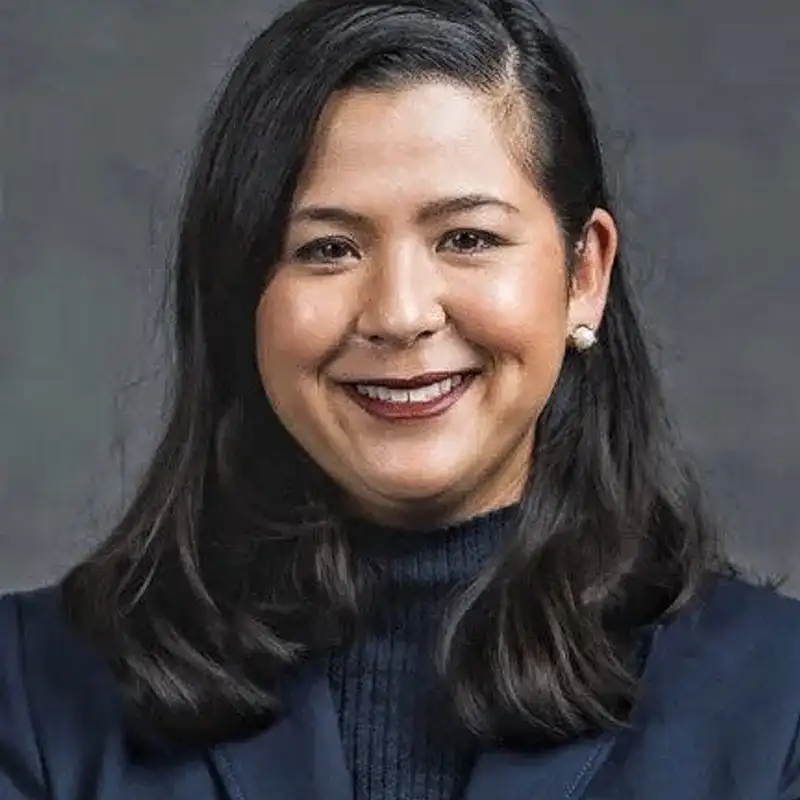
Angie Watson-Hajjem:Today, I will be talking to Malia Vella. Malia was first elected to the city council back in 2016 and served twice as our vice mayor before she was termed out in 2024. And before her tenure at the council, she was very active in the community. She served on the Alameda Historical Advisory Board and the Alameda Family Services Board. She currently sits as a member of the Spectrum Community Services Board.
Angie Watson-Hajjem:Malia is an attorney, educated, a proud mom of two who hopes to become our next mayor come November, and I'll talk to her about her vision for Alameda and, some of the challenges that we face here on our Island City and how she would, address those, challenges. So with that, I would like to say hello and welcome Malia Vella to our podcast. Hi, Malia.
Malia Vella:Good to see you, Angie.
Angie Watson-Hajjem:Oh, great to see you too.
Angie Watson-Hajjem:So you served two terms as a city council member, twice as a vice mayor. What are some of the biggest challenges that you faced in your eight years there on the city council? And what were some of your most rewarding experiences?
Malia Vella:Lots of rewarding experiences. I think when you choose to go into public service and, you know, get the the the privilege of serving the public. There's so many opportunities to improve quality of life for so many people, and I feel like that was really what defined my time on council. And I was proud of the work that we did in eight years for my first vote to make Alameda a sanctuary city, which is the first thing I did when I was actually sworn in, to office, to the protections that we got in place for renters as well as really building a community for all and doing it in a way that was reflected in our budget as well as our priorities from things like building housing to establishing programs for first time homeowners to making sure that we were really looking at holistic services and making sure that we were funding alternatives to policing. So lots of real positives, I think, when I was in office.
Malia Vella:I mean, when I started before I was in office, you know, meetings were running late into the night. Mhmm. There was a lot of dysfunction, really curtailed access to public spaces and public speech, I think, especially for some of our more vulnerable community members, our tenants, many of folks who were facing displacement with large rent increases and things like that, not being able to stay at meetings until 04:00 in the morning. And I think the overall tone and accessibility of council evolved while I was in office, and we did a lot also to make sure that we were trying to meet people where they were at. And I think, you know, overall, that those are the the highlights is inaccessible government that really reflects the values of the community and listens to community members.
Angie Watson-Hajjem:Mhmm. And what were some of the most difficult things that you experienced, would you say, in your eight years there on the city council?
Malia Vella:I always tell people I've never had to make a tough decision because I think that the decisions that I made and the the votes that I took stand in line with my morals and my moral compass and doing what's right for the people that I serve, and I serve all Alamedans. I don't serve a subset. I don't serve, you know, just some populations, really doing things in a way that are gonna benefit everybody and and also trying to direct more services to those with greater needs. So, you know, never tough decisions. Sometimes it's tough taking the stance that is in line with progress and change.
Malia Vella:But when you're in line with justice, it's never a tough decision. It's just, you know, making it through the process in a way that retains your values as well as allows you to continue to serve. So, you know, I think I grew a lot as a council member and learned
Angie Watson-Hajjem:You became a mom while you were a
Malia Vella:Became a mom. First council member to be present pregnant while in office.
Angie Watson-Hajjem:I remember that.
Malia Vella:But, you know, so many things allowed me to grow as a person and and to, I think, try to strive to be better about a process that's more inclusive and widens your view of of kind of how policy can inherently impact people's lives for the better or for the worse.
Angie Watson-Hajjem:So we have to talk about housing because that's always on top list for for many of us. And, you know, Alameda, think we were the first city to get our housing element plan to the state of certification. So that's awesome. So we're doing we're doing pretty good, but we're still lagging. We still have, like, 5,000 or so units that we need to build by 2031.
Angie Watson-Hajjem:How do we fix this? How do we get that housing going? How do get housing going in Alameda?
Malia Vella:Well, it's a number of different factors, but I think, you know, I always say you don't get to choose the world that you live in. And there's so many external factors bearing down on the cost of housing, whether it's building housing and adding units. We have additional factors, like there's the cap at Alameda Point. So when people say, oh, we'll just all put it out at Alameda Point, there's the cap that's in place by the navy. But, yeah, we really do need to work kind of across different sectors within the industry, and there's so many different sectors within the industry and try to add to those numbers.
Malia Vella:We need to get creative as we were with Site A at Alameda Point when we came up against external factors like the rising cost of inflation, when we came up against factors like the the changes with the tariffs and the changes to financing. So the city really needs to work on that. I also think that in order to get development, you need to have a a view and a plan to allow for more you know, to to really say, okay. This is what's gonna happen with everything. So we do need to get the transfers finished.
Malia Vella:I mean, that's something that people don't realize is that out at Alameda Point, we have we still have land transfers to complete with the navy. Right? And some of those parcels are right in the middle of areas that we could be developing. And so that adds a layer of uncertainty, so we need to work to get those transferred. I think we have some other projects that potentially can add more housing, but we need to work with with our our developers and folks to see where we can kind of meet in the middle make sure that we're building housing at all income levels.
Malia Vella:Sometimes it means you redesign what the units look like or the type of housing. But we've done that before. I've been part of those conversations. It's really about establishing a safe place for dialogue and then having that conversation to make sure that the the project goes through.
Angie Watson-Hajjem:Let me ask you. If we don't meet that goal, is there some kind of penalty that we'd be facing?
Malia Vella:There is. There is. Is. And the state has been really stringent in terms of enforcing the RENA goals and making sure that cities are doing their part. Potentially, you lose state fundings.
Malia Vella:There are external pressures. I do think that the state of California needs to continue to partner with us, which they have, and they will continue to do as long as we continue to act in good faith towards moving and meeting those goals.
Angie Watson-Hajjem:Mhmm.
Malia Vella:I think, you know, making sure that we're continuing to work with our representatives in Sacramento, making sure that we're working with our con our congresswoman Latifah Simon. We have so many valuable partners that are able to help us kind of mitigate the different extenuating circumstances that exist.
Angie Watson-Hajjem:Good. So we are living under a really harsh economy. I think everyone feels that. And, you know, people always say that our local businesses are the kind of the engine of our economy. So they're making the businesses, keeping stability in our cities, and our local business owners here are struggling.
Angie Watson-Hajjem:You know? And I'm just wondering what proposals that you would be wanting to bring forward. Maybe you have as a city council member previously to help our local business, men and women not only survive, but really thrive here in Alameda?
Malia Vella:We are fortunate to have our different business associations. Of course, we have the chamber, and then we also have the Downtown Alameda Business Association, West Alameda Business Association. We have a number of different groups that really allow our businesses to come together. I think one thing that was really great was during COVID when I was on council. We worked pretty extensively with our business associations to say, what are the needs?
Malia Vella:How can the city use some of our federal COVID relief dollars to support them? I was a a big supporter of that. Uniquely in Alameda, the city also is is a large commercial property owner as well. So I think we do have incubator space and space like that where we have certainly worked with tenants to make sure that, you know, leases are structured in a way that are gonna allow businesses to get established and and thrive. So I think those are things that that certainly I would continue to utilize.
Malia Vella:I would also say that, you know, we have seen almost like a renaissance, I think, on the West End and and on Webster Street and, you know, would love to kind of take the learnings from where our investments helped and and what they did to help those business businesses thrive and and grow and what we can do on Park Street to do something similar as well as in Harbor Bay with the Harbor Bay Business Park and and the different areas that we have throughout the city. So, you know, I think, really, a lot of it is about communication and not just making assumptions about what businesses need in order to succeed, but really talking to them about what are different anchor ideas in terms of events or things that can draw folks over. You know, restaurant week was something that we got established while I was on council and really promoting that. So there's a lot the city can do to use our resources to leverage them to help our business districts and our small businesses. I also think, you know, we have funds that we put in put in place.
Malia Vella:We have a facade grant and things like that. But if we need to change or augment what we're spending money on, that really needs to come from that sort of local level grassroots input from our business owners about where the dollars are best best utilized to help them.
Angie Watson-Hajjem:Great.
Angie Watson-Hajjem:So I wanna get your take on public banking. Many cities here in California, Oakland, San Francisco, I think Sacramento as well, looking at, creating public banks as a way to, have those banks be owned by us, taxpayers, and that those profits would go to us or communities or schools or housing or giving loans to, you know, business owners and so forth. What is your take on public banking? Is that something that you guys looked at at all when you were on the city council?
Malia Vella:It came up, yes, it came up, for a brief period of time when we were also looking at limiting our who we were investing with and what the what, those investments were backing. So, especially around making sure we weren't investing in things like oil or investing in things that were gonna be counteractive to, you know, supporting environmental justice and and things like that. And we also did a lot of work looking at our city investments relative to our different funds that exist to make sure that they weren't investing in things like weapons or war. You know, I've been a big supporter of public banking. I think it's I think it's something that we certainly should be continuing to look into as a city.
Malia Vella:I don't think we've done a full study on it, but it was something that we were lightly looking at, I believe, in '20 I wanna say 2018, 2019, something like that, especially when we were looking at updating our investment policy. And I think the two things go hand in hand. And it's not just about the money coming back to the taxpayers, but it's also about making sure that you have an ability to loan out funds at a time when interest rates are climbing and skyrocketing to really allow community members who wouldn't have the same banking power to receive the support that they really should be getting.
Angie Watson-Hajjem:So you would be open to taking a serious look at public banking and creating a public bank in Alameda. Okay. Great. Yes. So I wanna talk about police Surveillance because I know this issue on the minds of many Alamedans.
Angie Watson-Hajjem:I know that our police department I didn't know this, but I just found this out that they use drones. We have our license plate readers, and we have our cameras. I know that those tools can be very helpful in stopping crimes from happening or getting you know, kicking people who commit crimes. But I wanna have you talk a little bit about the balance, well, between public safety and also public privacy. You know?
Angie Watson-Hajjem:We wanna we don't want our government city or, you know, otherwise getting too much into our business and being big brother, but we also wanna be safe too in our community. So how do you balance that, you know, those two factors?
Malia Vella:Yeah. I mean, these were issues that came before the council when I was there. I was not a supporter of mass surveillance. I think there always need to be guardrails in place. There's things that I put into a place while I was on council to really put and establish some limitations.
Malia Vella:For example, how long are we keeping the data? Right? So how long when we are recording these things, how long are we keeping them? We don't need to hoard data. Number one, we know that that requires data storage, which requires data centers and a number of different things.
Malia Vella:There's no need to unnecessarily hoard data. Also, putting language into contracts that require oversight of from the city when any sort of data would be turned over to any other governing body. While there may be subpoenas and, you know, requiring subpoenas and things like that rather than just allowing these private companies to turn over our data, to other agencies, within the government. I mean, the constitution still exists, and, we shouldn't just be wholesale turning data over. And when those breaches happen or violations of our contract, there also need to be remedies in place in the contract, not just that we would cancel the contract, but that we can actually go after them for material fines because I think that those things are really important.
Malia Vella:There needs to be not just the guardrails, but penalties in place for people that violate the contract and violate public trust. You know, I'm I'm I I work for a technology company. I think technology can be extremely helpful. We've certain certainly seen that in the medical field that technology that assists trained medical practitioners allows them to make much more you know, the care much more acute and informed based off of the individual patient and where they're at. So I think technology can certainly be helpful.
Malia Vella:It can also be weaponized, and I think it's easily weaponized. And there's so many, nefarious purposes that it can be used for. So I while I think it can be helpful, I'm always interested in what's the ROI. So if we have used ALPRs and other things to help, recover vehicles or things like that, What's their return on investment? If we were able to recover a 100 vehicles, what was the cost of the contract?
Malia Vella:Because if it's costing, you know, 1,000 or 10,000 or 40,000 for each one of those, is it really worth the investment in the technology? And I think we have to look critically at that. We also have to look critically at, you know, how soon after was the was the recording used in order to help get you know, solve the crime or, you know, recover stolen property, things like that. So because then maybe we can augment our policy to say, actually, we want shorter data retention. We don't need to retain it for, you know, ten days or two weeks.
Malia Vella:We can actually or thirty days. We can shorten that time frame because, realistically, the practice is to to actually access the data much more quickly.
Angie Watson-Hajjem:Mhmm. So, I can say this way, we need to have some thoughtful conversations about how we use police surveillance tools and so forth and making sure that Yes.
Malia Vella:It can't just be a a blanket blanket use. And we also really need to look back every single year, and that was something that we put in place was that we wanted transparency and reporting back to the public in terms of how it was used. Right? Those disclosures need to exist, and then we need to be reflective about whether or not we need to change the policy or update it. .
Angie Watson-Hajjem:Let's talk about our federal government. So we know that ICE is around here locally in Alameda. We know that they've been here. And I just want you to give us your take on what the city council's role can be, should be in helping to protect our vulnerable neighbors. You know, I know there are parents here in Alameda that are afraid to go to to their PTA meetings anymore.
Angie Watson-Hajjem:They're afraid to take their kids to school because they're afraid to be just, you know, round up and shipped off and never seen again. People are really fearful. You know? And so I don't know how much the city can do, but I would love for you to just give your thoughts on what might be able to be put in place to help people feel safe here, you know, in in their communities.
Malia Vella:There's there's what's constitutionally and legally permissible, and then there's the fear factor. And we can't discount just the fear mongering that's been used to to really harm our our fellow community members. When I was a deputy superintendent at the California Department of Education, we saw school attendance being impacted by these policies that were being put out, policies that were not constitutional, that are not, you know, permissible under law, but were were being used as a fear fearmongering tactic in order to drive out members of, you know, our our immigrant communities. You know, my family came to this country through my grandfather's military service. And if you know anything about history, you know that Filipino Americans well, Filipinos were recruited into the US military and served, and that that wasn't necessarily didn't guarantee them a pathway to citizenship.
Malia Vella:It took many years and many fights to allow for Filipino service members to establish citizenship for a country that they fought for and served and for their family members to establish citizenship. So it's not something that I take lightly. I think we have so many community members and so many children who are trying to do everything right and then are put in this really impossible place. And it's really unfortunate, and it hurts us as a community. So, you know, I was proud, as I mentioned earlier, to have my first vote on council be to make Alameda a sanctuary city.
Malia Vella:You know? I I think there's so much we can do. Things that I supported was know your rights clinics, things like that, rapid response, regional programs, and making sure the city is also participating and funding those services. We need to allow for people to actually access advocates who can work for them. You know, I I think it's just a terrible thing when families and children don't feel safe going to school.
Malia Vella:That's the safe you should you should always feel safe. Schools should always be a safe haven. The fact that the that schools have been targeted, we saw that happen in LAUSD in particular and and other schools in Oxnard, just goes to show, you know, that we need to do more. So at the local level, you know, I've supported an a supervisor, Nikki Fortunato Bass' work at the county level to get services in place and a rapid response network and things like that. I would continue to do that.
Malia Vella:I also think that we really need to think as a city about what we would turn over or wouldn't turn over, and I think we need to to fight and not just accept that people are demanding things from the federal government. I understand that there's requirements. That doesn't mean that we take a passive stance. I think it's really about whether or not you fight. And I one of the, you know, existing case laws in place came from a a Bay Area community member when we think about the internment of Japanese Americans.
Malia Vella:My my family was also interned. My Japanese relatives were interned during World War two. And the that case still stands as as law, but it doesn't mean like, if if Fred Korematsu had not fought, right, on on the principle of the matter, whether you win or you you lose, that's not the point. The point is is that you need to to fight against opression.
Angie Watson-Hajjem:Yeah. I also think it's important for each of us to make sure that we let our our immigrant neighbors and friends know that we are here, that we support you, that you belong here. I think it goes a long way.
Malia Vella:You know? And we also need to make sure that we're not tracking data unnecessarily, and this goes back to it. Right? Like, whether it's our our food bank or other services that are funded by the city, I think where there's gaps in those essential services, the city does need to take a look and figure out, okay. How do we support and how can we support our agencies that are providing these necessary services where there might be a gap and do it in a way where we're not collecting, you know, information around people's status.
Angie Watson-Hajjem:Right. Right. We have to talk about climate change. We are an island. We are surrounded by water.
Angie Watson-Hajjem:And, you know, I was reading that Alameda is actually quite advanced, compared to a lot of cities regarding climate change, planning, and, action. And I applaud you because you were city council when a lot of these things were implemented, but more could be done. So I'd love to hear, how you would like to steer our city toward, you know, coming up with more strategies to combat the devastation that climate change, you know, has on our communities.
Malia Vella:Yeah. I mean, as a council member, I was fully supportive of AMP moving to a 100 green Yeah. That's clean energy. And, you know, we need to do more of that. Of of course, there's a number of places where we can make decisions and investments that are really gonna change things.
Malia Vella:I mean, when we think about housing and moving over to appliances that are gonna be, you know, lower lower energy, things like that. So there's little things we can do. We've also done it in terms of supporting our solid waste and recycling contractors and and making moves over so that we can comply with the best not just the the lowest standard of regulation around, you know, organics and recycling. You know, plans are great. I'm I was happy to support and be a part of our climate action plans.
Malia Vella:Plans are just that. They do not, in and of themselves, affect change. It's about implementing the plan. So we also have a number of infrastructure needs, and aging and declining infrastructure is a huge place for us to make upgrades that are really gonna enhance quality of life, but also address climate change. So, you know, I'm gonna be supporting our infrastructure bond.
Malia Vella:I hope that it it gets put on the ballot. I hope that it includes a number of different climate mitigation strategies, including the materials that we're using in our roadway, the type of infrastructure that we're putting in, and and then also really focusing on re upping our commitment to addressing climate change and our climate action goals because those plans do need to be updated fairly regularly. And and then we also need to do a look back of how are we doing in terms of meeting those goals.
Angie Watson-Hajjem:Yeah.
Angie Watson-Hajjem:And as someone who loves to ride her bike around the island, I wanna see more bike lanes. I know we have a lot more. It's great. Wanna see more more more. And so because I see Mayor Ashcroft, you know, on her bike around the island.
Angie Watson-Hajjem:I go, good for the mayor. Yeah. So more more bike lanes, and that's gonna help
Malia Vella:us a lot. Well, we you know, when we when I start started on council, we had one of the worst ratings in terms of bike and pedestrian safety, and we've moved to the gold status, especially for cycling. And, you know, I'm a mom, and my kids bike to school. And they bike to school to and from school every single day.
Angie Watson-Hajjem:Wow.
Malia Vella:Rain or shine. And it's not something I take for granted, and we need to make sure that we're continuing to do that in a way that's gonna allow all ages to really have true protected multimodal transit.
Angie Watson-Hajjem:Yeah. I totally agree with that. So back in 2018, Jean Sweeney Park was was created, and we were promised a community garden, and that has not happened. So many people wanted me to ask you about this. I mean, a lot of vocal support for community garden, been a lot of barriers.
Angie Watson-Hajjem:And so what's happening with that? What happened when you were there in city council?
Malia Vella:Yeah. What what do you wanna do? In 2020 and 2021, these came the the community garden came actually before the council, and I was supportive of it. I I do think, you know, the pool project project has gone way, way, way over budget. I think there's a a new request for an additional $5,000,000.
Malia Vella:I think we right. And so I think we need to to think long and hard about these these these costs that continue to grow. The community garden, we we did a number of different outreach to kind of say, okay. What's the purpose? What do we wanna see in this community garden?
Malia Vella:Do we wanna give priority to folks who are gonna grow produce, let's say, for the food bank? You know, what what do we wanna do? You know, I continue to support it. My position on having the community garden has not changed. I do think that we're hopefully, we'll see the infrastructure bond passed that will kind of alleviate some some funds.
Malia Vella:I think, that we can then shift over to to prioritize the community garden. And I know part of it was also staggering it with the the completion of the pool. You know, I I was not not I I supported the pool in concept, but I also think that sometimes we have to think about, like, what are the things that we aren't getting if we put in a pool of a certain size or or a complex and things like that. And and the open space is really meant to be that, an open space, which includes spaces for gardens and things. So Right.
Malia Vella:I think we need to stick to to what the intent was.
Angie Watson-Hajjem:Yeah. I really hope so. So this bond that you're talking about, we'll be voting on this bond this November, this infrastructure
Malia Vella:Hopefully. Hopefully. I think that the council's doing a lot of work currently, mayor Ashcroft. And I think, you know, the council are are are contemplating putting the measure on. It's long overdue.
Malia Vella:We have a lot of aging infrastructure.
Angie Watson-Hajjem:Mhmm.
Malia Vella:And, you know, I mean, the other you were asking about climate change and what we're doing for that. I mean, ten years ago for ten years, we've been talking about adding another West End crossing, really a bike ped focused crossing on the West End. But, you know, if we want that sort of regional and state and federal investment, right, which we're gonna need to add another crossing for bikes and pedestrians and potentially also emergency vehicles, then we also need to invest our dollars locally in other aging infrastructure because this is part of a wider network. Right? So to your point, if this bond measure hopefully, it will will get put on the ballot for November, and we can all, you know, chime in about what we between now and then about what we wanna see included.
Malia Vella:But as we think about redoing our roads and up upgrading our roads and upgrading our undergrounding and our infrastructure, right, we have an opportunity to add to our bike network and things like that. And as we think about connectivity throughout the island and the region, right, these things are gonna put into play into larger projects like an additional crossing, which is gonna be really important, right, with the Oakland Alameda access project underway and things like that.
Angie Watson-Hajjem:Right. Right. Right. Malia, I would love for you to just take a few moments and just speak directly to our our audience. And and and tell me why you're running for mayor, what your vision is for this city, and and why they should support you.
Malia Vella:You know, I think there was a lot of progress made when I was on council, and there's a lot of things you mentioned, Angie, the bike lanes and having more protected bike lanes and having, you know, housing for for all income levels. And, yeah, we're a city where 55 of our population are renters. And ten years ago, when I first ran for office, we did not have protections for 55%. For the majority of the folks in Alameda, we did not have protections to prevent displacement, to prevent folks getting priced out of the market with egregious rent increases. I'm the only candidate that is running that has stood by, those protections and not tried to erode them over time.
Malia Vella:I'm also the only candidate who has really supported every single housing project that's come forward before the council and done it in a way that's really looking at first time homeowner opportunities, making sure that we're serving our community, alternatives to policing. In my experience, when we take things for granted and we say, oh, this is the Alameda of today, like, that wasn't the Alameda ten years ago. And so that's why I'm running. I think we were able to accomplish so much in a way that balanced the budget. We didn't ever have a structural deficit.
Malia Vella:We, in fact, put money aside for rainy days, but we were able to invest in the community and invest in community projects that were informed by the community. And I take that role very seriously, and I want to have an Alameda that's inclusive, and welcoming for all. It's more than just a slogan. It's what we have to do, every day in terms of the investments that we make as the council. I've also served on a council that has been divided over time, and I learned a lot about how to build coalitions and get things passed even with a divided council where rhetoric could be very divisive and antagonistic.
Malia Vella:How do we get back to doing the people's work? And the way that we do that is we meet people where they're at. We go out. We engage, and we engage in productive conversation about how we make Alameda better for everyone. And so that's why I'm running.
Malia Vella:I wanna continue with that vision. I wanna continue, with building an Alameda that's inclusive and welcoming and supportive of all of our different community members, and that is gonna really meet the needs of the changing needs that we're seeing while keeping up with all of the quality services that we know and love and that make Alameda so great. That includes our parks. That includes making sure that police and we you know, that we have our emergency services in place. We have alternatives to policing that are really gonna make a difference and support people, and that we're really working together in coalition with our school board, with our regional partners, and everybody else to make sure that we're we're utilizing things and maximizing, our resources for our shared constituents.
Angie Watson-Hajjem:Thank you, Malia. Thank you for that, and, thank you for being on our podcast. We really enjoy talking to you.
Malia Vella:Thanks, Angie.
Angie Watson-Hajjem:And thank you for joining us here at the Island City Beat Podcast. I hope you enjoyed this interview. Hope you come back and listen again to a podcast coming your way very soon. Until then, I am your host, Angie Watson Hajjem
Angie Watson-Hajjem:Take care, everyone. Goodbye.