Hello, Alameda. Welcome to the Island City Beat Podcast. I'm your host, Angie Watson-Hajjem. On today's show, we'll be talking about India's caste system. Although this system of discrimination, which places people on a social hierarchy based on their birth, was banned in India in 1950 after it gained its independence from British rule, this ancient practice continues to impact the lives of people living not only in India, but Indian Americans living right here in the Bay Area.
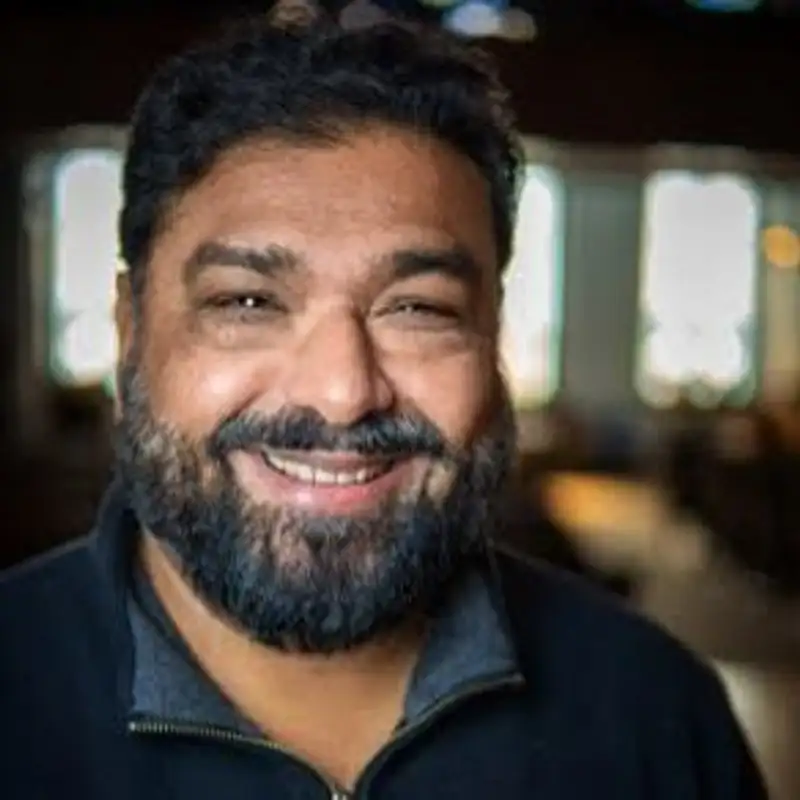
Angie Watson-Hajjem:We'll learn about the history, the origins of the caste system, why it was created, how it shows up in the modern world, and efforts to eradicate it. Joining me in this discussion is my guest, Reverend Neal Christie. Reverend Christie has a rich and varied career as a writer, religious, and social political activist. He is the founder of Faith Beyond Religious Nationalism. He has attended Yale University Divinity, Princeton Theological Seminary, and is a huge, huge advocate for building bridges through interfaith unity and understanding.
Angie Watson-Hajjem:So with that, let me say hello to my guest, Reverend Neal Christie. Hi, Reverend Christie. Welcome to the Island City Beat Podcast.
Neal Christie:You are so great. I am so glad this worked out. Welcome back.
Angie Watson-Hajjem:Oh, thank you. Yes, I had a great time in Europe, and now I'm back to work. So I'm so happy that we're having this conversation.
Angie Watson-Hajjem:We've been trying to make this interview happen for a while. So I think most people have some familiarity with the caste system of India. We've heard about it either in school or through books, movies. But many of us don't have a full picture of what it is. I would love for you to start off the conversation with giving us a history lesson, background of the origins of the caste system, why it was created, and how it's being used for generations to divide the Indian population.
Neal Christie:I'm grateful. I'm grateful for having this kind of a conversation because this is something that's impacting, I would say, our whole society. I think in the Bay Area, in particular, with the shifting of demographics. And let's go... Let's just name what this is.
Neal Christie:Right? And and we tend to be really familiar with how race... What race is. Many of us can... Are pretty comfortable talking about racism and what it means to be even an anti racist and whether it's in attitude or public policy.
Neal Christie:But casteism is something totally, it's like it feels so foreign to us that it's out there. It's not here. But it is here. And the way that I understand it is I begin with the family and the family you're born into. The social system that you're born into, your family connections, all of that kind of signals cast.
Neal Christie:In The United States, we have, you know, forms of racism that that all the way through Jim Crow, anti blackness has persisted. It's about forms of exclusion. It's about racial classification. When it comes to cast, it's about ancestry. It can be about appearance, but it's really about kind of a discrimination that occurs first within the South Asian network and then expands beyond that into other relationships.
Neal Christie:So it's just, if not limited to just South Asians and how they relate to one another. And so when I'm talking about caste, I'm talking about what's inherited by birth. It has deep roots in South Asia. The word Varna, which actually means darkness or had to do with colorism to begin with. A lot of people that talk about caste don't don't talk about that.
Neal Christie:They don't even touch that part. That it actually had to do with people who are darker skinned, right? So it's a pigmentocracy in South Asia, but it had to do with who was sort of the lower level and codified into some, not all, of Hindu texts. It has to do with who you're allowed to marry, what occupations you're allowed to have, the religion that you have. And colonial conquest and sort of segregation of religious groups and divide and conquer mentality took advantage of caste.
Neal Christie:And so the British Empire was very smart. They knew how to pit one caste against another, had access to the upper caste and to educate them further and to maintain the social system, this classification system that would almost in a kind of mirror sort of the circle hierarchy of aristocracy of the British Empire. So it was to their benefit to maintain it and not to challenge it. The difference is that it appears in religious texts, so it becomes sacralized and it's not just a social phenomenon. And that's where we have religious nationalism.
Neal Christie:So castism is not just a social phenomenon, but it's something that's been blessed by religion or an interpretation of religion. And that's why it becomes really, really problematic to deconstruct and even to name.
Angie Watson-Hajjem:So Neal, let me ask you, so you're saying in your Hindu holy books, divine books, religious texts, Castes is actually implemented in those scriptures? That's something that
Neal Christie:Some of them they are, yeah.
Angie Watson-Hajjem:Adhere to?
Angie Watson-Hajjem:Wow.
Neal Christie:The tragedy for me, and this... I think this is someone who's a Christian, is it's not limited now to certain Hindu texts because casteism has been practiced by Christians. It has been practiced by Muslims, and this is tragic. This is really tragic. But Christianity is supposed to be a religion of liberation for all.
Neal Christie:Just like Buddhism is supposed to be about liberation, Islam is supposed to be about equality and dignity. But we've adopted it within our own religious traditions to certain degrees. And I think I've talked to a priest actually in India who was traveling in the Bay Area and then New York and here in DC. He was telling me about a church where if you're upper caste, you sit on chairs. If you're lower caste, you sit on the ground.
Neal Christie:It sits in the same church. And if you challenge that, as a minister or a priest, you get picked on by the bishop. I mean, you you get... The people do not like it because you're you're you're you're messing with the whole system.
Angie Watson-Hajjem:Mhmm.
Neal Christie:And people expect it to be this way. So it's it's very disconcerting for me when I hear that. I think about my own family that left a version of Hinduism because they were lower caste, and they found liberation in Christianity. So when I see that there's a resurgence of casteism right now in India and now in The United States, now imported because of the diaspora of Indian immigrants here, this is really problematic. This is seriously problematic cause this isn't who we are.
Neal Christie:And Hindus will say, progressive Hindus will say, of course, this is not who we are and I'm with them. These are my siblings. We agree. They want to distance themselves. They want to unpack the harm that's been done by casteism.
Neal Christie:Just like as a Christian, any misogyny or racism that's been done in the name of Christianity, I want to unpack because it is not really Christianity. That is an abomination of Christianity. It's an aberration. I'd say that casteism is the same thing when it comes to Hinduism.
Angie Watson-Hajjem:So tell me, Neal, if you're in India and let's say the environment is where many people are adhering to the caste system, How would you even know a person's like their hierarchy? Is it through how they look, their last name, or where they live, their occupation? How can you tell what cast I'm part of? How would they know?
Neal Christie:Yeah,
Neal Christie:So think about the ordinary decisions that make up your life. Who does your family expect you to marry? Because people get married in India. Where arranged marriages are still quite common. Who do you share a meal with?
Neal Christie:What work are people expected to do? Who gets to lead? Cast shapes every answer to these kinds of questions I'm raising. And so changing your religion does not automatically change how your neighbors and your family will see you. So there was a Pew survey actually done across religious communities in India and their debt talked about caste.
Neal Christie:And what they found is they asked Indian Christian adults about their experience and eleven percent said they had faced caste discrimination within the previous year, which is quite high for religion that's supposed to be anti caste. And that that as a Christian that makes me ask the question again is who gets to lead in our churches in Hinduism who gets to lead in Hinduism and it tends to be because of the caste system, it's those when it's enforced, it's those who are in the leadership, who's been given privileges, who's recognized, who's fully human. I mean, the story of caste for me is you have people who are the so called untouchables, right? You don't... But they're not just untouchable, they're unseeable.
Neal Christie:If you look at them, somehow you're polluted. Somehow your eyes are polluted and you need to make up for that. You cannot use the same towel that someone of the lower caste has used. You certainly can't eat from the same table and the food that's been touched by them is somehow is impure and somehow I will be impure. That's how deep cast runs.
Neal Christie:And so when I think about racism, and ethnocentrism, it's a sibling to casteism. But for me, casteism I want to go even deeper. It goes... It's it's even harder to disentangle because you can't even be in the same space without being polluted, honestly. And that is really problematic, that you're erased.
Neal Christie:You're not even seen. So I don't have to deal with you as a problem. I don't have to deal with you, period, because I will erase you.
Angie Watson-Hajjem:You're just invisible.
Neal Christie:You are so separate from us
Angie Watson-Hajjem:So how would people know that? Let's say I'm just going to a random social event. How would people know that, oh, this person, Angie, she's in the lower caste? How do people just know that? Or do they?
Angie Watson-Hajjem:Or do they poke around asking questions?
Neal Christie:They poke around asking
Neal Christie:questions. They see it by your surname. If you change your surname, they still know what town you came from in India. They find out. People find out.
Neal Christie:And it's interesting since the 1960s, the immigration movement to this country, you see who came. In the early 1960s, it was a mix. You had Muslims, Sikhs, Hindus, Christians, a real mix from different parts of India tended to be up educated. It's been the formally educated but since the 1990s, you see a whole other group of people, highly skilled people and those highly skilled people are bringing other highly skilled people and they tend to be people of what a higher caste. It is not common to see lower caste people immigrating to The United States.
Neal Christie:Certainly not at the level that the upper caste people are and we don't even talk about that. And we don't talk about the fact that those upper caste people are now raising money through temples and through associations to support paramilitary groups that are oppressing castes in India and that are promoting Hindu nationalism in India. We don't even talk about that. So it is... It's a growing problem.
Neal Christie:It's a problem here because it was imported here and it's a problem there because we we are maintaining it here to maintain a system back there, if that makes sense at all.
Angie Watson-Hajjem:Yeah. Well, sure. It does, actually.
Neal Christie:How do you know what you learned from... But you learned it from from the person, by learning more about the person's background.
Angie Watson-Hajjem:Yeah. Was just curious about your history, because you were saying your family originates from India. You're an Indian man. You are Christian. But you were saying that because your family, you were part of the lower caste, you left the Hindu religion and became Christian to try to erase that horrible legacy.
Angie Watson-Hajjem:If you were to go back to India and, say, live with your family, would you still be, in the eyes of the people there, part of the lower caste, even though you're not even Hindu anymore. I mean, that's not even even your religion. Is that still following you? Is that following you?
Neal Christie:No. I mean, that's a good question. So our names changed. So there's a reason why a lot of Christians change their name to a Christian name so that they can they can get out of that system.
Neal Christie:If they maintained a Hindu name, they would be identified by the caste that they were in. And so let... My last name is Christie. I have friends who are named Christian, Then South India Christians take the names of the apostles. So Thomas or Abraham.
Neal Christie:I mean, so you've got surnames that no longer reflect your history. I mean, this is the tragedy is you kind of have to give up your ethnic history and your ancestry, don't you? If you're going to escape the system because the name is attached to the system.
Angie Watson-Hajjem:Yeah.
Neal Christie:There's such power in names that... Such power in names and they define us or they can liberate us. And in this case, they're defining and used to oppress other people. So, yeah.
Neal Christie:So that's how, I mean, for my family, we don't end. I still remember when my mother in the 1960s, when they immigrated, there was an article in the New York Times with a family that had some inheritance money. I don't know how much, not a lot. But my mother said, we left that family. We're not going to claim that money.
Neal Christie:It's not ours. We left it. And there's a reason for that. They said no to it. And it wasn't just because they found a different faith.
Neal Christie:They had a different self understanding, social self understanding that they were not going to be part of that system anymore. They rejected that system. And friends of mine who are Sikh or Muslim, they get it because they're like, this isn't who we are. I mean, this faith tradition gives us an alternative. And Hindu, progressive Hindus, I think that I deeply, deeply respect like Hindus for human rights critique casteism within their own tradition, which is really hard to do.
Neal Christie:And they come under attack. Just like when I critique Christian nationalism as a Christian, I come under attack by Christian nationalists because they see me as a threat to them. But yeah.
Angie Watson-Hajjem:Yeah. Let's talk a little bit about Hindu nationalism, because there certainly seems to be a rise of that. And I'm just curious if maybe you could talk a little bit about the intersection between the caste system and Hindu nationalism. What I understand is that Modi, who is the president of India, actually has come out against the caste system and wants to do away with it as a way of bringing all the Hindus together. Tell us a little bit about that.
Angie Watson-Hajjem:How does that all work out?
Neal Christie:So when we look at the history of India, we have uh it's important to go back to what was what was there. In the Indian constitution, which is the longest constitution in the world, caste is named frequently. Protection of certain groups caste. But it's never been eradicated. It never says in the Indian constitution there shall be no caste.
Neal Christie:Mhmm. They say there shall be protection for castes here. We shall include castes here. Different people lower castes here, but it maintains class caste. Isn't that interesting?
Angie Watson-Hajjem:It is.
Neal Christie:It is like instead of naming the... Correcting the problem, they named the problem and make accommodations for it. That doesn't make sense. And you do that for a billion plus people who are not all gonna stay in India.
Neal Christie:They're gonna they're gonna... There's gonna be diaspora. They're all over the world now. So there's a problem. With Modi and Hindu nationalism, Hindu nationalism is implicitly casteist.
Neal Christie:It is it is... I I... You cannot remove casteism from Hindu nationalism. Hindu nationalism is all about India is a Hindu state. Arashtra is intended, not just India, but to expand through the subcontinent to other countries around India.
Neal Christie:That's their vision. And to do it as a Hindus for Hindus only. And so if you don't fit that, you either convert, you leave, and if you stay, you have less legal protections. So this is problematic. And we have had instances more recently where the head of the RSS, the world's largest paramilitary in India, has come and has planned a trip to California, was in Toronto, was in New York City, courting religious leaders saying, I want to bring people together.
Neal Christie:We are about unity. Well, it's really a lie. It's not about unity. It's about uniformity. They can't get away from the fact that they are...
Neal Christie:These are paramilitary organizations that are coming to speak for the Indian government and the Indian people, and that they're representing a version, an untrue version of what's happening in India. When we have religious minorities and indigenous peoples being persecuted, bulldozed, classes of worship, schools, curricula that you know, where Hindu certain Hindu interpretations of the their scripture are introduced and required. If you're not a Hindu, attacks on Muslims, lynching of Muslims, which is quite regular, laws, anti conversion laws that have been passed. There's something that happened to the Supreme Court that I love to refer to because people are shocked by it. Is the only country in the world which...
Neal Christie:Where a god, and it's a Hindu god in this case, has all the rights of a human being is in India. And it's Lord Ram, and it's a very masculine version of a god in the Hindu pantheon who really is revered by the upper caste. It's not the lower caste. These are the upper caste that want this masculine god. And it's all the rights.
Neal Christie:The supreme court says all the rights of you and me, of a human being. You... So that god can own property. If you say something against that god, you can be held criminally liable, civilly liable. You can be sued.
Neal Christie:This is problematic. That is religious nationalism at its best. When the judiciary takes it over, legislature takes it over, makes it illegal to convert, throws out organizations like Amnesty International that's watching over religious freedom and other civil rights, claims that we're being persecuted when in fact we're the persecutors. That's what's happening. And the problem here is that Hindu nationalist ideology is embraced by upper caste
Angie Watson-Hajjem:Mhmm.
Neal Christie:And it's imported to The United States. It's imported to places like the Bay Area. And then what does that look like in practice? People who are denied jobs because they're caste, in universities where they have to pass caste protection legislation because students are being persecuted by other students and even by faculty who may be of an upper caste. I think about your area in terms of housing, Prem Pariyar, worker housing, a Nepali Dalit lower caste who earned a social work degree in California told ABC News that he was denied access to housing used by restaurant coworkers because of his caste, it was lower caste in San Francisco.
Neal Christie:The International Commission for Dalit Rights has also documented a number of people who've been denied housing because of their lower caste. Graduate student housing, Rutgers University has seen graduate students in the California system where there's caste exclusion. Dietary rules have been used to shut out people based on caste. So there are instances that are happening more than there were at one point.
Angie Watson-Hajjem:Yeah, live and well here in the Bay Area. Know there was also a few years ago an engineer. He sued his company Cisco, actually. He was a lower cast at Delete. And he filed a lawsuit because he was not promoted.
Angie Watson-Hajjem:He was harassed because of his cast. So that's the case that came out of California. And like you were saying, I've been hearing about other stories of people losing housing and students not wanting to have a roommate of a lower caste. I was just like, oh, it was wild. And I was hearing this happening right here in schools that you see
Neal Christie:I mean, you don't wanna have someone of a lower caste as a house... As a neighbor.
Angie Watson-Hajjem:It... That's just
Neal Christie:I mean, if it's not... And not just like a rental, but then property ownership.
Angie Watson-Hajjem:Mhmm.
Neal Christie:So what does that do in terms of wealth? The possibility to build wealth.
Neal Christie:What does it mean about job security? What does it do to income? I mean, it becomes embedded, doesn't it? I had one person in the church in Alameda and I was doing a training on, it was a conversation on Zionism, Christian Zionism and Hindu nationalism and seeing how they were the parallels. And one participant who's from South Asia, toward the end, she just stood up very quietly and said, my husband was fired from his job in a tech company.
Neal Christie:He was also demoted from another company because we're lower caste. And we knew these were South Asians, and we knew we were being penalized. And it prevented my family from having the job security as immigrants we needed, and it impacted my children. And this whole congregation looked at her. They had no idea if she'd ever spoken of it.
Neal Christie:And this is a Japanese American congregation that have loved her and embraced her. She felt safe enough to share that with them. And I think that's not just a story in isolation. That's happening in more places, but not everyone's telling that story. Yeah.
Neal Christie:You know what I'm saying? Yeah. And she took courage for her to share that.
Angie Watson-Hajjem:Yeah. It Did.
Neal Christie:She took a lot of courage.
Angie Watson-Hajjem:Yeah. It's just shocking to me just hearing this happening, yeah, right here in our Bay Area. This
Angie Watson-Hajjem:kind
Neal Christie:Yeah. Of in the Bay Area, Seattle, West Coast, Atlanta, New York and New Jersey, Texas, Houston, Dallas, it's a big issue. These are the centers where Hindu nationalism continues to grow and it has more legislative power. And I think in your state with SB four zero three, which explicitly included caste under ancestry to protect people And your governor, governor Gavin Newsom
Angie Watson-Hajjem:He vetoed it. Yes.
Neal Christie:And existing protections already covered caste discrimination. But a Rutgers report was filed right after that, Rutgers University. And again, it found caste in Fresno. Fresno, adopted a anti caste discrimination piece of legislation. And again, Newsom was opposed to that.
Neal Christie:I mean, he seems to be opposed to it every part of the state, not just for the state, even when local governments wanna put it into place. Why why is it not good for California, but it's good for Seattle? Seattle passed a city code protecting people of lower caste, especially workers and students who are really vulnerable. How come California... It's not good for California, but it's good for Seattle?
Angie Watson-Hajjem:Well, Neal, some people have said they think that this was all political on the part of Gavin Newsom. He definitely has his eyes on running for president, and he didn't want to outrage and anger some of the tech companies, owners, and big pocket people in Silicon Valley. So I so I don't know. I don't know what's in his head, but some people think it was just really a political veto and not anything that he really believed in so much. But he was just trying to make it easier a path for him if he does choose to become a nominee for president.
Angie Watson-Hajjem:So I don't know.
Neal Christie:It's really problematic because it shows the power of Hindu coalitions, Hindu nationalist coalitions to sway legislators. Think, Yeah. But it's not just in California. There was a bill in Atlanta, in Georgia that was, that they were, that an Hindu, sort of anti Hindutva or Hindu phobia bill, excuse me, saying that if you spoke up about against Hinduism, that it would be illegal. But that would then include speaking out about against India and Indian policy.
Neal Christie:So if you're a professor teaching somewhere in Georgia and you talk about India critically and its foreign policy, its discrimination, its civil rights abuses, you could be prosecuted. Someone could come and sue you. And so that's been popping up in places in Texas, New Jersey, Georgia. I'm afraid it's going to happen in California. The anti Hindu phobia kind of legislation.
Neal Christie:And it's problematic. It's seriously problematic because it's couched to protect Hindu nationalism. That if you speak out against Hinduism and Hindu nationalism, then you're anti Hindu. That is... And that's that's that's wrong.
Neal Christie:That's not... It's it's like saying that if we speak out about Christianity, we're anti Christian. And there are some people that will say that. We have an anti Christian, Christian bias task force that president Trump started two years ago, which doesn't need to exist. But it it creates a whole paradigm where it's like we are under attack.
Neal Christie:Religious nationalists want to see themselves as under attack. That gives them the freedom then to say, we will be aggressive in promoting our exclusion. And religious freedom is now defined as exclusionary. Casteism is about religious freedom. It's not about religious freedom, it's about practice, cultural and religious oppression.
Neal Christie:And if it's not checked by legislation, you have massive discrimination on your hands. It's like, it's legislating racism. I mean, it's problematic.
Angie Watson-Hajjem:Definitely it is. So what are some efforts that you see happening in your interfaith communities in trying to bring awareness to this and eradicating this horrible
Neal Christie:So caste the United Methodist Church in 2024, we're an international church. We have churches in Africa, Asia, The United States, Philippines, Europe. We passed, of any church, a resolution that condemns casteism and condemns Hindu nationalism in India, but also casteism in all its forms. Any use of religion... Hindu nationalism to legitimate casteism, whether it's in The United States, in the Bay Area, or if it's in India.
Neal Christie:So I'm very proud of the United Methodist Church for doing that. We also have a letter that was signed by Christian leaders, Catholic, Protestants, theologically diverse, where we had 150 signatures, all that signed it, that agreed with that resolution. I'm also proud that the United Church of Christ in 2025 passed a similar resolution condemning Hindu nationalism but condemning casteism. It's implicit, it's even stronger by the United Church of Christ, so I'm grateful for them. World Council of Churches, which represents Protestant churches all over the world, they have something called the Bangkok Declaration, which confronts casteism within churches and says we must confront our own practice and support Dalit or lower caste oppressed peoples movements.
Neal Christie:And the National Council of Churches in India issued a statement saying no one can serve Christ and caste, calling caste discrimination a sin and in fact a crime. And the Catholic bishops adopted a Dalit empowerment policy way back in 2016. I actually met with their staff, a priest here in DC as he was itinerating. Then he went to the Bay Area where he is the one who told me what it's like in practice and wanted to hear how we can work together. So we've seen churches that have spoken up about casteism.
Neal Christie:Also, there's something called the Indian Institute of Dalit Studies, which I encourage people to check out. And Muslim organizers such as Ali Anwar, an organization I have a lot of respect for called Justice for All. My friend Safik Katavik, who's a Muslim Imam I grew up with, he's a Muslim Imam, I'm a Methodist minister now, And they condemn casteism as a Muslim organization. They're working on this. And Care California is a great resource as well.
Neal Christie:Hindus for Human Rights, I encourage my own organization, Faith Beyond Religious Nationalism, we can work on it. But this is, again, looking for the story, right? Looking for who's being impacted and whether it's in a work setting, in a school setting. I talk to students where they're dealing with this and they're looking for allies with their professors. It's ubiquitous, but it's still very quiet
Neal Christie:because it's not as obvious.
Neal Christie:And like I said, it's based on the name, based on hereditary, what your heritage is, based within the religion people know. But if you're not a Hindu, you got to figure it out. It's not as obvious. So I'm not a Hindu, so I've got to ask a lot of questions. I've to ask more questions.
Neal Christie:Once I figure it out, I know how people are being treated because it's pure discrimination. Our churches have spoken out.
Angie Watson-Hajjem:That's good to know. United Nations
Neal Christie:has spoken out. Rutgers University does some of the best research on this.
Angie Watson-Hajjem:It's good to know that there's a movement of people in this world that are saying this is wrong, and we got to get this, eliminate this, eradicate this. Because I tell you, it wasn't until just a few years ago that I even knew the caste system was even part of our fabric here in The US and certainly in California and the Bay Area. So this really brought a lot of awareness to me. I've learned a lot.
Neal Christie:For you, what was it that brought your attention? Is it because you heard in the headlines?
Angie Watson-Hajjem:Yeah, was Ayesha Wahhab. Ayesha Ayesha Wahab, she was our state senator. She was the one that brought that SB four zero three legislation in trying to have caste discrimination to be illegal under our California civil law. And it passed. It passed the state Senate.
Angie Watson-Hajjem:It passed the assembly. And then, of course, we know that Governor Newsome vetoed it so it was the first time that I had really heard about the caste system being even an issue in The Bay Area. It was Her who brought that to the attention of many of us. That was, what, in 2022? It's a few years ago.
Angie Watson-Hajjem:So that's how I got hooked into it and wanted to know more about the caste system here in the Bay Area, how it plays out here.
Neal Christie:I mean, give one thing that's important I think for me to share is 70% of Christians in India come from lower castes. There's a reason for that. There's a reason
Angie Watson-Hajjem:for that. They want escape.
Neal Christie:I mean, you've got a way out. You're gonna be treated like a human being. Meaning you're gonna get access to education, health care. Right? You can eat at the same table.
Neal Christie:We can... You're not you're you're not gonna physically harm me. You know, this is someplace safe for me. This is a... You know, no wonder people...
Neal Christie:And yet that's a threat to the... To any Hindu nationalist because the perception is, well, you're a colonial project. It's not a colonial project. If it's a liberation movement or liberation message, that's what it is, whatever the religion is. And if it's Buddhism, Hinduism, Islam, Christianity, indigenous traditions, if that's what it's doing, it's affirming human dignity.
Neal Christie:That's what we wanna go toward, right? And affirming human rights. But it's like the... I think that that that that... Because The United States has sort of not seen the the the influx of South Asian immigrants until really felt it, honestly.
Neal Christie:Sixties is when when the laws changed. Remember the immigration laws changed on the shoulders of the civil rights movement.
Angie Watson-Hajjem:Mhmm.
Neal Christie:Because of the wins for African Americans. Right?
Neal Christie:Asians Asians Asians benefited from it. They would not have been able to come to this country if it weren't for the civil rights movement. And I tell that to every Asian Asian American that I meet, anyone that's grown up here. You didn't do it on your own. It's because of black...
Neal Christie:What black folk had to endure for over and continue to endure for over four hundred years that you now are able to come to this country to immigrate, and we immigrate for different reasons. We immigrate for different reasons. But the fact that you're here now, what is your responsibility? If you maintain this sacralized notion of hierarchy, thinking that God blesses this caste system, which God doesn't, what does this say about who we are? I've got to challenge that, and I expect people to challenge it within their own religious tradition, whether you're a Hindu or Christian.
Neal Christie:If somehow you're still practicing that. Well, ya know ..
Angie Watson-Hajjem:I'm just really happy, grateful to you that you are challenging this and you are talking to people about this and bringing awareness to this, to our audience who are listening. It's just been such a delightful and engaging and informative dialogue with you, Reverend Christie. I really, really appreciate it. Wish we had more time to delve in. We'll have to talk camera, off audio, because I have more things I would love to talk to you about at some point.
Angie Watson-Hajjem:But I thank you so much for coming on our program. Really appreciate the conversation.
Neal Christie:I'm grateful to you. I'm grateful that you have these conversations. I think that we have a there's a lot of work to do. My hope is that we continue again to not define others by our worst impressions of them and then define ourselves by our best impressions of ourselves, but that we really do some real honest understanding of the history of where we got to where we are. And that these are not isolated incidents.
Neal Christie:They're systematic, they're embedded, that's why we've got to name them. The best way to do it, in my opinion, is through public policy and then through education on how has this impacted hundreds of millions of people and do not allow that to happen here.
Angie Watson-Hajjem:Yes.
Neal Christie:That the worst thing we can do with immigration in this country is to take the worst of our religious nationalist practices.
Angie Watson-Hajjem:Bring it here.
Neal Christie:Because other religious nationalist groups would love that. They will find alliances. And to me, this is really contrary to any dignity, human rights that all our faiths want to support. So that's why we need to talk about it.
Angie Watson-Hajjem:Yeah, we'll keep talking. Thank you, Reverend Christie. Thank you so much. And I thank all of you listening out there. I hope that you enjoyed this conversation.
Angie Watson-Hajjem:I hope that you come back and listen to another podcast coming your way very soon from the Island City Beat Podcast. Folks, until then, I am your host, Angie Watson-Hajjem. Take care, Goodbye.