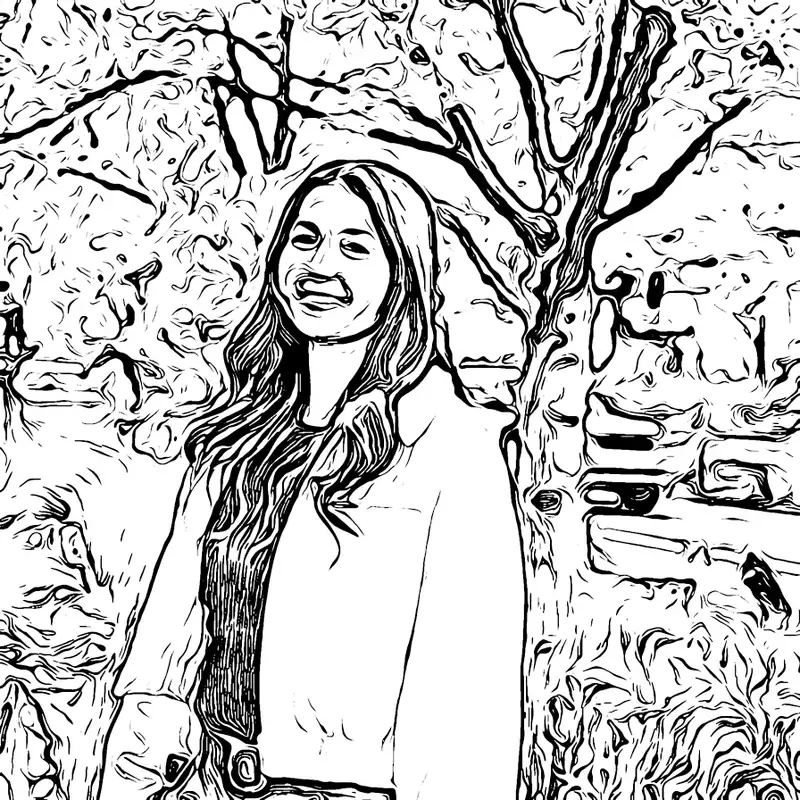
Hello, Alameda. Welcome to the Island City Beat Podcast. I'm your host, Angie Watson-Hajjem. It's estimated that about twenty percent of the world's population, so about 1,000,000,000 people, are considered to be neurodivergent. But what does it mean exactly to be neurodivergent?
Angie Watson-Hajjem:It's a label that's thrown around a lot these days. Well, people who are neurodivergent simply have brains that process information differently than what is considered typical. So people who are autistic or have dyslexia or have attention deficit or hyperactive disorders or people who have Tourette syndrome, which is a condition marked by involuntary movements and sounds, these are all people that would fall under this umbrella that we call neurodivergence. And eighty percent of the people who are neurodivergent happen to be people that have dyslexia, including my guest. Her name is Evelyn, and she's here to share her personal story of how she navigates in the world as someone who has dyslexia.
Angie Watson-Hajjem:And with that, let me welcome Evelyn to the Island City Beat Podcast. Hi, Evelyn. Welcome to the show. Thank you so much for being here.
Evelyn:Yeah. Thank you so much, Angie, for
Evelyn:the intro. Yeah. Happy to be here and talk about my upbringing and yeah.
Angie Watson-Hajjem:Yeah, so glad you're here with us. So I think a lot of us have kind of a vague understanding about what it means to have dyslexia.
Angie Watson-Hajjem:We imagine people who get their letters mixed up, or they get words mixed up and have a really hard time reading. But can you give us what your definition, your understanding of what this condition called dyslexia is?
Evelyn:Yeah, dyslexia's definition is evolving and I went to a call on dyslexia conference last year where they presented the new definition of dyslexia and is a quite lengthy one so if you're interested anybody can Google that, but I can say that my definition that from my perspective is dyslexia is just a different just a one type of brain profile that happened to have a label. And I've come to understand it as part of like the range that we call now neuro-diversity because we don't have a single normal brain at the end of the day, right the brain is way too complicated to say. This is typical, and this is not so like I like the word neuro-diversity, because it really captures that we're all different because our brain is all different period. For me, like it just the dyslexia became famous because it's had a major impact in the modern day schooling, where we're measuring intelligence by reading and writing.
Evelyn:Before you know technology was introduced in classroom it became really. The students who are dyslexic became really. recognized because they weren't performing well in testing when it's only when they're only given pen and paper, because how it happened is that happens is that: Dyslexic tends to use more of our right hemisphere of the brain to try to read and write and for fast readers and writers, they typically use the Left hemisphere when reading and writing, which is a very fast way of doing so, but the text looks that we just use the brain differently. There's so much research going behind that and and that's the only reason why we just tend to read slower because we try to process it in a three d way.
Evelyn:So we just try to visually try to read, of course, you know that's going to make it slower to slower to read and write so that's how it happens and so yeah it's not a really. I don't think it's a really big deal if you're out of school and I don't really encounter any barriers in life. Of course, when I was in school, it was a big deal. That's why I moved here to America. Grew up with then.
Angie Watson-Hajjem:I love you talk about that because I know you were born in London, but you grew up in Japan and you went to school there. A lot of your school years were there. And I would love for you to talk about your experiences as a child in school with dyslexia, what that was for you.
Evelyn:Yeah, so because I was going back and forth a little bit between America and other countries, you know, was mainly raised in Japan, but I thought my reading and writing was slow because of that back and forth, I was having so I didn't really think much too of it until I. Attended a middle middle and high school in Japan, where there were a lot of returning students from overseas, who spend their ten ten years in London, for example, and. They were able to read and write way faster in Japanese than I. Who I only spent a couple only couple years overseas so, then I started to wonder: Oh maybe there's something else that's happening, besides this foreign traveling.
Evelyn:the traveling reason and yeah and then my mother introduced me that, oh, it's probably because you're dyslexic.
Evelyn:And that's how I was kind of casually introduced to this topic. Then ever since
Angie Watson-Hajjem:You're like eight years old, right? When your mom said this to you,
Evelyn:I was in eighth grade,
Angie Watson-Hajjem:actually. Eighth grade. Eighth grade when your mom told you that. Okay. So when she told you this, did it kind of like a light bulb went off kind of like, okay.
Angie Watson-Hajjem:Now I understand why I learned differently. What was that reaction to you?
Evelyn:You know, when I first was introduced, I didn't have the information that I know now, like how I was explaining the definition of dyslexia, like I didn't know I was using more of my right brain to read and that's why like I was reading slow like that I didn't have that information so back in the day, like. Giving getting that word like you know my getting introduced to that word didn't really do much. It just, I mean, it just gave me a topic to really research and get curious about it. Like, it just gave me a top. I what do you call it.
Evelyn:It gave me a topic that I can dive deep into more. So I'm, yeah, so I'm really grateful that was introduced to that word because if I haven't until now, I would probably just question a lot of things. I mean we probably all question how we think. I don't know if it's just me but it's really you know the brain is really complex and very interesting. But because there's so much attention to this topic there's so much research done and now we know why this, you know, kind of...
Evelyn:Not phenomenon, but this way of reading and writing occurs even so. Yeah but back in the day I just didn't have that information so just kind of it wasn't definitely a positive thing, although because I was in school where you know dyslexia was not recognized or understood at all like nobody knew what dyslexia was I know in America everybody knows what dyslexia is even though they don't have you know a deep understanding they just generally. I never met somebody who doesn't know what dyslexia is in America, which is amazing. That's, you know, a lot of people know about it, but in Japan. It's the opposite.
Evelyn:I never met somebody that actually knows what dyslexia is. Like nobody knows what dyslexia is.
Angie Watson-Hajjem:So let me ask you, So when you were in school, so you were struggling to read and write. Was there any attention at all given to you from the educators there, from your teacher? Did they ever sit down with you or with your parents? What was that like? You have this condition and you're trying to learn and you're in the classroom.
Angie Watson-Hajjem:What kind of support, if any, did you get when you were there?
Evelyn:Honestly, I didn't really receive anything. If we had, Like I attended a really big school lot of students. Yeah I mean there's there's not much I got and when I. When I told my teachers that I do have dyslexia they just nobody knew what that was and you know how to you know accommodate for it, but just course like I don't blame them like it's there, they just don't didn't know right. So that's why I moved to The US and finish my high school here because.
Evelyn:At that time I thought there was no way for me to graduate high school. Like I was failing pretty much everything besides art. Art was the only thing I got A on and everything else I was failing tests for people who have to retake tests. It's just like, you know, at that point it's like, what are they gonna do?
Angie Watson-Hajjem:Yeah, yeah.
Evelyn:So I was like, is kind of my last resort, you know, I have my family support. And I was able to go to a boarding high school that I mean all American high schools has the Ada so they are protected to get the you know text to speech and speech text and all those accommodations that we can truly learn the best. and. I'm just so grateful that I was able to move over here and get the correct learning tools at my boarding school and the boarding. Boarding school teachers were amazing amazing teachers, I still talk to today. & .. Yeah they I was able to graduate high school and get into my first choice college.
Evelyn:Graduated college in four years which I don't think that would have happened at all if I stayed in Japan. I don't want to say what could have happened in Japan, but just saying like, I'm just, yeah, I'm so grateful to be here where everybody knows about dyslexia. It's not a shame. Yeah. So that's why I'm here.
Angie Watson-Hajjem:That's incredible. It's wonderful. Glad you're able to come here and get the help support that you needed and to be able to thrive. I mean, it's such a good thing. I've been learning a little bit more reading about dyslexia.
Angie Watson-Hajjem:And one of the things I've learned that, like you've been talking about the right brain and that you tend to use your right brain more than your left brain. And there's some research that states that people that have dyslexia, they tend to be more creative, more spatial thinking. They tend to be really good about figuring out things, like seeing a bigger picture and so forth. So there's a lot of I don't want to use the word superpower, but there's a lot of wonderful gifts that come out of having dyslexia it seems from what I've been reading. There's also a lot of very famous people.
Angie Watson-Hajjem:For any kid out there who's struggling with dyslexia, I tell you, you can't succeed. You can't thrive. I mean, people like Cher has dyslexia and Steven Spielberg and Whoopi Goldberg. I mean, there's no stigma to this. But I do want to talk to you a little bit about the whole right brain, left brain, because that's just fascinating to me.
Evelyn:Yeah it is a fascinating topic and it kind of you know, the more you learn about why it's difficult for me to read and write it also reveals why I'm good at what I'm good at. right?. It's like there's so many trade offs here and, And one of the thing that when I was diagnosed. When I moved to The US by a neurologist She said that my visual intelligence were off the charts and that's so I always wanted was curious like what is this like visual intelligence thing that she mentioned that I'm good at and it's when I do more research is. It's part of like the big picture thinking and spatial reasoning like you said and.
Evelyn:It's like the example could be like imagining how a furniture will fit in the room without doing it, know, bringing in the first
Angie Watson-Hajjem:Yeah, just because see it. That's amazing.
Evelyn:And which, and also what's really interesting recently, I saw read an article about how race car. Race car what you call it race car drivers. Some. Some people who win the race are dyslexics and there's like research on that too. So like spatial reasoning plays a role in even race cars, like racing which is really interesting.
Evelyn:But I think the first time I kind of noticed my like so like quote unquote visual intelligence is in Japan, I was really good at when I was young, I was really good at braiding like braiding cornrows and doing all these intricate designs without practicing like if I see any design, I was able to do it really well. At my school in Japan, there was this like tradition of everybody doing like raise really tight braids and. For the sport event to like kind of get ourselves hyped up, I guess, and I was I don't know why, but I was really good and I was the one of the person who could really do intricate designs out of 300 girls.
Angie Watson-Hajjem:Impressive.
Evelyn:Yeah, so that so yeah that's so even though I wasn't really doing well at all and the you know grades like I was really good at that so I knew I wasn't like stupid, I guess.
Evelyn:Like, I knew I was like nor not normal. It I knew as some not nothing was wrong with me. If that makes sense. Like, I knew I wasn't. Oh, wasn't, I was just in a situation looking back.
Evelyn:I was just in a. Yeah, I wasn't set up for success. Is that is that all that was really because now that I'm here, I'm, you know, I'm doing better than ever.
Angie Watson-Hajjem:Very well, yeah.
Evelyn:Yeah, very well. I don't have any barriers. So, it just shows that it's really just the, you know, situation, the situational problem. Set up with the right tools and this environment, then dyslexia isn't a thing.
Angie Watson-Hajjem:So you definitely, I mean, it's so inspiring how you've just been able to just embrace dyslexia and just, hey, it's just part of me. It's part of my life. It's just that you just go on and you live your life and you're successful and all that. But I'm sure at some points that there are challenges that come up. And I was just wondering if you could maybe speak to some of those challenges that you might and it doesn't mean that it happens all the time, but that do sometimes come up with having dyslexia.
Angie Watson-Hajjem:And maybe some of the strategies that you use to mitigate those challenges.
Evelyn:Like challenges like today that I have? Or what do you?
Angie Watson-Hajjem:Yeah,
Evelyn:honestly, I really don't okay I'm only speaking for myself yeah because I again like the brain is way too complicated
Angie Watson-Hajjem:yes yes
Evelyn:I can only speak for my brain but I don't have any challenges like really I really don't the only challenge I faced is when I was in Japan, because I was stuck in a school where they're only giving pen and paper to learn and take tests and that's how they measure your intelligence. That was the only reason. Yeah, why I was failing so hard and I moved here and now that I moved here, I'm, I seriously don't have any barriers.
Angie Watson-Hajjem:That's great.
Evelyn:I can't even think of it.
Angie Watson-Hajjem:Yeah, yeah, that's wonderful.
Evelyn:Well, I guess, I mean, I don't even want to call it a, I don't think it's severe enough to even call it a challenge, but like, we are living in a text based world, right? And if there's a lot of texts, for example, like going to a restaurant that has very lot of crusive (cursive) stuff for crusive (cursive) writing and very lengthy with no pictures. Then I will just pull up Yelp and see the food pictures right so there's always a way to,
Angie Watson-Hajjem:To get around whatever
Evelyn:Yeah, may be a so there's always a way to get around. So that's, yeah, technology is great, like it's there to help us and yeah, so I guess like the restaurant menu, I don't have my phone is where I could face this challenge today. Other than that, I can't really think of anything.
Evelyn:I really can't.
Angie Watson-Hajjem:Well, that's great. That's wonderful to hear. I would love for you to any teenager, any child that's listening to this podcast, young person in school that's struggling, that has dyslexia, that's having a hard time reading and writing and learning, what advice, what encouragement could you give to those children? What would you like to say to them?
Evelyn:Yeah, I want to say if you are struggling in school currently and they're not providing you what you need is, grades don't define you at all. So don't look at them like I did never looked at them. If it doesn't you know make you feel good if it's not reflecting your intelligence like don't look at it and also don't forget to invest time and what you're good at like explore your, you know, advance like what we all have things that we're good at and not good at like look like find out what you're good at and explore it because that's what I've been doing. And that led me to a career where I can really use my strengths and I love what I do. I'm able to use my strength and give back to the community by designing accessible designs and tools that could help dyslexics.
Evelyn:So, yeah, just invest in what you want to get good at and it's not a big deal at the end of the day. I know it may not feel like that if you are in school, but just keep, yeah, keep it going with the stuff that, yeah, outside of school and it's really not a big deal. Know, I don't know, it's a very hard thing to give advice on, but I don't think, I really don't see it as a big deal. It's like almost saying like you're left handed living in a right handed design world. And yeah, you could face challenges, but there you could get away, you can get around with it.
Angie Watson-Hajjem:it's okay to be different. It's okay to think and learn differently than your classmates or your siblings or whatever. It's okay to be unique. And also, maybe just a couple of words to the parents out there.
Angie Watson-Hajjem:I know your parents, some of got support from, that's really helped you to thrive in your life. But parents who may be struggling and having kids who have dyslexia, what advice that you might be able to give to them? Maybe things that your parents did for you to help you.
Evelyn:Yeah, I think. I mean, it depends like what advice the parents are looking for, but if a lot of parents, I guess first don't know what to do or they're really clueless and I meet a lot of parents at dyslexia conferences and to just gain information. Yeah, that's amazing. I think that's the greatest thing that you can do for your child is to really understand what dyslexia is. There's great books out there.
Evelyn:Like I introduced Angie to what was it called? The dyslexia, dyslexic advantage revised version. That's a great book that really dives deep to how we use the brain and it reveals all the great things that comes with it. So yeah, just don't think it's really not a bad thing at all. If you think, yeah, if you, yeah, so it's, yeah, it's not a big deal.
Angie Watson-Hajjem:Yeah, sounds like you're saying too, have parents really do the research, really learn about what this is and your child and how you can support your child do this. Yeah, well, Evelyn, it's been so wonderful having you here. And I'm just so happy and proud of you, just in what you've been able to move through in your life, your young life in Japan and struggles in school and coming here and making a beautiful life for yourself and doing good work in the world and just loving yourself and celebrating who you are. I just think it's awesome.
Angie Watson-Hajjem:I think that's such a role model for all kids, including So of course those that have thank you for sharing your story with us. It's been such a joy really in listening to you and talking to you today.
Evelyn:Yeah, thank you so much. It's yeah, I'm always happy to talk about it because maybe if you asked me ten years ago in Japan, this is something I would have not openly talked about. But yeah, I'm just grateful for all the information and research that's done for this brain type. And I'm really able to learn more about myself and grateful to be here in America. And yeah, thank you for having me to share my story if it helps anyone and yeah, thank you.
Angie Watson-Hajjem:Yeah, well, you. Thank you, Evelyn. Best to you. Thank you so much for the time that you spent with us. And I hope that all of you who are listening to our podcast enjoyed the interview.
Angie Watson-Hajjem:And I hope that you'll come back for another episode coming your way very soon. Until then, I am your host, Angie Watson Hajjem. Take care, everyone. Goodbye.