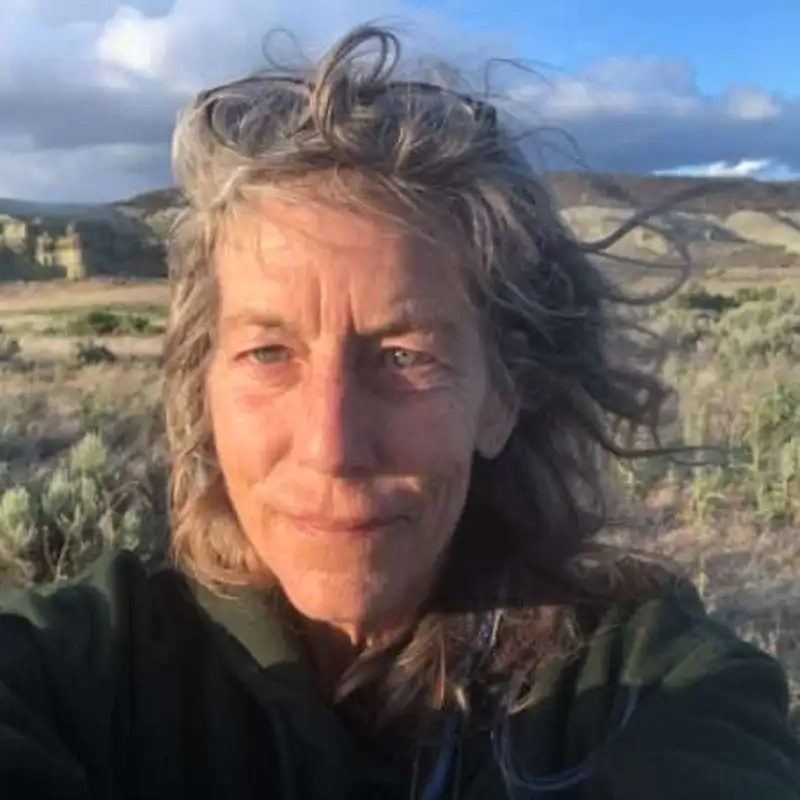
Hello Alameda. Jeff Gould here, your host for this episode. Today, we're with Elizabeth Dougherty for a conversation about water, the Maker Farm, and its benefits for our community.
Elizabeth Dougherty:Hey, I'm Doctor. Elizabeth Dougherty, the director of Wholly H2O. That's spelled w h o l l y h two o as in oxygen dot o r g.
Jeff Gould:So you operate out of the Maker Farm?
Elizabeth Dougherty:I do. Our office is at the Maker Farm here in Alameda. And as part of the Maker Farm, one of the things I've done there is to build a native/pollinator garden on the big mound that we have. And along with that we've designed incredible signs that have the plant name in English, Spanish, Chinese, the Ohlone uses of that plant, the pollinators who use it for pollination, for nectaring and as a host plant.
Jeff Gould:This is at the Maker Farm or Farm to Market?
Elizabeth Dougherty:No this is at the Maker Farm. Yeah, so come on by and we have a couple signs up. We're gonna hit up the rotary club and try to get some money to produce more signs. Hang them up there.
Elizabeth Dougherty:So and then Holy H2O , our work is, we're teaching people about the ecosystems in the creek watersheds of the East Bay. Alameda is a little funky because it doesn't really have any watersheds because it's a flat island without creeks. Now, Salsa Creek used to come down into the island, but that since long ago stopped.
Jeff Gould:No beavers in Alameda.
Elizabeth Dougherty:No beavers in Alameda, unfortunately. You know Brock Dolman, I can tell. Yeah. So what would you like to know?
Jeff Gould:What goes on over at the Maker Farm? We're not really that familiar with what Oh, they do
Elizabeth Dougherty:okay. Or Oh, well, first of all, okay. So come for a tour of the Maker Farm. We also have volunteer days and, like, next Friday, once a month, we do an open potluck music event. Today, in fact, there's another music event there.
Elizabeth Dougherty:There's always something going on. We have a bicycle free clinic. You can come in and fix your bike anytime. And then there are goats and chickens and ducks and pigs and food gardens and then the pollinator garden that I manage and tool sheds and just we're nothing but resources. We have ..
Jeff Gould:Oh you have a tool library there?
Elizabeth Dougherty:We have a tool like well it's not exactly a library so you can't take tools off-site but you can use them on-site And we also do mulch and compost giveaway for the whole community.
Jeff Gould:Yeah. I've I've gotten compost from there.
Elizabeth Dougherty:Right. Cool.
Jeff Gould:It's pretty good stuff.
elizibeth Dougherty:Yep.
Jeff Gould:I was just thinking of something.
Elizabeth Dougherty:What would you like to ask me about Holy H two o and ecosystem watershed ecosystems?
Jeff Gould:Well, as you mentioned, I'm familiar with Brock Dolman's work on that. Are you engineering drainage systems like he does or what?
Elizabeth Dougherty:Yeah, so we just in fact got $20,000 to start working at Urban Promise Academy, which is a school in Fruitvale that is, in a very, very poor neighborhood. And it's also a campus that's heavily impacted by filthy storm water and trash. And so we're starting work there and we'll be doing rainwater harvesting and we'll be reorganizing and turning that over time into a green street.
Jeff Gould:Yeah. Now the use of gray water was a big thing a few years ago.
Elizabeth Dougherty:Well, it's a big thing way more than a few years ago. So I worked, I actually wrote the first best practices guide for the state of California on gray water. Some very many years ago. And I don't even know what happened to that thing.
Elizabeth Dougherty:But, you know, people like Brock, Laura Allen from Gray Water Action Network, there's all sorts of gray water experts. Our work is more in rainwater harvesting and in stormwater management, although we certainly promote gray water. But what we're focused on right now is teaching people to connect to their ecosystems because what I learned is you can tell people about gray water and you can tell them about rain water all you want, but unless there's a drought, my phone is not ringing. So I had to back up and say okay what's going to motivate people twenty four seven year round drought no drought and what I learned is if you get people like Amos and the Rotary Club did today out and you're teaching them about the ecosystem or like we just had a conversation about why these redwoods don't belong here in Alameda, why this is a mistaken idea to plant these redwoods here? They don't belong here.
Elizabeth Dougherty:It's not right for this ecosystem. So somebody did learn enough about this current about this ecosystem to find out what belongs here and plant it for the birds and insects and what not that live here. So redwoods belong up in the hills. They never were naturally down in the flatlands. So planting them here.
Elizabeth Dougherty:So that's the kind of thing that we teach people. We teach people about the history of people of color in the watersheds. So you can like okay. Here's an example. We did a tour of Lake Temescal.
Elizabeth Dougherty:I got up there, and I was like, well, who I mean, okay. We know who paid for the work to get done, Anthony Chabot, but did he actually like today, did he have the shovels? Was he doing no. So who built Lake Temescal? Do you guys know?
Jeff Gould:WPA, wasn't it?
Elizabeth Dougherty:Nope. 1860 .
Jeff Gould:Oh, before WPA.
Elizabeth Dougherty:Long before. Who built it?
Jeff Gould:John Muir.
Elizabeth Dougherty:No. Okay.
Elizabeth Dougherty:Isn't this amazing? And I'm gonna tell you, you're gonna go what? It was Chinese workers. They had done building the railroad, and then they built the water infrastructure systems
Jeff Gould:Nobody knows in that
Elizabeth Dougherty:and nobody knows that. And then what happened right after that? The Chinese exclusion act that made it illegal for them to work in this country. People don't know. Very simple fact.
Elizabeth Dougherty:When I found that out, I was like, okay. I'm done telling the Anthony Chabot stories, and we're here to tell the people of color stories because they are MIA in the watersheds. And so that's what holy h20 two o is focused on now. We build online tours you can take any time, then we also give the tours in person. You're learning about the flora and fauna, and you're learning about the human history of each watershed.
Elizabeth Dougherty:Temescal Creek, Salsa Creek, Strawberry Creek, Glen Echo Creek. We're starting on Cortland Creek. So all of these creeks, every one of them has an individual story to tell and that's what Holly H2O is doing. Connecting people to their watershed so that whether there's a drought or there's not a drought, they care about their watershed enough to do things like rainwater and graywater harvesting.
Jeff Gould:Mhmm. Well, that's an important, story about, people who do the work. I come from a working class family, and, that's the way I'm oriented.
Elizabeth Dougherty:Right. And how many people are telling the stories of your family or the people that are like your family? Not enough.
Jeff Gould:We leave our legacy. That's it.
Elizabeth Dougherty:Yeah. Right. And so we just feel like that's very important work. And while it's really hard to get down to the individual people who did the work, just even highlighting the groups of people like in the Lower Salsa Creek watershed for instance, part of that creek is not buried, and the people who kept it not buried were, Latino activists in the sixties. How did they do that?
Elizabeth Dougherty:The whole rest of Sausal Creek in that area is buried. Well, our goal is to find that out by interviewing them, and we're doing a whole oral history project in addition to the, podcast that we do, which is called H2whoa!. In that we interview scientists and artists about a particular question about water. How do you spell that? H2 WHOA exclamation. It's always hard to do that. H two whoa. Okay. Every one of them is like, what is water?
Elizabeth Dougherty:Where did it come from? How old is it? How did it get here? Interview a top scientist and then a world class artist on the same question. A really, really fun podcast.
Jeff Gould:That's great. Well, maybe we'll put a link to that on our podcast.
Elizabeth Dougherty:Yeah. Sure. Do it. And but really what we're what we really wanna get out is our work in the watersheds and getting people to get involved in learning about the flora and fauna of your watershed, learning about the people of color who likely either built or maintained that watershed over time, and then what's going on there now. How can you get involved in maintaining that watershed and doing the most for the health of your watershed, which involves gray water harvesting and rainwater harvesting.
Elizabeth Dougherty:See, those things are part of the suite of things that fit in with loving your watershed.
Jeff Gould:Okay. Well, thank you for the information. And ..
Elizabeth Dougherty:I have one more question for you, and and I wish I had my stickers on me. What's the name of the river coming out of your tap here in Alameda? What's the name of American the river? What's the name of the river you're made of? Do you drink your tap water?
O K Boomer:Supposed to keep my mouth shut while we're doing it.
Elizabeth Dougherty:Okay. No. But I love that you said that. I'm the first person that's mentioned that.
Elizabeth Dougherty:Right? That's crazy pants. Tap water in the East Bay is great. What's the name of the river that you are made of?
Jeff Gould:Tahoe.
Elizabeth Dougherty:Is there Tahoe River?
Jeff Gould:Comes out of Tahoe.
Elizabeth Dougherty:No. Isn't this amazing? Nobody.
Elizabeth Dougherty:You guys are not the exception to the rule. Nobody knows the answer to this question. Even though EB Mudd, our water supplier, does know the name of their river, It's the Mokelumne River. You're made of that river. Every forty eight hours your body cycles through a whole bunch of new water.
Elizabeth Dougherty:Whatever water you're drinking is the water you are literally made of. 60% of the water your body is is made out of water. You are made out of the Mokelumne River. The water that you use every day means all the things up in that watershed are not using it. Every time you rinse a spoon, take a drink, some bear up there is not getting that water.
Elizabeth Dougherty:Some salmon up there is not getting that water. Whole system. Whole system. So So I'm gonna run across the street and get two stickers for you guys that say on tap Mokelumne River. You can put it over your sink.
Elizabeth Dougherty:You can put it over your toilet, your bathroom sink. Every time you turn on your tap, you'll be like, Mokelumne River.
Jeff Gould:Go, go get it.
Elizabeth Dougherty:Okay, okay. I'll be right back.
Laura Thomas:Hello, this is Laura Thomas, another Island City Beat producer. I would have known the answer to her question. Growing up, I camped and went swimming along the Mokelumne River near Calaveras Big Trees. And I knew the Mokelumne is where our drinking water came from. My father would always tell me it was some of the best water you can drink from a tap anywhere in this world.
Laura Thomas:I will give Anthony Chabot some credit, however, because he did build the water system that became the East Bay Municipal Water District that we all rely on. Excuse me, Municipal Utility District. And we are really lucky to have such a well maintained public water system. Globally, big corporate investors have taken over water systems in the name of efficiency and have really run them into the ground along with raising the rates. We should never allow this to happen here.
Laura Thomas:Elizabeth Dougherty is right. We must cherish and protect our water. It is our lifeblood. So when you go out to a restaurant and they ask you if you prefer water that is sparkling or still, why don't you say, I want some fresh, delicious Mokelumne River water, please. If you're in San Francisco, can say Hetch Hetchy, which is actually the Tuolumne River.
Laura Thomas:By the way, Umne, the last part of Tuolumne and Mokelumne, Umnee means people of in Miwok. So now we who drink from those rivers are also people of the river. Let's remember that. Thank you all for listening and we'll see you next time.