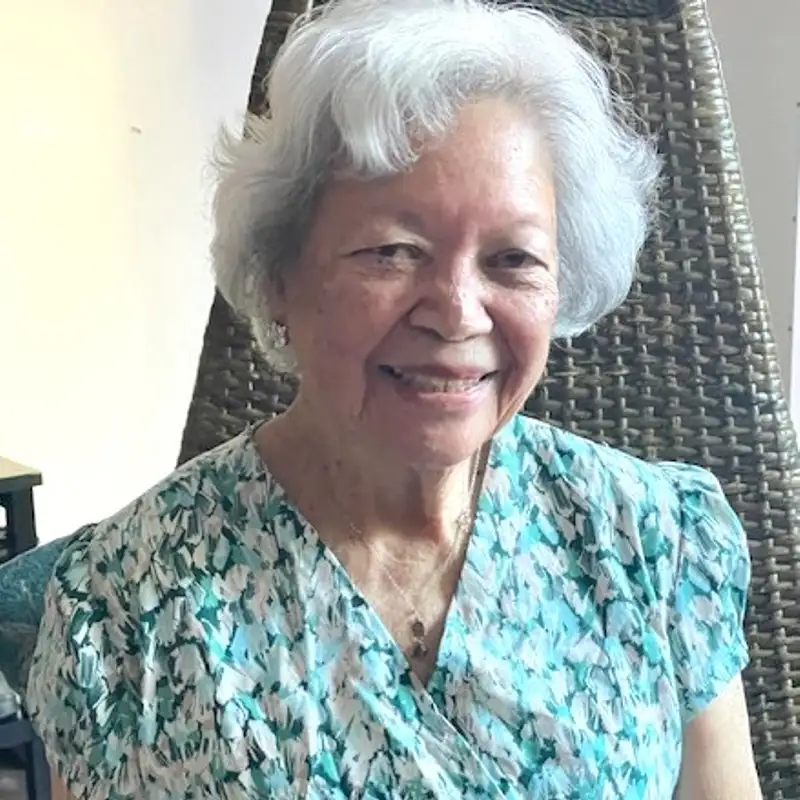
Hello Alameda, this is the Island City Beat. Once again, we're speaking with Cynthia Bonta about her life as an activist and leader in the Filipino community of Alameda. Cynthia, we've covered your life in part one of our interview up until the time you left Berkeley for Sacramento, now we want to talk about the international hotel eviction in San Francisco in 1977. Can you tell our audience what that was all about and why you took part?
Cynthia Bonta:Wow, that's a very important part of my history and the history of the Filipino Americans in California. I had just left Berkeley in 'seventy seven, but I belong to an activist Filipino organization called the Union of Democratic Filipinos. And we have chapters in every city with high concentrations of Filipinos. So in San Francisco for sure, LA, New York, and then we had a chapter in Sacramento and I led that. Two of us, our activist organization had a two pronged program.
Cynthia Bonta:One was to fight racial discrimination against Filipinos, and the other one was to overthrow the Marcos dictatorship. So I actually led the program against martial law. But when there was action that was required, we all had to come together to support whatever action that was. And so the fight, the anti eviction struggle under the iHotel was part of our anti discrimination program. And we had activists assigned for that campaign.
Cynthia Bonta:And I was mainly part of the rest of the organization that supported that. But this was really a fight for being treated with justice and equality, in spite of the fact that we are Filipinos who are not of the Caucasian race, and that we are mainly workers because the Filipinos, when they came starting in the 20s during the Commonwealth period when we were a territory of The US, we didn't have to have a passport. We can come and go without legal papers like that because we are part of The US. But at the same time, we weren't protected by the government of the US and neither were we protected by the government of the Philippines. So the young men in their teens, 17, 18, or maybe even younger than that, would venture into The US with a hope that they could get an education and do something to improve their economic life and send money home and improve the lives of their families.
Cynthia Bonta:So mostly men who were adventurous came and there were hardly any women. Now, these young boys never left The US. They grew old here, they continued to work in the fields, but when the war broke out, World War II, they were enlisted and were promised US citizenship. So a lot of the manongs, we call them manongs, you know, the older people who worked in the farms, did enlist. They agreed to be part of the Filipino American Infantry Regiment, you know, there were two of them.
Cynthia Bonta:So we have now a group of Filipinos who are US citizens for the first time. Now, by the time of the international hotel, these same manos were already too old to work. And they needed to find a place to live because they couldn't go home, but they didn't have any families. Were single men. So they flocked to what was called Manila Town in San Francisco.
Cynthia Bonta:And it's pretty close to Chinatown as well. Filipinos flock to Chinatown because that culture is very similar, the food is very similar. So this international hotel was a place for manongs to live affordably. And some have actually lived there for thirty years. I mean, they grew old there. It's their home.
Cynthia Bonta:And if they're being evicted, we didn't think it was only a housing issue. The owner of the building, Four Seasons, wanted to build a parking lot in that area. So they had to clear the grounds with any buildings so that they could build this flat parking lot. I don't know if it was going to be several stories high, but all I know is that it was for a parking lot. So because we felt that this was an injustice, not providing a place for the tenants to move to.
Cynthia Bonta:They're just being evicted out in the streets with no place to go, that this was like profit over people. And there was a lot of collaboration with the Chinese communities as well to organize an anti eviction campaign. So that's the reason why they tried hard to keep that building, you know, for reasons of, not only was the home going to disappear for these manongs, but it was also the Manila town. There is a Filipino community there where there were shops, there were artists, Kearny, all the way to Jefferson. So from Market all the way to Jefferson.
Cynthia Bonta:So it's on Kearny Street, yeah. So it really had to do with fighting for the rights of You know, they have been, yeah, struck, it could be thirty years.
Laura Thomas:Thirty years?
Cynthia Bonta:Yeah, but the last ten years was when there was a lot of contact with the city and the owner and trying to really get people to, you know, like even the mayor to stand by us and to stop the eviction, you know. Moscone was the mayor at that time, but somehow it didn't work.
Cynthia Bonta:So there was that one night, August 4th 1977, when, yeah, you know, the whole police department and I don't know who else, you know, they called upon to, you know, just, you know, swoop down on the building and forcibly get the people out of their beds because it was early in the morning. you know it was early in the morning Right?
Cynthia Bonta:It was starting at night and then all the way to the early mornings.
Cynthia Bonta:And I remember I was in Sacramento and we were called to come to San Francisco. And we actually came during the late morning and we started demonstration around noon, you know, there. And we had this human chain, you know, that was protecting the building from any armed forces to come and do their eviction. And I remember mounted police, I actually was kind of at the edge of the human chain and very close to these horses and felt, you know, the saliva of the horses dripping on me, you know, I mean, they were just fierce and inhuman, they were just forcing themselves onto the human chain as well. And I, in the meantime, I knew that inside, you know, there was more violence inside.
Cynthia Bonta:And those manongs were being forced out into the streets because they had no place to go. Starting in '77, I was done with the UFW in '75. I did curriculum development, multicultural in Berkeley for two years, being hired by different projects that were writing curriculum, K through 12. I was into that. So that affected my development a lot because I got to understand better the Filipino American history and experience.
Laura Thomas:I see.
Cynthia Bonta:And because I worked with the farm workers, the Filipino manongs, that really gave me the incentive to learn about life here of Filipinos. And I just became a very strong advocate for anti discrimination cases and stuff like that. And when I was a member of Union of Democratic Filipinos, also in around 1977, we won a case to free Narciso and Perez, two Filipino nurses in the Veterans Hospital in Ann Arbor, Michigan, when they were accused of multi murders.
Laura Thomas:Oh really?
Cynthia Bonta:Yeah.
Cynthia Bonta:And we fought that by convincing a civil rights lawyer, I forgot his name, but he's very famous, to work with us. And then we provided the political movement behind it. And that's how I learned that legal with the political can be very effective. But sometimes legal alone is not because you need the people's support for it.
Cynthia Bonta:Yeah. So two years in Berkeley, and then I moved to Sacramento, headed up the anti martial law chapter, or program of our chapter in Sacramento. So I went to San Francisco and that was not just Filipinos, that was Asian. And it was the time when we had to build the human chain around the building to prevent the eviction. But there were some of our members inside the building that they have actually been organizing there for many years.
Laura Thomas:Right, exactly.
Cynthia Bonta:And actually I have this book that one of them wrote about his, He calls it Red Sky, Recollection of the International Hotel. And he was one of the leaders on And
Laura Thomas:That's a book by Emile De Gay Guzman
Cynthia Bonta:And he was with the union of democratic Filipinos with me. And so the San Francisco chapter, the Sacramento chapter, I wonder what other chapters. Yeah, I think we had maybe three chapters from the union of democratic Filipinos that were mobilized to be part of that human chain and and and and really prevent the eviction.
Laura Thomas:Well, that one, I know, as as we all know, I guess you could say it, it wasn't successful in the long run because people I know they held out for many years, and then they eventually were evicted.
Cynthia Bonta:Yeah.
Laura Thomas:I'm curious what your philosophy of organizing is. I mean, there's many moments when you're successful and many moments when you're not. What has kept you going as an organizer all these years
Cynthia Bonta:At least I can be proud to say that I belong to two movements that won, the United Farm Workers, you know, by building a union, they did find their, get their union. And then also the EDSA revolution, people power that overthrew Marcos after working against him from '72 to '86.
Laura Thomas:Well, you were mostly in this country. So how did your organizing influence what happened in '86?
Cynthia Bonta:I I'm sure our education on USAID to the Marcos dictatorship and also education to reveal the human rights violations. And, you know, what actually drove me to become a member of the Union of Democratic Filipinos was in '70, let's see, we had already left. I think we, yeah, we had already left the United Farm Workers. It was in 1975 and we were in Berkeley and there was a free political prisoners in The Philippines program at the United Methodist Church in Berkeley. And I attended it and met some of the members of the union of democratic Filipinos.
Cynthia Bonta:And because they named some of my friends who are political prisoners, that really, I think, drove me to want to be part of that organization, to do all I could to to stop Marcos.
Laura Thomas:And and So you had friends in The Philippines who were political prisoners.
Cynthia Bonta:Yeah. Yeah. And I worked with them in the church. And and I I I it it it was just so mind blowing, you know, what was happening in The Philippines.
Cynthia Bonta:I guess you just have to respond. You just can't do anything, nothing. Can't do nothing. And that's why in my anti martial law work, we had to build a community festival that's what we did in Sacramento, that was to be an alternative to the Turnal Ball that the consulate would organize to celebrate our independence day supposedly from Spain.
Laura Thomas:I see.
Cynthia Bonta:That was June 1898.
Laura Thomas:So they wanted to highlight that, but you wanted to highlight ..
Cynthia Bonta:Community, you know, that you don't have to wear expensive clothes to celebrate. We want the community to be able to celebrate in their own way. So we organized the Philippine National Day Barrio Fiesta. Oh, okay. And do you know that that's still happening even to this day in Sacramento?
Laura Thomas:Oh really?
Cynthia Bonta:We started that in 1976. And then in 1996, we agreed for them to change the name to Filipino Fiesta. Philippine National Day Barrio Fiesta became part of a nonprofit name that I organized. So I organized the Philippine National Day Association after I stopped working on the martial law.
Cynthia Bonta:I decided we we're gonna do community work.
Laura Thomas:And that was in Sacramento.
Cynthia Bonta:And we had a theater project, we had scholarship project and youth leadership project. And I'm proud to say that I was the one that really implemented them. Even if we were 15 in the board, you know, I was working full time, but I was also working full time as a community organizer.
Laura Thomas:Yeah, but you never stopped,
Cynthia Bonta:Right I Like I had two jobs. That's why I couldn't wait to retire.
Laura Thomas:Oh, did you retire? What job, what was your paying job?
Cynthia Bonta:I worked for the state. I moved from one department to another. I started with the Department of Motor Vehicles, only two months. So I moved to the Department of Health Services.
Cynthia Bonta:And then I became a civil rights coordinator.
Laura Thomas:Oh, okay. So that would have been more up your alley.
Cynthia Bonta:Yeah. And I worked directly with a deputy director and I sat in every hiring panel. I couldn't believe it, which helped me also pass some of my own tests when I had to be in an exam panel. But I was in the hiring panel. They were required to have me there.
Cynthia Bonta:So I learned a lot. So three years was enough for me there.
Laura Thomas:Well, okay. So that was your working career and you retired. When did you come to Alameda?
Cynthia Bonta:You know, I wanted to retire when I was 63, because my first granddaughter was born already in 1999. I wanted to take care of my grandkids, but I couldn't afford to retire when I was 63. I had to wait until I was 65. And so Reina was already three years old when I was able to take care of her full time. But she would still be brought to me every weekend.
Cynthia Bonta:And she stayed with me every weekend from a baby to, you know, she was already five years old. She would, let's see, was she five years old? No, no, she was not. She was still like three years old. And I would take her to all the banquets that I had to go to in Sacramento, know, being a community organizer, you have to do a lot of community work.
Cynthia Bonta:And she would come with me and one time she was with me for a weekend and she didn't think I was getting her ready for anything. So she said, Lola, don't you have any more banquets we could go to?
Laura Thomas:She liked them.
Cynthia Bonta:Yeah, she really did. She really did. I retired in December 2002. I moved out of Sacramento February 2003, know, a few months after.
Laura Thomas:So you came down because Rob was living here with his family.
Cynthia Bonta:And that's where I stayed in that little in-law cottage.
Laura Thomas:And was Rob working for the San Francisco City Attorney? For the city manager or the city attorney?
Cynthia Bonta:He he was by that time, yeah, he was a city attorney, deputy city attorney. He worked for a private practice first, until he was able to pay for all his student loans.
Laura Thomas:Student loans, right. So here and out, since you've been in Alameda, what have been your primary projects?
Cynthia Bonta:You know, as I told you, I was still going back to this, to Sacramento for my community. I didn't get very active here. Right away. Till, actually when I got active was when Rob started to run.
Laura Thomas:When he ran for office in
Cynthia Bonta:2010. 2010. Can you imagine? From 2003 to 2010, I was going to Sacramento.
Laura Thomas:Well, they needed you there, I'm sure, but then you
Cynthia Bonta:And I needed them.
Laura Thomas:And you needed them.
Cynthia Bonta:Yeah. So we start with Rob after when he became city council member, we started to organize the Filipino American history month event, and also the Philippine independence day in front of the city hall.
Laura Thomas:Oh, that's right. I remember doing that with you a few times. And you know what else you did? You helped organize the Alameda renters coalition.
Cynthia Bonta:Oh, yeah. Yeah.
Laura Thomas:You and I were going out one day and we collected signatures in the West End with Austin Tam.
Cynthia Bonta:2016. Was that 2016? Yes. Was. That was really a good year.
Laura Thomas:Yeah. Actually, I guess it was, except I think we elected Trump that year, but okay, I won't. Go ahead, tell me why it was a good year.
Cynthia Bonta:No, for me, it was a good year because we were working on renters' rights. Yeah. But we continued to do that for Measure K and we lost.
Laura Thomas:No, we won Measure K, well we beat Measure K. Oh,
Cynthia Bonta:we won Measure K
Laura Thomas:We did win the first rent
Cynthia Bonta:control It's Measure Z. Measure Z, That's what we lost.
Laura Thomas:I know you say that people you believe that people really have the power to make change in their life.
Laura Thomas:And I wonder if you could talk a little bit about what you've learned over the years about how do we make that happen?
Cynthia Bonta:Well, you know, I I like to be very clear about, clear in my belief in that, because of what history has showed too, right? As far as Filipino, history in The Philippines, with the Filipino revolution against Spain, and how Filipinos fought the Filipino American war in 1899. I really believe that Filipinos show that their love for freedom and that they would do anything to liberate themselves from another rule and determine for themselves how they want to run their own government. And, you know, in 1896, they organized the first Republic in Asia.
Cynthia Bonta:It was a Philippines that organized the first republican, know, first Republic And they actually patterned a lot of their constitution to The US. Right. That the one in theory, not the one in practice. Philippine history in The Philippines shows that they do, that it was always the people's power, you know, that really won what they strived for.
Cynthia Bonta:Not only during the Spanish time and the Filipino American war, but also the answer evolution against martial law. So those are very concrete examples. Right. And I had, and I was part of that struggle. And for The US, my experience with the farm workers is my second win, right?
Cynthia Bonta:That I was part of that same movement and we won it because they won their union. Of course, we always have to be making sure that we don't let go and rest on our laurels because as far as the rights of farm workers, they, we always have to fight for it. We win once and we can rest. We always have to, because it's taken away from us.
Cynthia Bonta:And we have to keep on claiming it back.
Laura Thomas:Well, so how does it apply to the rep to our moment in history now, our moment as Americans
Cynthia Bonta:Right now. Today. And then now, my gosh, you know, we of course, many of us followed Zoran's- Victory. Mamdani's- Victory is New York. New York.
Cynthia Bonta:And how he declares himself as a democratic socialist and how he didn't really believe much in what money can do, but people power again.
Laura Thomas:Yeah, he does. He's sort of demonstrating a bit of the people power concept. So what about, so maybe the last things we can talk about are what are your projects again, and at the moment in Alameda, you were telling me earlier about a museum of diversity
Cynthia Bonta:First of all, I wanna tell you, that the reason why I'm doing, Sister City was because of my experience in the war as a child. And as I look back to what my mother did, my mother was amazing how people get attracted to her, you know. During the war, we went to church and some Japanese officers went to church at our church.
Laura Thomas:My goodness.
Cynthia Bonta:And so my mother got to know them. And there was a time when we volunteered to have midweek prayer meeting at our homes. And one of those weeks, it was at our home. And when that happened, these Japanese officers came also. And I was maybe three years old and I am always so snoopy.
Cynthia Bonta:I don't sit down and be with them, but I like to go around and listen and observe. So that night, I wasn't, I didn't know why everybody was crying. So when I tried to figure it out, this is what happened. The Japanese officers who were friends of my parents, you know, were saying goodbye. They said, You know, please forgive us.
Cynthia Bonta:We don't really like being in this war, but we had no choice. Tomorrow we're going to be deployed. We won't see you again. This is to ask for your forgiveness and to say goodbye. And so they sang this very sentimental song about God be with you till we meet again, by His grace, he will lift us up or something, something like that.
Cynthia Bonta:But the tune, I still know the tune. And they were all crying, you know. So that was why. And then the next morning, my mother said, okay, you and your big sister, dress yourself up in your best Sunday dress, you know. And so we did, we wore a patent black shoes, and we had ribbons in our hair, and we wondered where was my mother taking us?
Cynthia Bonta:And so the next morning, the next day, she carried a big pot, you know, of something. I found out later it's adobo, you know. Adobo, when you cook chicken as an adobo, it preserves it because in The Philippines we don't have refrigeration, right? And we learned to cook it like this because it lasts long with the garlic and vinegar and it's almost like
Laura Thomas:Of course, yeah.
Cynthia Bonta:Yeah. And then she had a big bunch of bananas. She was carrying that, I mean, a slight woman carrying those two things. And we couldn't tell, we were kids. So we were just following her.
Cynthia Bonta:We went behind our house, down the hill and right down there behind our house was a concentration camp of the Japanese, where all the allied forces were imprisoned.
Laura Thomas:Oh my God, oh wow.
Cynthia Bonta:They were like, they might have been professors, you know, maybe working with UNESCO or with the, you know, foreign service. They were all
Laura Thomas:They were the civilians, the Japanese had imprisoned in The Philippines had been in the
Cynthia Bonta:That the Japanese imprisoned. They all, you know, gathered them. And there was one in Santa Tomas in Manila, University of Santa Tomas. And the only other one was in Los Manos. And it's in history books.
Cynthia Bonta:That they were right there behind our house. And so my mother said, Oh, okay, go play with the soldiers. So we went over the sentry men called us, you know, because they like children, these Japanese sentries like children and they would have like paper dolls in their pockets, or paper balloons that you blow up and you can play with, or some kind of wooden toy, you know, they always have something. And we went and we feel at ease, because they like children. Maybe they miss their children, you know.
Cynthia Bonta:So we played with a sentry man and my mother disappeared. And then later on she called us back and we went home. And I thought about that, you know, my parents don't really talk to us about those things because we are kids, right? And I don't think they even thought of telling us when we were grownups. But what I figured out was that my mother became friends with this church going officers, and that actually either they were those sentries or they talked to the sentries.
Cynthia Bonta:And that was all set up, that they actually knew my mother was sneaking in to bring food. Playing with the children was their alibi. You know, well, if they were told, if she was caught and they said, what did you do? You were sent to you, why didn't you catch her?
Cynthia Bonta:And they were saying, Oh, maybe that was the time when we were playing with the kids. So, and do you know that some of those missionaries, I visited when I came in 1965.
Laura Thomas:Do you want to talk about your desire to have a library a museum for Filipinos or in Alameda?
Cynthia Bonta:So the reason why I talked about World War II was that made me want to have a sister city.
Laura Thomas:Right OK.
Cynthia Bonta:Because sister city is to build peace. It doesn't matter how, what differences you have, is to build peace through mutual respect, understanding and cooperation. And it was organized by Eisenhower because he wanted wars to end.
Laura Thomas:Oh, Eisenhower was the founder of Sister Cities?
Cynthia Bonta:Yeah, he was. He was a military president. And so he he knew what it was to to what what
Laura Thomas:He knew how bad war was.
Cynthia Bonta:How bad war was. And he wanted to stop wars. And that's because of my war experience. And that really you can be friends with your enemy even.
Laura Thomas:So your experiences that your mother made friends with people who were enemies.
Cynthia Bonta:It's friends or was a human to human.
Laura Thomas:She found humanity and people who you were supposedly against.
Cynthia Bonta:It has nothing to do with our differences. And that's why I like Sister City. And that's one of my main
Laura Thomas:Well, do have a Sister City relationship with the town, the city of, what is it again? In Meguete?
Cynthia Bonta:Yeah, Meguete. We used to have one in Japan, but we stopped it. And then we have Varice, Italy, and Yongdongun, Korea, and Jiangyin and Wuxi in China.
Laura Thomas:And we're hoping at some point Wadi Fuqin and
Laura Thomas:And then in Palestine. Wadi Fuqin.
Laura Thomas:Well, okay, Cynthia. I think we've we've we've spoken about it quite a lot about your life.
Cynthia Bonta:I think the museum we talked about already.
Laura Thomas:Oh, well, I don't know. Maybe we
Cynthia Bonta:should You want it in Well,
Laura Thomas:say a little bit
Laura Thomas:more about it and then we'll Okay. What is your vision?
Cynthia Bonta:I I'm trying not to be too active anymore so that I can do some writing. All right. But I do want to be involved in the Filipino Island Fest, which is now two years old. And my participation there is for the opening ceremony and making sure we have first aid and also the educational part of the celebration in the form of a history museum.
Cynthia Bonta:I'm starting with Filipino American history, but I wanna build it up to a multicultural history of Alameda.
Laura Thomas:Oh, that would be marvelous
Cynthia Bonta:And when families put together their exhibits and talk about their stories, I don't want it to be only a one day display and exhibit, but I want the high schools in Alameda to be aware of it and make good use of it. And also to maybe display at the main library. Because last year we did that. I had exhibits from the Filipino American National Historical Society Museum in Stockton. They brought a really wonderful display of Larry Itliong and the three waves of Filipino American immigration to The US.
Cynthia Bonta:And it was one of those things that you can, it's already formed and you can just move it from one venue to another. So last year we had one in the library, one in Alameda High School and one in Encinal, and then also one in the city hall. Oh, okay. Both city halls.
Laura Thomas:So you're thinking eventually it'd be nice to have something equivalent here in Alameda that would be permanent.
Cynthia Bonta:I'm hoping, I am.
Laura Thomas:It's long term.
Cynthia Bonta:It's a long term. That takes a lot of time. Yeah, but in the meantime, whoever worked so hard for the exhibit gain some exposure, only one day, but maybe several days in the high schools and in the city halls and library.
Laura Thomas:Okay. That sounds wonderful. Thank you, Cynthia. This has been the most stimulating conversation. I hope all of our, listeners on Island City Beat will agree, and we will see you next time.
Cynthia Bonta:Thank you so much for being interested in people's stories.
Laura Thomas:Oh, we love people's stories. There's a story on every street. That's our motto.
Cynthia Bonta:That's I like that motto. Very good. I believe in it.