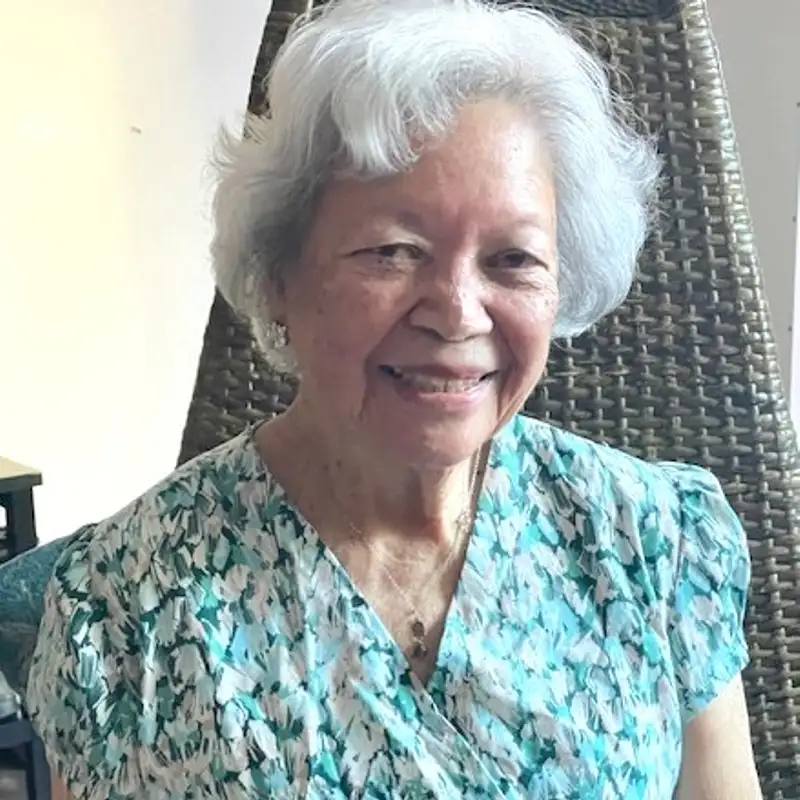
Hello Alameda. This is the Island City Beat, and I'm your host, Laura Thomas. And today, I'm sitting with Cynthia Bonta, somebody I've known for quite some time. I can remember actually when I first met you, it was probably in 2010 when I did a coffee for Rob and he was running for City Council the first time. Do you remember that?
Cynthia Bonta:Yes, I do, at your house.
Laura Thomas:Yeah, yeah.
Cynthia Bonta:Well, we helped you set up and there were a lot of people that came.
Laura Thomas:Yeah, I was pretty impressed. And then of course he won and anyway, he's had quite the career. Cynthia is the mother of our Attorney General Rob Bonta and the mother-in-law of our Assemblywoman Mia Bonta. But you've actually made your mark as an advocate for immigrant rights in Filipino American culture.
Cynthia Bonta:Yeah.
Laura Thomas:Yeah, you have.
Cynthia Bonta:That's nice. Thank you.
Laura Thomas:But where did your story begin? I'm wondering if you could tell us about your childhood and your early life and how your feeling for social justice began.
Cynthia Bonta:Yeah. I'm an immigrant woman. I came as a mother of two kids. So I was born in the province of Laguna in the Southern part of the biggest island in The Philippines, Luzon. And if you drove from Manila to Los Banos, where I actually was born, the town in Laguna, it would be in good traffic an hour and a half away from Manila.
Cynthia Bonta:So I was born there because my father went to school at the College of Agriculture of the University of the Philippines. And after he graduated, he stayed and joined the faculty. So he got married there. And all our all of us children were born there. Interesting,
Laura Thomas:In you Manila or
Cynthia Bonta:in In College Laguna.
Laura Thomas:Oh, in Laguna.
Cynthia Bonta:That's what it's called, College Laguna.
Laura Thomas:Oh, I see.
Cynthia Bonta:But it's in the town of Los Banos.
Laura Thomas:Okay.
Cynthia Bonta:So I was a child of the World War II.
Cynthia Bonta:So World War II has impacted my life as well and the formation of things I believe in. But so after the war, however, my father was invited to join the faculty of Silliman University in Dumaguete City in the province of Negras Oriental, which is in the Visayas, which is the center of the Philippine Archipelago. So I grew up in Dumaguete City, mostly within the Silliman University community, because the children of the faculty members did a lot together. It was a very musical campus. It was also centered around the life of the church there, which was Presbyterian background, but became a part of what was called the United Church of the Philippines.
Cynthia Bonta:Oh, interesting. United Church of Christ in The Philippines. So this however, Sylvan University was discovered and was built by Presbyterian missionaries, right? So it's very, very Americanized, you know, they we were, we were brought up speaking English only. And then we learned how to always say sir and ma'am.
Cynthia Bonta:And we weren't even allowed to dance, you know, the modern dances in the campus. The the kinds of dances we dance were mostly gosh, what do you call that?
Laura Thomas:Square dancing?
Cynthia Bonta:Yes. Square dancing.
Laura Thomas:I'm not surprised
Cynthia Bonta:for some reason. Square dancing. But that was amazing because it was a very vigorous kind of dance and it was good. So the place was very athletic as well. I became a member of the cheering squad because I wasn't very athletic, you know.
Cynthia Bonta:So they also had what you call the Christian Youth Fellowship, which is the youth group of the church. And that's actually how I first started being trained as a leader. I attribute it to my church upbringing. So anyway, I lived there longer than I lived where I was born. So whenever I go to The Philippines, I go to Dumaguete because I still have a lot of friends there.
Cynthia Bonta:And Silliman is very close to me because I did start a Filipino American history library section in the main library through my Alameda Dumaguete sister city.
Laura Thomas:All right. Maybe we can talk
Laura Thomas:about that a little later.
Cynthia Bonta:Is Yeah.
Laura Thomas:Is That where you
Laura Thomas:got your social justice, you were gonna say?
Cynthia Bonta:I- Fervor. I started there because I think my church upbringing was a lot social service, you know, we would go out into the community and set up recreational programs for the children, you know, teach them songs and games sometimes there's a little bit of a Bible study. Right. You know, so and that's the reason why after college, I was invited right away to join a youth office that was run. It was the youth office of the youth secretary for East Asia Christian Conference.
Cynthia Bonta:So, she was with the kind of more ecumenical formation of the church. So, it's not just one denomination, but she was more like outside The Philippines and in East Asia. So that included Japan, Thailand, Taipei, which is in Taiwan and Singapore, you know, those. So while I was there, I was also the in the board of education for just the one particular denomination, United Church of Christ in The Philippines. So once I served there for maybe three years, it was time to find a new national youth director just for the United Church of Christ in The Philippines?
Cynthia Bonta:And so they asked me. So I became the national youth director ust in the philipines for ten years.
Laura Thomas:Oh my goodness.
Cynthia Bonta:Yeah. Wait, was it ten years?
Laura Thomas:You were, but you must
Cynthia Bonta:No, have been
Cynthia Bonta:five years. Because it ten years altogether with the interdenominational or ecumenical, and then this particular denomination, ten years altogether. So I was doing that already before I came to The US. And the reason why I came to The US in 1965, I graduated in 1958, and then worked with the church all that time until 1965. I was offered this scholarship because they said I needed to learn some theology so that I could be able to communicate with the pastors, the men and women pastors in the churches where I do youth work, because it's national.
Cynthia Bonta:So I said, of course I accepted because everything was, it was a full ride.
Laura Thomas:So you had to come to The US to get your theological training?
Cynthia Bonta:Yes.
Laura Thomas:Oh, of course.
Laura Thomas:So the United Church of Christ or the Presbyterian
Cynthia Bonta:The scholarship came from the World Council of Churches. Yeah. So, that's worldwide. And they, so when I came in 1965, that was around July, that same year in September that the Delano Graves strike started.
Laura Thomas:Oh, wow. I guess it's
Cynthia Bonta:Yes.
Laura Thomas:For some reason I think it was the seventies, but I guess not.
Cynthia Bonta:No, it was 1965.
Laura Thomas:Okay.
Cynthia Bonta:And I, you know, when I look back, I said, maybe it was really meant to be that I had to be here when that happened. Because when I found out that they were Filipinos that were striking, said, why, what kind of life do we have here? You know, because when young men from The Philippines, we always think life here is amazing, you know, like it's, you know, those streets are paved with gold, you know, and, and dollars grow on trees, you know, everybody has a car and and they don't have to wash their clothes by hand. So we think it's paradise, you know, and then what? Filipinos are striking?
Laura Thomas:Now let me interrupt you just for a point of information. It I'm I'm remembering now something. Was it Filipinos who actually started the strike?
Cynthia Bonta:Definitely.
Laura Thomas:Yeah.
Cynthia Bonta:Yes. Okay. Okay.
Cynthia Bonta:That that's what we want to correct. Okay, go ahead. So in 1965, in September, actually before that, Larry Itliong, who came when he was only a young teenager, he wanted to go to school, right. But a lot of the Filipinos who came in the 20s and 30s, because we were a territory of The United States, we can just come and go without a passport. And of course, that had problems because no government really protected us, not The United States nor The Philippines.
Cynthia Bonta:So, however, because we couldn't, usually people, the boys were in their teens who came, really didn't have money, right? They were going to find, work their way to an education, but it was not easy to find jobs. They could, the easiest way was to get farm work, you know, work in the land, or pick, be a fruit or go to Alaska and work in the salmon canneries. So, they ended up doing that. And, Larry Leung, you know, that, you know, and whenever he had a chance, he would organize, you know, and even before the delay in the grape strike, he already organized an asparagus Yeah, strike in
Laura Thomas:because I relate to, I remember that. I mean, were a lot of Filipinos around Stockton.
Cynthia Bonta:Yeah.
Laura Thomas:And they worked in the
Cynthia Bonta:asparagus, And Larry, you know, they moved around a lot. So you can't really say where did they live, where are they from. But, so Larry did spend a lot of time in Stockton before he got involved with the Agricultural Workers Organization, committee, Agricultural Workers Organizing Committee. And there he got really radicalized, because he met like Chris, gosh, let me remember the names. He met Filipinos who were actually in the communist movement.
Laura Thomas:Oh really?
Cynthia Bonta:You know, And and so he was radicalized.
Laura Thomas:That's interesting.
Cynthia Bonta:Were they
Laura Thomas:there organizing the workers?
Cynthia Bonta:And they they were members of the agricultural workers. Okay.
Laura Thomas:That's very interesting. Unknown.
Cynthia Bonta:And and, you know, Filipinos who came during that time were also in a way radicalized in The Philippines because there was a movement for Philippine independence. Filipinos have always wanted to be free from their foreign oppressors, you know, and foreign.
Laura Thomas:Can you give us some background on the Philippine American war once you won your independence from Spain. What was The US's pretense for invading you?
Cynthia Bonta:Yes.
Cynthia Bonta:The Philippine revolution against Spain was in 1896 and we won that under the leadership of Emilio Aguinaldo in 1898. So in 1898, we already established a republic, our government, you know, in Cauit Cavite, so that was considered officially our independence from Spain. But in 1899, we fought the Philippine American war against The US because we thought that we had already won our independence from Spain, but however, we didn't realize that America, The US, declared war against Spain to free Cuba and with a pretext that they were, yeah, you know, pretext to free them when actually along with Puerto Rico and The Philippines, they really wanted to take it over. That was the beginning of US imperialism, you know, they wanted to conquer other lands for economic reasons. And it was really the first Vietnam.
Cynthia Bonta:Because they introduced for the first time the water cure for torture. Really? They introduced it at the Philippine American war. And they also killed every man starting from 12 years old. And in Samar, that's well documented.
Cynthia Bonta:And that's the same thing they did in Vietnam. So that's why it's called the first Vietnam.
Laura Thomas:Oh my goodness.
Cynthia Bonta:Yeah, so Phil be an American one. So, but going back to Larry Itlion, he actually worked with Ben Gines, G I N E S, in winning the grape strike before Delano. My gosh, I hope I remember that name. It was in, I'll mention where it is when I remember it.
Laura Thomas:Okay.
Cynthia Bonta:But, and they wanted to move to the north because the grapes were getting ripe and ready to that they should move there and strike. So they did. He, of course, he had worked very hard before that to convince 1,500 Filipino farm workers to join him. And he got it all organized.
Cynthia Bonta:But when, so that was in 1965 and I heard about it and so I wanted to be there. What was really good was we had what was called social justice outreach committee or some kind of social justice committee in the school. And I was member
Laura Thomas:Which school were you in?
Cynthia Bonta:Oh, yeah, I went to Pacific School of
Laura Thomas:Oh, of religion in Berkeley.
Cynthia Bonta:Yeah, which is north of UC Berkeley.
Laura Thomas:Right.
Cynthia Bonta:So Warren, who became my husband, was part of that too.
Laura Thomas:Part of the social?
Cynthia Bonta:Of the outreach.
Laura Thomas:Oh, the outreach.
Cynthia Bonta:Social Justice Outreach Committee. And we had a lot of different projects. You know, Lane Of Graveside became one, but a lot of them were also in night ministry, which is in the Tenderloin Of San Francisco, and some were in civil rights, and some were against the war.
Cynthia Bonta:And there were even some that were already starting to resist the draft, and that was the resistance movement. Oh, right. Warren became part of that. So he never really got drafted. And until he was too old to be drafted, you know, was able to really avoid Vietnam War.
Cynthia Bonta:Was really amazing. So, Larry Itliong started the grape strike in September 8. No, actually '6. No, no, no, no, it was '8, September 8, Cesar Chavez joined eight days after September 16.
Laura Thomas:Really?
Cynthia Bonta:Larry Leone invited him.
Laura Thomas:Did the
Laura Thomas:United Farm Workers, was it an organization
Cynthia Bonta:Not by yet.
Laura Thomas:No. Not yet. So this was Cesar just leading some people or?
Cynthia Bonta:He was with the National Farm Worker Association.
Laura Thomas:Okay.
Cynthia Bonta:His approach was more, not so much unionizing, but more like setting up credit, a credit system, you know, more like social.
Laura Thomas:Services.
Cynthia Bonta:More like services. Yeah. Not, not like Larry who, who wanted to go against capitalism. Because that's what he said, you know, this is our way of affecting capitalism, you know, for it to not be so successful.
Laura Thomas:Right, right. He had, he had various, yeah, he had the goal of bringing down capital. Yeah.
Cynthia Bonta:That's interesting. So, that was his, that's why he, that was what was his thinking behind unionizing, to empower the workers so that they can claim what's due them, you know, the justice and the fairness, you know, in the way that the working conditions are as well as their wages. So they struck by picking all the grapes and then leaving it to rot.
Laura Thomas:Oh. They didn't put them on the trucks or
Cynthia Bonta:No, whatever no, they just left it on the ground and they left. Oh. After they did that. You should watch Delano Mano, it's a documentary. Oh, okay.
Cynthia Bonta:That was the filmmaker was Marisa Arroy, and it's still the best documentary so far because, yeah, there are others that have been made, but it's not as comprehensive as And this it included interviews by people who were there in that time, but I have either passed away now or are very old by now. So anyway, Larrate Leone was the one that started the donation.
Laura Thomas:So did you meet him, I guess?
Cynthia Bonta:Of course.
Laura Thomas:Of course.
Cynthia Bonta:Yeah. So every chance we got during weekends, see Warren lived in Ventura County. So whenever he felt he needed to go home, we would just stop in Delano, you know, and spend some time there, which became very convenient for me, you know. And we, of course, became friends with what was called the farm worker ministry. It used to be migrant ministry, but then it was called the farm worker ministry run by the National Council of Churches in The USA.
Cynthia Bonta:Okay. So it's the ecumenical formation. And that's why when we came, so I had to go home after three years. I finished my master's, but my visa required for me to go back home. And that I couldn't return until after three years.
Cynthia Bonta:So which was fine. I wanted to serve three years anyway, for the three years I was in school, I would give back three years, you know, to the church.
Laura Thomas:Oh I see,
Cynthia Bonta:Yeah. Sort of worked, worked out. But we got married, Warren and I got married in, see, I came in '65, we got married in '67 and we left in '68 and lived in The Philippines as missionaries until '71.
Cynthia Bonta:The first two children, Lisa and Rob were born in The Philippines.
Laura Thomas:Okay.
Cynthia Bonta:'69 and then '71.
Cynthia Bonta:So
Cynthia Bonta:Rob was only two months old. So he was born September 22, which was when Marshall was declared the next year. Oh, in The
Laura Thomas:Philippines? Yeah.
Cynthia Bonta:That's why Rob never had a birthday on his very day because mom was always organizing something, a picket or a-
Laura Thomas:It's a day that lived in infamy for you, right?
Cynthia Bonta:Too bad not until he was 16 years old, 1986. Was that right? '72, plus six, 14 years old. That he had the birthday on the right day But he was with us, know, all the kids were picketing with us and everything. The kids even have a very favorite chant that they still remember.
Cynthia Bonta:It goes, Marcos Hitler dictator too ta. Marcos Hitler dictator to the. And and it's very it's very rhythmic. That's why they remember it.
Laura Thomas:Can you explain, what the martial law declaration was all about in 1986. Right?
Cynthia Bonta:No.
Laura Thomas:No, was '77, right?
Cynthia Bonta:1972 I'm
Laura Thomas:pardon me. '72, right?
Cynthia Bonta:'86 was the overthrow.
Laura Thomas:The overthrow, sorry, you're right.
Cynthia Bonta:So '72 to '86,
Cynthia Bonta:So those were the years to remember
Cynthia Bonta:You know I was still in the Philipines, my husband and I and my two kids. because my first twohe
Cynthia Bonta:has been reelected already. So he has served eight years, but he wanted to continue because he wanted to keep, it had to do with The US bases in The Philippines. The people didn't want The US bases in The Philippines anymore. And they thought that they had come to a point where this was gonna happen soon. But because Marcus wanted to run again in order to keep that kind of alliance with The US through the presence of The US bases in The Philippines.
Cynthia Bonta:The students in the University of Philippines were leading the demonstrations, but of course the working people, the unions, they were all out there in public, demonstrating and marching, you know, with signs and so demonstrations were very common already in 1971, early 'seventy one. And I could already feel, you know, the climate that was dancing up, you know, in The Philippines. So we wanted to leave The Philippines, but we couldn't leave right away because I was already advanced in my pregnancy So the doctors advised us to stay, to have the baby first before we left. So Rob was born 09/22/1971. So we left in November, it was Thanksgiving when we arrived in LA.
Cynthia Bonta:And so we were able to have Thanksgiving with Warren's family. And so that was the reason why Marshall Law was declared.
Laura Thomas:To stop the demonstrations.
Cynthia Bonta:No, because he wanted U.S. bases. Oh.
Cynthia Bonta:To continue. Mhmm. And and that he, already had, served his term, but he he wanted to continue under a dictatorship.
Laura Thomas:Oh, I see.
Cynthia Bonta:So
Laura Thomas:So it was the first move towards him consolidating his power as a dictator.
Cynthia Bonta:Yeah. So he he he he was he was a military dictator from '72 to 1986. And, you know, we were in LA when we heard over the radio that he declared martial law and we were celebrating Rob's birthday. I see. His first birthday.
Cynthia Bonta:So he was born '71 and martial law was declared September 22 72.
Laura Thomas:Okay.
Cynthia Bonta:You know?
Laura Thomas:So you were here organizing, but you you always did something around the martial law
Cynthia Bonta:Oh, god. Yeah. Because I I became a member of the Union of Democratic Filipinos who is very organized nationally. And we had chapters in the most, main cities where there was a high concentration of Filipinos.
Laura Thomas:Oh, see organized here in The US.
Cynthia Bonta:Yeah. Uh-huh. And because we were organizing against martial art.
Laura Thomas:Right. I know there was a big-
Cynthia Bonta:And educating the American public about US aid.
Laura Thomas:So you were in The Philippines and then you came back to The US after a few years. And were you were you actually living with the farm workers union?
Cynthia Bonta:We we joined the boycott as volunteers in LA because we lived in LA. We landed in LA because it's close to Warren's family and gosh, Rob was two months and Lisa was two and a half years old. I don't know how I did it though. It was tough, but I couldn't believe we'd survived. Yeah, and so we, in 'seventy one, well, maybe 72, January, that whole year we were in the boycott in LA.
Cynthia Bonta:And then I got pregnant again. And so they were the National Farm Worker Ministry of the National Council of Churches said, would you like to be hired as full time volunteers and you will be assigned in the headquarters La Paz. La Paz is called it is the headquarters. Okay. It's called La Paz, but it's really in Kien, in a little town near Tehachapi.
Laura Thomas:And this was the headquarters of the United Farm Workers Yeah, Union at the
Cynthia Bonta:it was already a union. Right. Because by 1975, it became the United Farm Workers Association of America. But they became a union. Their first union was called United Farm Workers Organizing Committee.
Cynthia Bonta:That was their first union. And then when it got recognized and everything, it became the United Farm Workers of America. And usually it was instead of UFWA, it is commonly known as UFW. Right. Right.
Cynthia Bonta:Yeah.
Cynthia Bonta:So,
Laura Thomas:So what did you do primarily for that, for them? You were working for the World Council of Churches, not exactly for, or for the union?
Cynthia Bonta:No, this was the National Council of Churches in The United States, not the World Council. Right. This is just The United States. And, you know, I wanted to say that the migrant ministry started in the 20s. You know, the church was already working with the farm workers.
Cynthia Bonta:Oh, really? And so there were quite a few families and single adults who agreed to work for the farm worker ministry full time. And that meant that they provided us a trailer because we were a family. And they would pay us subsistence salary just for food and a little clothing for the kids. So the children, every time they outgrew their clothes, they would get two outfits, we would buy them two outfits each, one for play, and one for a little special.
Laura Thomas:Right.
Cynthia Bonta:And by the time it was worn out, they also outgrew it. So another set of two. Right. And at Christmas time, I always wanted to have a Christmas tree, but I couldn't buy, afford a Christmas tree. So I would go out into, I would go out to Tehachapi on the twenty fourth and, and just take whatever was left, Christmas tree that was left.
Cynthia Bonta:And, you know, they weren't very good looking anymore, but we ended, we always had a Christmas tree, every Christmas.
Laura Thomas:How many years did you do that?
Cynthia Bonta:Just five.
Laura Thomas:Five years?
Laura Thomas:Well, your children really were little and they really grew up. Their first memories must be of a trailer in Keene. Yeah.
Cynthia Bonta:Lisa actually went to kindergarten in Tehachapi. And after that we had to think about, you know, she needs to really go to a good school for first grade. And that's the reason why we already left. And we were so lucky. I lived two years in Berkeley, and the kids were able to all be together in this, what was called early learning center, where it was an open classroom type of education.
Cynthia Bonta:So all my children got to be there because it was from preschool to third grade.
Laura Thomas:That was in Berkeley. Yeah. Oh my goodness.
Cynthia Bonta:And it's not there anymore. I've been wanting to find out where it is and thank them and see how they were coming. Because, you know, they believed in diversity and multicultural education. So there was a teacher for every ethnic group. Yeah, and so there was a Filipino teacher for my kids, you know, but it was an open classroom, means that you can go to any teacher, you know, and Rob got very attached to the third grade teacher.
Cynthia Bonta:And there was even a time when he said, mom, I give me a long piece of string. Why, what will you do? Oh, I want to tie it to my school and take the rest of the string with me when I go home so that I will know how to go back to my school. I'll just follow the string. I don't know how he thought he could do that.
Cynthia Bonta:But when she talks about Rob, I don't know if it's true, because now he's attorney general and he's she says, Oh, you know, even as a child, Rob was different, you know, he was very charming and he knew how to get along with the grown ups. You know, I said, Oh, wow.
Laura Thomas:Thank you, Cynthia. That was really fascinating. We have a lot more to cover of Cynthia Bonta's life. So please join us next week for part two of our interview when she talks to us about supporting the generation of Filipino field workers known as the Manongs during the international hotel eviction fight in San Francisco in 1977 and how it inspired her to push recognition of the role Filipinos have made to American culture.
Laura Thomas:She'll also tell us about her belief in people power and her commitment to the Sister City movement. So there's a lot more to come. This is Laura Thomas signing off. I hope you enjoyed this episode of Island City Beat.