Welcome Alameda, wecome to the Island City Beat podcast. I'm your host Angie Watson-Hajjem.
Angie Watson-Hajjem:So I am here sitting with Isaac De La Fuente and he's owner of a newer business here in Alameda. He opened up six months ago a business called Collab. Hi Isaac.
Isaac De La Fuente:Hi, how are you doing? Pleasure. Thank you for coming.
Angie Watson-Hajjem:Great. Thank you for taking time to talk to us.
Angie Watson-Hajjem:So tell us about Collab. What do you guys do? What are the services that you provide?
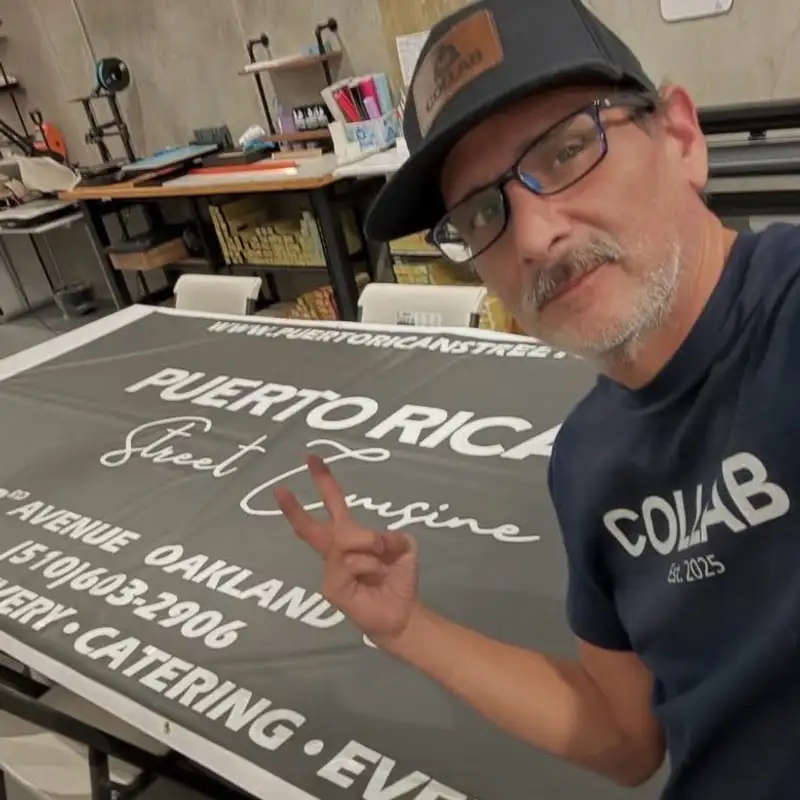
Isaac De La Fuente:Collab, we're creating an on demand studio, is the full name of Collab. We actually do it's a very multifaceted type of business that I've built here. One, when you first step in, you'll probably see, okay, we have merchandise and things of that nature, which we customize, and we can do one offs of somebody's idea. Like the customers just came in, you know, they had a picture that they wanted to see what they can put it onto. So they put it onto a coffee cup, and we were going be doing a coffee cup for them.
Isaac De La Fuente:But we do we help brands build their businesses We or do B2B as well in regards to helping support merchandising, merch for shirt wear, all their swag that they might need companies going to a conference or something like that, tablescapes and things of that nature. So we're actually able to personalize all those. We're a full manufacturing studio too. We have textile printers and we have lasers, we have embroidery, we have one of the only West cylindrical printers in the Western United States right now, We UV cylindrical have other flatbed UV which does really kind of dynamic things. Big plasma laser, big CO2 lasers that we're able to cut the different types of media from acrylics to wood.
Isaac De La Fuente:Then I have a metal work, a metal laser that does metals and things of that nature and you can weld and sculptures and all that.
Angie Watson-Hajjem:Oh, with the artist studio you have.
Isaac De La Fuente:Yeah, it's a full manufacturing studio and though with the really special thing about what we love to do is teach. So I have my summer programs and we do studio sessions with kids and whatnot. And that's really where we thrive is helping that young entrepreneur or entrepreneurs that come in and we're actually helping them. One, showing them the full arc of from conception to prototyping to actually knowing how to actually commoditize that idea. So we harness trying to teach them that full arc because a lot of it I think is very lost and even in the schools, you know, they only teach you certain dynamics of, okay, you create this, but there's no throughput of how actually to put it into the marketplace, commoditize and start doing all those other things that, you know, which actually encompasses being a business, right?
Angie Watson-Hajjem:Yeah, remember like in elementary school, well actually I guess it was more like middle school, we used to have things like wood metal and then they just got rid of all that.
Angie Watson-Hajjem:so, it's just learning.
Isaac De La Fuente:There's no throughput. Yeah, yeah, and there's, you know, I think a lot of that is lost. So I opened the shop to where somebody had an idea through either through lack of access, know how, equipment or anything like that. I wanted to bridge that gap. So where they can actually come in here and say, or a business that has, they're stuck on apparel, but actually how we can expand that product line.
Isaac De La Fuente:So I help them do that. Or I help them and not have to do full, I can do their backend fulfillment so they don't have to do a full front of buy. So everything routed through me and I do their fulfillment so they can concentrate on expanding their business. So we do brand support, business support. We incubate businesses here so we can have somebody can be a wedding planner here in a day.
Isaac De La Fuente:Literally, you can walk in here and say I want to be a wedding planner. You can go do from the bachelorette parties, they can do all the merch You for can do engravings for the tablescapes and You all that kind of do engrave the stemware. You can do signages in here.
Angie Watson-Hajjem:Well, I wish I knew about you months ago because we've been planning a family reunion. We could have come to you for our t shirts. You'll be in business next wo years?
Isaac De La Fuente:100%. Oh, no, we shall be. So we do a lot of, like I said, we do a lot of work with, you know, B2B to, you know, we help them navigate that uncertainty when they buy online. And this is where Collab really shines is where when you order something online you say, okay, I want this here and there and then it's that unboxing experience of like, oh, I really get what I want and then that brand is stuck with what they try and then a lot of brands get hurt just because they're having to present themselves in the way that they didn't want to. Here they can actually come in and say, want this specific shirt. They leave here knowing exactly what they're going to get from the quality of shirt, from the quality of hat, from the quality of stitch and exactly what their brand should be like or what their brand is going to be developed like.
Isaac De La Fuente:But like I said, really a lot of my real passion is helping those that have that idea, the kids that want to really learn, you know, the real creation tools of Photoshop, Illustrator all these other kind of things that that here. I love teaching.
Angie Watson-Hajjem:Yeah, so great. Now your father is someone that is quite well known, actually I would say famous here in the East Bay, Ignacio
Isaac De La Fuente:Ignacio de la la Puente.
Angie Watson-Hajjem:Yeah, he was city council member for many, many years in Oakland.
Isaac De La Fuente:Over thirty?
Angie Watson-Hajjem:Oh, thirty. And he's also Vice Mayor. And so you didn't go the route of your father.
Angie Watson-Hajjem:You didn't enter politics. You became entrepreneurs. So I would love to hear a little bit about your story and how you decided to open up your business.
Isaac De La Fuente:Oh, well, that's probably going to take a long time. I'll give you the Reader's Digest. Okay. Did college in baseball and then I came into the corporate world, you know, broker and whatnot and then carried on and managed quite a few businesses and developed business development and then went high level corporate. And then about three years ago, about three years ago now, I came, I got ill .
Isaac De La Fuente:So I was actually very lucky to actually have survived this experience. My colon seized up and I got distended. Went into the hospital and the doctor said I probably had twelve hours. If I didn't come in, the vice secretary would have probably found me at my desk. Probably another sixteen hours later I was in surgery and you know they gave me a sixtyforty chance of actually making that out of it.
Isaac De La Fuente:And then three and a half months later, still in the hospital, you know, within that time I said, you know, I want to make a life change.
Angie Watson-Hajjem:Uh-huh.
Isaac De La Fuente:So then, started pursuing my passions and whatnot. So, then was semi retired in that stage about a couple of years ago. Then I had this dream of, like, doing something that what really made me happy is, like, I've always in anything in any level of my in my professional life always when the principles got together or we got we needed to get something across the finish line or a throughput or in the project or what it got it was always that collaboration within that table, within that boardroom or within that, you know, I mean, it was window, it was very dynamic. It was when we were all collaborating on how to get something done. And that was when I was the most happiest and that was, you know, that was creating something, even if it was just, you know, whatever we needed to get through the throughput, right?
Isaac De La Fuente:So that's kind of what drove me to wanting to build something communal, wanted me to build something that was impactful in many different ways. And then I started looking at the industry and how fragmented it was for some corporation or something to come in. Let's say it's a high level, let's say Bart or any other kind of company, right? They would say I want to do my company merch. Well, they would have to go to one entity to get their textiles, hats, hoodies, shirts and what they, and then all we want to do coffee cups or mugs or things like that.
Isaac De La Fuente:Okay, they would have to go to another vendor or okay I want to get signage or something like that, I want to go to another vendor. Well here at Collab you're able to actually do that in full manufacturing with one stop shop.
Angie Watson-Hajjem:In one place. yeah.
Isaac De La Fuente:Yeah we can do from product design to graphics to everything that we can do all the back end then we can do for film for all of you know, for brands and things of that nature. You know, they can so it was very I built this space to be very multi vertical in regards to that and then my after school programs, my summer programs for the kids and whatnot.
Angie Watson-Hajjem:It looks like you had this horrible medical emergency where you almost died and kind of just shook you up and go, Okay, I've got to figure out what I want to do with my life, follow my passion.
Isaac De La Fuente:Yeah, something that was more impactful and really, you know, something that was going to leave it's, you know, rising ties raises all boats. I've always believed in that, you know, and I come from a family that get, you know, that we support the community and whatnot, so this was my chance to do it in my way.
Angie Watson-Hajjem:Yeah, yeah, that's wonderful. So tell me, what are some of the challenges? I know you're new to your business but what are the challenges that you have faced in the last six months of your business?
Isaac De La Fuente:I'd say probably the biggest challenge is really trying to get out really what the power of what Collab can do is that because really it depends how you walk in through my door. It's really it's kind of hard when somebody asks what do we do? Well, we do a lot and we do it in a very dynamic way. I'll give you a good example is, you know, working with a yacht club. You know, one of some of the yacht clubs I've done different work with them in different ways.
Isaac De La Fuente:Then from there, those come in, I can actually teach some of the students, some of their kids that have been taking my classes, their gifts for personal gifts and things of that nature. Kind of depends on what your need is in here if it's either to support your brand or your business or whatnot or you want to give your kids a lesson to where they can actually get behind these tools and get creative and whatnot. So it's kind of hard to get that message out because it's very broad. That's been a big challenge of me of how to actually communicate really what we do because we do so much in so many different ways.
Isaac De La Fuente:That's been one of my personal challenges of trying how to convey that out to the public. You know, the other I would say is my outreach and then probably the parking in regards to where my location is at is that's probably one of my biggest hurdles of trying to let, you know, people know because they drive by and say, Oh, I wish, but I couldn't find parking. And I do have a parking lot that's, that's like they let me use it right across over here, but they won't let me brand it because they don't want to do it. It's kind of like, okay. And so it's, it takes me time.
Angie Watson-Hajjem:Can't put your name on the parking lot.
Isaac De La Fuente:Exactly. Cause it's not ours, but, so the parking has been one. And then, I would say the other thing too is, is the support of sometimes of the city or like some of the organizations that say they want to be local, but then they really don't do local.
Angie Watson-Hajjem:They don't do what?
Isaac De La Fuente:They don't support local.
Angie Watson-Hajjem:In our city you're saying.
Isaac De La Fuente:Yes. In some premises, you know, it's under the guise of one to, oh, we want to support local and then, you know, you're doing business and then you put your hat in the ring and you're on par of that. But you might be within a few cents or whatever that is and it becomes a dollar game. Which it always, you know, I don't mind that because I always knew that's the nature of business. But when you're advertising, we support local, live local, and you know, all those other kinds of things.
Angie Watson-Hajjem:Like if they want to like make a contract with a business, they may go outside of Alameda
Angie Watson-Hajjem:rather than support the local. That's awful. They shouldn't do that.
Isaac De La Fuente:Yes. No, no, 100%. And, you know, and then my quality was, is better than some of the things that they're bringing in and whatnot. So that's kind of a little bit disheartening, you know, when, cause I, you know, I support local, you know, as much as I possibly can.
Isaac De La Fuente:yeah, So those are kind of a little bit of the challenges of trying to, you know, manage my expectations on those kinds of things, but, you know, but I'm new to this business world because I've managed businesses and all of the things, I was never, you know, I managed the monkeys and all those departments and whatnot but I wasn't the principal.
Angie Watson-Hajjem:Yeah you're the owner.
Isaac De La Fuente:So that's the yeah all everything falls on my shoulders. I a lot of hats. From the janitor to, you know, business.
Angie Watson-Hajjem:Well how is business?
Isaac De La Fuente:Business is going really good. You know, in, in all honesty, the community has been very supportive, you know, so, in that respect, we grow every day for the most part. We get a lot of, like I said, we were dealing with a lot of different entities. The schools have done a lot of outreach with the schools. I've done fundraising with the schools and that's really gotten me a good return in regards to, you know, business from them as well.
Isaac De La Fuente:And I, like I said, I support local businesses and that's been a really good business opportunity for all of us, you know, to where, you know, they're getting, you know, a better product and actually being able to upscale what they need to do. And, you know, I can actually provide that. And so, you know, we're getting that, a lot of that push. Yeah, but a lot of people have been really, lot of customers have been really vocal about this place and trying to make sure that we're getting out there and whatnot.
Angie Watson-Hajjem:I have to say it's such a nice space. Mean you come in, know that our listeners can't see the physical space that you have here, I'm looking here on the wall, this blue wall, you have these sea lions, you
Angie Watson-Hajjem:have turtles and all these beautiful colors. It's just like an art studio or something.
Angie Watson-Hajjem:It's really cool.
Isaac De La Fuente:It's intentionally we built this way to where you can come in and then just kind of relax, have fun, create in a good atmosphere. So, but yeah, no, that's, you know, that's why it's called Collab because we want people to get, you know, be social and come around each other and, you know, because you'll be amazed when you get around a lot of creative people. You get that dynamic of, Oh, you get different ideas Oh start to yeah. The inspiration of somebody that is in a different field and they're looking at something they go, Oh, how you doing?
Isaac De La Fuente:Then, you know, they start collabing. Oh yeah, I've seen some really cool stuff.
Angie Watson-Hajjem:Yeah.
Isaac De La Fuente:Even in the short time that we've been here. I'm excited to where what's going to come next. And you know, as much as more traction that we get in regards to getting the and as like when you're speaking to say, I wish somebody I can only talk about it as much as I can but until you step foot in here then it really hits you of what this place is.
Angie Watson-Hajjem:I'd like people to come. So tell us your address and
Isaac De La Fuente:18 the address out 1820 Park Street, Alameda. We're almost by the bridge right here on Clement, right next to the Kung Fu studio and the, the scooter place is kind of little famous, bottleneck intersection here, but, just look over to your right if you're going out of the city and, I'll start you. I got to get my signage, my outdoor signage, I'm just waiting for the city to clear me on my, my signage.
Angie Watson-Hajjem:Can I help you with the signage?
Isaac De La Fuente:They have a nice, I'm in the process. Oh wonderful. That's gonna within the next month that should be up for that. So then a little bit more visible as regards to, you know, signage out front of laundry facade. But you, you got to step inside.
Isaac De La Fuente:You got
Angie Watson-Hajjem:to step inside to really, to
Isaac De La Fuente:really understand what we do
Angie Watson-Hajjem:and
Isaac De La Fuente:how dynamic and how inspiring that it'll bring out your inner child. Know, I've made adults be kids and kids be so yeah. So yeah, we love smiles here. Yeah.
Angie Watson-Hajjem:Well it's been so fun, such a pleasure talking to you Isaac. Really enjoyed it and I wish you the very best in this wonderful business that you created here.
Isaac De La Fuente:Thank you so much. Thank you so much. Well you're always welcome as is everybody and want people to come create something amazing with us.
Angie Watson-Hajjem:Yeah, sounds good. Wonderful. Thank you so much. You have a wonderful rest of your day. Thanks for spending time with us.
Isaac De La Fuente:Oh, well, thank you for giving me your time.
Angie Watson-Hajjem:Appreciate it Take care.
Isaac De La Fuente:Bye Bye now.