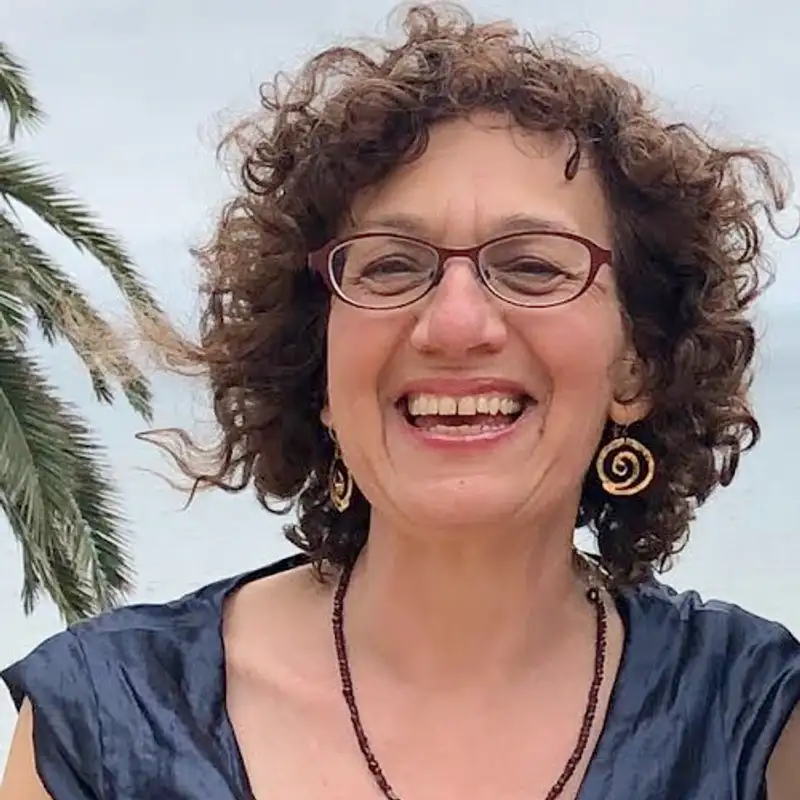
Hello. This is the Island City Beat, and I'm Laura Thomas here with Bonnie Wolf, who was the project director of Arnold's Place, the medical respite center serving Alameda County residents who leave the hospital with no home or very little medical support. It opens for its first clients this month in a beautiful brand new facility at Crab Cove here in Alameda that took years to bring to fruition. Hello, Bonnie.
Bonnie Wolf:Hi there.
Laura Thomas:Hi. How are you feeling about this accomplishment?
Bonnie Wolf:You know, this is a community dream come true, and it was the effort of a small group of us who worked mightily and robustly together to realize this this project collaboratively.
Laura Thomas:You know, as a long time housing activist, I I worked on fighting that 2019 ballot initiative that attempted to block the project. And I also remember several stubborn appeals and maneuvers to do derail it. So to even to me, as a member of the community, it feels like a dream come true. Do you feel any mixture of relief or along with the excitement?
Bonnie Wolf:You know, it's it's a it's just such a beautiful contribution to alleviate suffering on our street and people who are sick and dying and struggling right now without care. So, the relief is really for those people who have long awaited for resources to provide people both who are departing hospitals and have nowhere to go and nowhere to heal and also people who are identified in street medicine. Mhmm. So we're living in encampments. So the the the joy is really for them. And for our team, we, you know, we had a celebration recently. It feels like a collective time.
Laura Thomas:Yeah. Well, I know it it yes. It feels like a real good it it was a good project for we and Alameda to support. And I think even though it took many years, we're really happy. But Can
Bonnie Wolf:I speak to that for a minute?
Bonnie Wolf:Which is that, you know, it was an extraordinarily inspiring piece of the project to see the community of Alameda affirm this county focused project. And there were many efforts by this very small but virulent group of people who wanted to stop the project. And, you know, whether it was the ballot initiative where people were voting behind, you know, in the voters group and we were the only thing on the special election or the over 20 local appeals or the CEQA lawsuit and appeal to that lawsuit. Every step of the way, the community of Alameda and the mayor of Alameda supported this project going forward. And to me, that's a model regionally and nationally of a community that made a decision to affirm a project serving vulnerable people. And and also to fight the disinformation campaigns that were happening. So I just am incredibly grateful.
Laura Thomas:Good. Good.
Laura Thomas:I think we're proud, and I think that this could be a groundbreaking facility not just for our city. Correct?
Bonnie Wolf:Correct.
Laura Thomas:Is it is is there anything nationally? Is it are people asking you about it? Or
Bonnie Wolf:What's new about the project is that we secured land, which we secured for free, but we secured land next to the beach and many programs and facilities for our unhoused neighbors are in industrial areas. They're gritty, they're rougher, and this is beautiful. So it naturally enables restoration and healing for both the patients, then the future residents, and also for staff. And then the integrated model of having medical respite and on-site health clinic, homelessness prevention resource center that also embeds hospice care and of course the housing, supportive housing for unhoused seniors. All that kind of mix in a beautiful location and with trauma informed design where the building feels thoughtfully designed.
Bonnie Wolf:It feels welcoming. It feels warm. It's uniquely beautiful.
Laura Thomas:Yeah. So We're we're very happy about thought about that actually, because it's next to the beach. But anyway, so can you elaborate a bit on what trauma informed is it design or
Bonnie Wolf:It's both the design and the service model.
Laura Thomas:Service. Yeah.
Bonnie Wolf:So the services that are gonna be primarily provided by lifelong medical care are trauma informed, meaning that the assumption is that by the time somebody walks in the door, they have experienced way too many both acute and chronic traumatic experiences. It means that the relationship with their providers needs to be thoughtfully held in a container of safety and relational awareness and care and awareness of people's what we would call trauma triggers Which is how the past can interrupt present trust And relating. So, their behavioral health model and their medical model is with providers who have all been trained in survivor centered and trauma informed care.
Bonnie Wolf:Now, the design I brought in the architects and because they had already done a building, a medical respite building in Portland, and I felt like they had a collaborative approach as a team, but they met with us a number of times to really understand what our intent was for the patient experience. And that we wanted patients, particularly people who often have, you know, are medically fragile, are coming off the streets, may have experienced pretty extreme violence, that they felt like they were home. And, they could feel like an embrace in the way the building was set up, the flow of the building.
Laura Thomas:Can you describe any piece of that?
Bonnie Wolf:Well, atrium, the use of light is exquisite. So that's one of the things they did incredibly well.
Laura Thomas:Mhmm. And I'm thinking maybe We have sitting areas, the outdoor sitting areas.
Bonnie Wolf:Yeah. And we use noise mitigation. There's outdoor sitting areas. There's indoor sitting areas. There's a lot, there's a quiet room.
Bonnie Wolf:You know, there's if you're if you're one of the people that might be in one of the hospice rooms, can see out the trees and hopefully birds. And
Bonnie Wolf:So particularly for people who might be bedridden, we wanted to make sure that they had the best view.
Laura Thomas:Oh, really? Yeah.
Bonnie Wolf:A lot of there's a lot of little touches.
Laura Thomas:Is there gonna be a community garden or just a regular garden there?
Bonnie Wolf:You know, I don't I know I don't know if how it's gonna be open yet to the community. Some of those were decisions that were in process While I was in the in on the roll I wrote.
Laura Thomas:Okay. So just briefly, how does the clinic operate? I mean, how long could people stay? What kind of people go there? Well, the There's specific details.
Bonnie Wolf:Yeah. The clinic will have medical and behavioral health care. So people will go who are senior housing residents who choose lifelong as your medical provider and the med respite patients will go as often as needed, which will be likely pretty intensive while they're staying Mhmm. Particularly at the front end.
Bonnie Wolf:For the medical respite, we were assuming about 45 average Month of stay. So some people might stay a couple of days. Some people are gonna stay a week longer.
Laura Thomas:Okay. And then they're gonna get follow-up care.
Bonnie Wolf:Yeah. They'll be they'll be connected to a permanent health home, so health care, and there'll be advocacy for connections to stable housing.
Laura Thomas:Okay. Can you tell us anything about the permanent housing? What how's that's gonna work or when it's coming?
Bonnie Wolf:Mercy Housing is in the final phase of the raise for the capital needs of that project. The intent is for it to start by the end of twenty twenty six.
Laura Thomas:Mhmm. Okay.
Laura Thomas:And the resource center isn't opened yet.
Bonnie Wolf:Right.
Laura Thomas:Right. Okay. Well, actually, I think that kinda covers my questions, and I really appreciate your time.
Bonnie Wolf:Of course.
Laura Thomas:And thank you very much.
Bonnie Wolf:Of course.
Laura Thomas:Alright. We're signing off.
Laura Thomas:Stayed tuned for a future ICB youtube video of the respite center by the water's edge in Alameda.