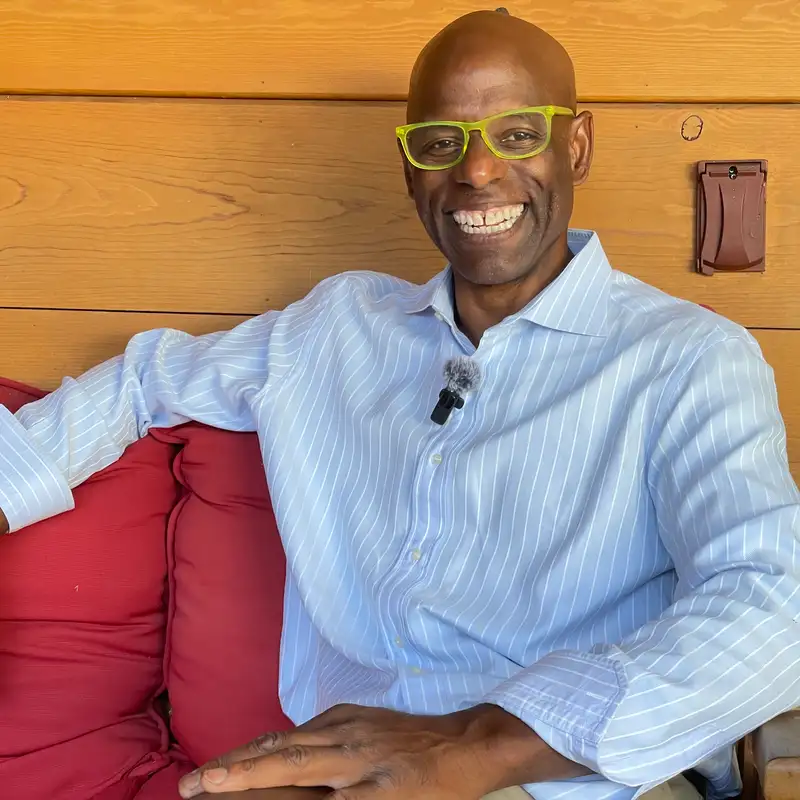
Hello this is the Island City Beat and we're talking to Amos White today. He's running for our Alameda City Council in the November third election. He's actually going to be one of a series of interviews we're going to do with the Council candidates And we need to know perhaps a little of your background, Amos. Do you want to tell us how are you today?
Amos White:Yeah, doing good, doing good. It's been exciting as you've known and you've heard. A lot of action and activity around this race. Really excited just to be in it, then too, thanks for having me speak here before you and your listeners. It's always a good opportunity to share, you know, not what I'm thinking, but my platform, but more so just, you know, talking about my background.
Amos White:That's for me, that's what it's really all about. You know, you judge a person by, the work they've done, not by what they say or the memes that they're putting out there or slogans. It's really looking at their track record and looking at the people who are there with them along the way. So what partners, what coalitions, what organizations, what other groups have they worked with and or done work with. And I think that's literally the measure of an individual.
Amos White:With myself, you know, my background is rather unremarkable. Grew up in Bexley, Ohio, a small suburb encircled in Columbus, Ohio, back in the 60s and the 70s. I'm actually that old. And graduated from high school to go to Wittenberg University where I majored in poly sci and English. Did really well on the writing side in English and composition.
Amos White:Wanted to be a poet for a short bit. And then got my first job outside of that in not politics, but in government. I was a page and a legislative aid two summers prior to graduating at college for the Ohio State House of Representatives and for an Ohio Senator there at the time, Rick Pfeiffer, Senator Rick Pfeiffer. And out of college, I got picked up by the Ohio Democratic Party and I was placed as the legislative aide to Senator John Glenn, a former astronaut.
Laura Thomas:Very famous person.
Amos White:You know, kinda. And then I came out here in California on a fellowship. I was extended a Coro fellowship and a leadership training in public affairs in Los Angeles. Diane Feinstein was a Coro fellow. I want to say Gene Ebert of Siskel and Ebert was a Coro fellow.
Amos White:So that was pretty flattering but not knowing exactly what it meant. Went through that in Los Angeles during the riots, fires and floods of ninety one to ninety two that we had down there. The first year of the El Nino, thanks to David Letterman who publicized the term El Nino. And, and, that was the floods and mudslides of Malibu. And then we had after the uprising Rodney King incident happened.
Amos White:That was incredible point of life and really Oh, literally was doing an internship. Coro has a series of in nine months, you're nine months intensive, eight hours or more a day of internship. And we went through probably 14 internships in that nine months. And I happened to be on my media internship and I was embedded with KTLA news and I was the assistant, I was assisting production on the Sunday morning show. I ended up on a news crew in Koreatown and in East Hollywood covering burning buildings.
Amos White:It was absolute chaos and social just decay. But being on a news crew with a team and literally covering that, I was just supporting the reporter at the time. It really was beyond belief watching what you took for granted as society for how things work, but really seeing the injustice of it and watching how people react to it and within it in the moment, all kinds of people, just completely different from community to community to community. We were first in Koreatown where we were covering that and the conflagration and all the energy came up from South Central right up Central, and or right up. I went on into politics working for, Barbara Boxer on her campaign that year, that summer.
Laura Thomas:So you first must have come up to the Bay Area?
Amos White:No. This was her first run. Was the whole Di Fi. You're the woman. Di Fi.
Laura Thomas:She was a Congresswoman for a while. And then she went to, so you worked on her Senate campaign.
Amos White:Correct. And that was, that was the Senate campaign in '92. And I was a Southern California volunteer coordinator from San Luis Obispo all the way down the Mexican border. But really the heart of it all was Los Angeles, which is just an amalgam of over 60 cities in that one county. So, that was an amazing campaign and having to manage so many people in six offices that we had was just a feat in such a movement.
Amos White:It wasn't a campaign, it was a movement. Getting Bill Clinton elected, getting two women in the largest state in the nation and the first two women in Senate at that time. There really was something magical and special about that. But then came up to the Bay Area, worked for Terrence Hallinan on his campaign the same year that in 'ninety five, yeah for 'ninety five.
Laura Thomas:Who? did he run for supervisor?
Amos White:He was supervisor. Terry was supervisor and ran for DA. Ran for DA against Arlo Smith and we won that race. That was the same year in December 'ninety five that Willie Brown became mayor And that so that was really incredible working across the fabrics of neighborhoods of San Francisco, learning the union politics, learning the democratic club politics
Laura Thomas:So and all how did you end up in Alameda?
Amos White:Alameda, literally off of Terry's campaign, it was run by a gentleman called Larry Tramatola and Catherine Liu was his campaign coordinator at the time. The campaign, they lured me over to beyond Barbara Lee's campaign, who was running for state senate at the time where she was, I guess, state representative. And so I build out three of her offices and Alameda was the first one. And I met some incredible Alamedans at the time. Harry Hartman I think was the chair of the Democratic club.
Amos White:Kate Prior met back then and just a host of people. Was really, really welcoming. Felt like being back home in the Midwest coming into Alameda the first time. But yeah, Barbara Lee drove me through and gave me a very extended tour of the city, almost telling me stories for for every building from the Crowell Building to
Laura Thomas:Barbara Lee did.
Amos White:Yeah, she picked me up out of 12th Street BART
Laura Thomas:I have not imagined that she would have known after
Amos White:Oh my we did gosh, my gosh. She was telling the nation, she told me about the first nations and how nations started enrichment. She even eventually drove me up there to buy me my second nations where she offered to buy me nations, a hamburger here. But it's incredible. I've really worked for some really incredible people and it's the stories.
Amos White:It's one thing to serve. It's another thing really to hold the stories of people and place and really work for that people.
Laura Thomas:Okay. Well, let's jump into other questions because we at Island City Beat are tough. We think we're tough.
Amos White:I thought we were done. No, just joking.
Laura Thomas:We think we're tough. So we have questions which we would like to get out. We want to pose to everybody. You and I have already spoken a tiny bit about housing. We're going to start with housing.
Laura Thomas:So social housing and I as a housing activist and my friend Doyle here as we were both in renewed hope and of course we did a lot to push the city's adoption of the housing element which as you know creates the zoning for housing. But it doesn't create the housing. So I'm wondering if you understand the concept of social housing and whether you would support it, how we would move in that direction.
Amos White:To your point, I'm learning the concept of social housing because that's not a familiar concept for many people.
Laura Thomas:Right, in fact, we should probably discuss it. Can you define it for me?
Amos White:Before we do that, no, I want get to that, especially for your listeners, because that's a whole new concept. Mean, a lot of people, they think, well, there's housing, there's affordable housing. They don't know there's actually, there's luxury housing that we're not building, but most of it is. There's market rate housing and the market rate here in California right now in the Bay Area to buy a house, market rate is 1.2 to one point four million dollars
Laura Thomas:it's ridiculous.
Amos White:But it's the market, so they say. But that's market rate. Then there's affordable housing. Right, It's a tier. The affordable in Alameda is about $900,000 And so if that's affordable for a person like me, look, I'm running against six other people, all of whom own a home.
Amos White:I'm the only renter in this campaign, me and my family.
Laura Thomas:Okay, so do you understand social housing?
Amos White:Tell me more about it.
Laura Thomas:Okay, social housing is permanently affordable housing and it's all affordable housing and it can be built in maybe two ways. It can be built by a non profit organization that then owns the land and rents or sells the homes on it. Actually the Woodstock housing is organized like that. Or it can be publicly owned and built and maintained as permanent affordable housing wherein people who arrive there are qualified by a range of incomes but are never forced to leave. They leave when they want to.
Amos White:Yes, okay.
Laura Thomas:And so you keep this housing in perpetuity and because it is always affordable and it's managed by some sort of non profit entity or municipality then or the you actually have an actual competition in the so called market, which isn't a real market because it's controlled by people who are wealthy, you actually have a public competition that brings the cost of other housing, the so called market rate, more into line with social housing so there is an actual real market there, not one that has been manipulated by the of the investor, the investment kind of financialized scene that we have in this country at the moment. Anyway, so that's what I'm talking about.
Amos White:Yeah, it's very similar. It's funny to say that. I was looking at that model. Sweden has got a lot of I price and
Laura Thomas:don't know about Sweden. Vienna is the shining example in the world.
Amos White:Okay. But there's a huge apartment dwelling structure and I was looking at it for its architectural value for how they integrated trees and landscaping to also make it more net neutral, if you will, from a climate standpoint. From absorbing carbon for carbon sequestration and providing more habitat for the environment, for wildlife. But then I looked at it but that is a social housing model.
Laura Thomas:It might be, well it depends on who owns the land and
Amos White:how the system is.
Laura Thomas:It's people are able to come in and stay.
Amos White:I'd be all for that for Alameda.
Laura Thomas:What do you think our first steps would be
Amos White:I wouldn't be the person for that. Not a housing expert and I don't intend to be that. Point is that as elected, I'm here to represent those, everyone in terms of a voice. I'm a representative. In terms of the values that I have, yes, housing, affordable housing, workforce housing for people who are in jobs but can't afford a home or are at risk of actually losing their home here they've been priced out of the community.
Amos White:I mean, the cost of food right now being up 30% in gas, it's too much of a dent for so many families. They have to move out of the area. That's a real pressure for renters like me. For my other five colleagues, you know, I'm not retired at a very young age having cashed out as a tech pro what I have work in the community. I run a nonprofit here, one hundred ks Trees for Humanity, planting trees for climate, for equity and for public health.
Laura Thomas:Let's turn then to the rent issue. We just heard that some landlords are finding some pretty ingenious workarounds to our rent control. Even Doyle was saying where he lives the landlord has asked people to pay a $50 upfront fee to use the laundry. So, do think this is sort of a scheme that needs some attention wondering what your position would be upon hearing that this sort of thing is going on in Alameda?
Amos White:I mean, at first blush, anybody would. There's two ways to look at it. They're going to be half the people that say, well, know, it's business. They can charge whatever they want. The answer is no, they can't.
Amos White:The question I would say as your council member or as I am a renter, even asking whether Doyle or, and I'll give you my own story coming up here at this Monday's Planning Commission, I'll tell you about our landlord Oh, and what they it's real. It's happening. So the thing is, need to interrogate it and we need to do that legally. First and foremost is we've got rent control here, a form of rent control. It's not the strongest, it's not the best, it ain't like Berkeley's, but the thing is it is something and we have it and we need to protect that and renters need to be able to know what their rights are first.
Amos White:Second, our city needs to be that advocate and this city has shown that Alameda has shown that it enforces our code. And then case in point, or specifically to your question, I don't know if a landlord can charge an upfront fee. That has to be challenged against what our code says. That's not my opinion. So that's how I would, you know, as a first, even as a citizen one or two, as your council member, I would say, what's the code say?
Amos White:And I'll be a voice for renters and for landlords. The thing is we have codes and we have laws. If we feel that people need access and need to have their voice heard, I will be your advocate.
Laura Thomas:Okay, let me get into something very quickly that the City of Alameda could jump on or could help out. There's a grassroots effort. This could also help with affordable housing. Apparently there's a grassroots effort in Oakland, Berkeley, Richmond to create a public bank. And Council people in those cities have endorsed it, Lena Tam's endorsed it, and I'm wondering what you would think about that
Amos White:I almost worked on that. I would wholly support a public bank. Same as I'm all for credit unions.
Laura Thomas:Right. Can you say briefly why what you think Alameda would get out of it?
Amos White:I haven't researched that and I literally was at the Democratic central committee meeting last night just learning about it. Fair Sean Dugard from Berkeley and Oakland is carrying that forward. A lot of us
Laura Thomas:are Was still that Sean Dugar?
Amos White:Yeah, Sean Dugar, D U G A R.
Laura Thomas:That sounds familiar.
Amos White:He was the one who's put that forward. Yeah, I think he's run for office. He's a very strong Democrat in Alameda County working on behalf of all of the party's issues.
Laura Thomas:So also another thing that we in the Island City Beat are always thinking about is the fact that small businesses are so important and the politicians tend to give a lot of lip service to them. But what can we actually do, especially with tariffs and other federal policies, along with consolidation and competition from people like Amazon, etc. What can a City Council do to help small businesses thrive?
Amos White:Help small businesses.
Laura Thomas:Right, right. Like what?
Amos White:That is the answer.
Laura Thomas:Right,
Amos White:And you need to advocate local. We need to promote shopping local. We need to lower the barriers for small business persons and persons who work from home to be able to have a livelihood, clean streets, safe walkable communities, and a permitting process that gets not expedited, but we need to be able to cut the red tape so that business owners and people, even for homeowners trying to get permits for renovations and what have you, we really need to work on our permitting process or department and planning.
Laura Thomas:What about rents for these folks?
Amos White:Rents, we can't determine rents. Rents are determined by the property owners and they vary across the board. Rentals aren't this, they're not the same building per building per building.
Laura Thomas:And
Amos White:so whether you've got a place on Park or if you have a place down Central or if you have a place over on Webster, the rents, depending on where you are, rents are different on square footage. The vacancies are different.
Laura Thomas:You don't see any role of the Council in limiting commercial rent.
Amos White:In limiting commercial rent?
Laura Thomas:Well, influencing the kind of rates that people pay for.
Amos White:I don't know, I've never been presented with that. Not a council member within that regard. I've never been presented with a proposal to quote limit rents for businesses or for independently owned buildings that are commercially zoned. I'd welcome exploring what those options are. And one, is there a legal, not just precedence, but is there legal standing?
Amos White:And then two, how would the community feel about that? And I mean, I'm all for free market economy. I believe that small business owners, especially, well, business owners across the island need greater equitable treatment. And in terms of programs that are being done, whether it's more street festivals and fairs, or if it's more community greening and beautification, why? Those increase more visitors to come to our city.
Amos White:Those things increase more foot traffic. Increases foot traffic increases, it's about that translates to sales. And so what we can do is support those programs that can attract more people. Alameda is a beautiful place to live. Alameda is, it isn't perfect, but it is a wonderful place both to have a family, but also to come and visit.
Amos White:I know more people who come here and dine here, from my friends from San Jose, come up here to dine with friends from Oakland here on Park Street or over at the restaurant they like over on Webster as well. So the thing is we're a destination. I think that is where we should put our investment dollars in improving those, if you will, programs and systems that better promote Alameda as that safe, comfortable dining destination, entertainment destination, whether it's our beach. We have the longest, largest contiguous sand beach in the entire Bay Area. But how are we promoting that?
Amos White:Are we holding a national sand volleyball tournament here? So what else can we do? Those are the kinds of things that I think we would do to help increase if you will, more foot traffic which supports more business owners.
Laura Thomas:Okay. So we're also concerned that there's some sort of an economic crisis on the horizon that we know that prices have been going up, but there could be some serious food shortages. If that were to hit, how could we help the Alamedans that will be facing, as you mentioned, the people who have the hardest time?
Amos White:I'm glad you asked that.
Laura Thomas:Who are, you know, can't afford to live, never mind rent. They may not be able So to afford the what can the Council do?
Amos White:Well, me tell you first what I'm doing as that prospective Council member already.
Amos White:First and foremost, I was appointed in 2021 to the Alameda County Agricultural Advisory Committee. We advise the Alameda County Supervisors on that committee.
Laura Thomas:That's interesting, didn't know that.
Amos White:But it's publicized and I'm on the website for the last six years.
Laura Thomas:just didn't know it. I It's very
Amos White:I serve in the capacity. I am the urban ag social and environmental justice chair. It's one title, urban ag social environmental justice chair. I'm really privileged to have worked underneath the tutelage of both our former chair, Carl Wente, of the Wente family and Wente Wines out of Livermore to really, who helped lead this commission forward and looking not just at the ag producers and our ranchers. I didn't know we had so much beef in Alameda County still, but the thing is there's still a thriving ag community here, but they need more support.
Amos White:But he really got the county to focus on urban agriculture and it has to do with two words that came from dearly departed friend and mentor Wilma Chan, supervisor Wilma Chan. She was really focused on youth and families and health and health through food, where they have a whole movement here in Alameda County where food as medicine. In other words, the healthier the foods, the more nutrient dense your foods are. Yes, organic does matter.
Laura Thomas:So how are we going to do that in Alameda?
Amos White:Well, what we're doing here in Alameda is the fact that I sit on both that committee and I'm sitting on a food institute.
Laura Thomas:You're talking back about the urban ag
Amos White:That's one position. The second is the supervisor's office, Marquez, think, no, Nikki Fortunato Bass has led a food security round table or work group.
Laura Thomas:Oh good.
Amos White:It's dozens of people working on food insecurity with looking at these potential disruptions that can continue disruptions one year ago. They shut down, they shut down SNAP or they first they shut down, one year ago they shut down the government. SNAP was just this winter spring. One year ago in September, they shut down the government Alameda Food Bank, and not the County Food Bank, the City Of Alameda has food bank over at Alameda Point. I'm partnered with them through 100 ks trees in terms of taking their food
Laura Thomas:We've waste and taking it kind of done a show on them and we're very impressed with how much work they've done. How do we scale it up as they say? How do we do that?
Amos White:That's the problem right now because this government, our federal government has cut the funding that
Amos White:used to go to food banks and churches and other groups that they use the funds to purchase food that they then would redistribute back to people in the community or they had their own food banks there. We need to continue to support our local food bank.
Laura Thomas:Right
Amos White:We need to continue and increase our support of urban farms and urban farmers. Now you see the link to my work And on the county so with the Food Security Task Force, it's how do we here in Alameda leverage one, the urban farm at Alameda Point called Farm to Market.
Laura Thomas:Well again, what can the council do? Because this is stuff that you as a grassroots person have worked on. That's correct. And it's mostly, I don't think the city supports the food bank, it's citizens that do. I'm wondering at the institutional level the city council, what could we do?
Amos White:We need to have a real conversation and I intend to lead that. The thing is we don't have that voice and we don't have that leadership in terms of looking at the people. I mean, I can't say enough as a renter, I can't just say at the end of the day, hey, let's take this up next quarter. Why don't we take this up at the beginning of next year? Why?
Amos White:Because that comes from a position of privilege of being able to just check out, I can go home. you Know, the mortgage is paid, the keys to the car multiple are on my living room table. I don't have that privilege from the position I'm in. I intend to be the voice of the people and more so to say I'm the only person not only who doesn't own a house in this race, but who doesn't live in the East End. All the other candidates do.
Amos White:I live in Well, the West
Laura Thomas:That's interesting
Amos White:It's not. It's a story of Alameda. If you look at our last Council members who were here, don't have that diversity. Perspectives. We don't have that diversity
Laura Thomas:of Well, used to have more West End people on the council, but anyway, what I'm hearing you say is that you do see the city as an advocate for people.
Amos White:City can be an advocate for people, I on City Council intend intend to lead that. Therefore, yes, that is City Council leading it.
Laura Thomas:That's what I'm hearing. All right, so here now we're going to get into a really dicey question. What about potential incidents?
Amos White:This the whole Raiders versus Giants thing? No?
Laura Thomas:No, think
Amos White:Raiders versus 49ers.
Laura Thomas:We buy to all of them anyway. How about a potential invasion by ICE? What
Amos White:It's does this not a potential. The thing is ICE has been here. ICE's offices are right up here by the tube, Webster Tube. The Homeland Security offices, they've been there. About a potential invasion?
Laura Thomas:I'm wondering what The open
Amos White:already was invaded.
Laura Thomas:Well, Okay, I'm going to ask you specifically. Yeah, go ahead. The role of our police if we were invaded at ICE. How do they, what role should they take to protect us? And I know you won't be a council, but were something to happen on election day, what role should they take?
Amos White:Our chief has already been instructed and he's already said Chief Nishant Yoshi. As you know, I help organize these no kings rallies. And in the first administration through ACLU with ACLU People Power, I and colleagues organized first and foremost the Sanctuary City Town Hall we held out at Rhythmics. And then the second town hall on immigration. First one was on immigration, police, immigration and police with Chief O'Leary, we held at Rhythmix and we gave him 12 points for ordinance, holes in ordinances that ACLU was saying nationwide, give these to your heads of chiefs of police, get them to agree to all 12 points.
Amos White:I led that within our city here. And I'm proud to say that Jim, who is it back? Jim Oddie, Trish Spencer, I forget, put that forward. And 11 of those 12 points in terms of ordinances were all adopted. Second, we had a second meeting on immigration and the police at city Hall as a follow-up.
Amos White:And the result of that was Sanctuary City.
Laura Thomas:Yeah, know, but those are all things that are in the past.
Amos White:No, they're not in the past. That's the basis for which our city
Laura Thomas:It's basis, okay.
Amos White:Without that basis, we are at risk and that's the basis. First, the ordinance
Laura Thomas:So what are the police gonna do if ICE comes?
Amos White:First is what they can't do. And that's what those 11 points are. We sewed it up to where they can't pull you over literally. Your viewers may not know, but I happen to be African So as a black man and the only one in this race, and it's significant, especially living here in Alameda, this history, and it's not that far back. I mean, it was only in 2002, our city made national news on NPR
Laura Thomas:You're for saying that the police would stop, would They
Amos White:can't stop. And Chief Yoshi has done
Laura Thomas:They leaps them can't. Well,
Amos White:it's not that they cannot. The police have been instructed by Chief Yoshi in upholding both our ordinances and our sanctuary city commitment. And I think our police department is on the side of the people. As I started to say, at one of the, at that No Kings rally, he actually made that point. That he stands firm with our city in upholding our sanctuary city resolution.
Laura Thomas:So you would hold him to account on it.
Amos White:It's not just holding the chief to account. The thing is it's more of the democracy. And that's why, you know, look, I've been a community organizer for forty years now. I'm 62, surprise here, 62 years old. For forty years, I've been a community organizer.
Amos White:Alameda comes together to protect all peoples in times of crisis. When I was with the Interfaith Coalition of Alameda, when I was the Rapid Response chair for them, when the synagogue got attacked here, when in 2017, when some trucks started going down the street throwing out leaflets against our Muslim community, We organized our city and Alamedans came together and Alamedans stood firm. This is what's at the core and the basis of our community, but without leadership on council to organize the people and to be the face that says we stand firm on our sanctuary city and I stand with the chief who's right there with me when we're there. That is the symbol of what we have built here in this town. And together with that ordinance, with our sanctuary city resolution, with the people there, that is what turns back ICE, not just one police department.
Amos White:Look at Minneapolis. Minneapolis is still fighting. It's not in the news. But it's the people.
Laura Thomas:I know the people come together, but the police department is hired by the people.
Amos White:Is hired by the people.
Laura Thomas:And should be taking direction from the people.
Amos White:They take direction from the chief and the chief takes direction from our city manager who takes direction from city council.
Laura Thomas:Okay. All righty. All right now, so we move on to another favorite topic in Alameda which is crime.
Amos White:Dude, was going be pies at Nation. I thought you were going to ask me what was my favorite pie from Nation?
Laura Thomas:That's the last question. It's right here. Again, to me or to us, crime is something that is never completely defined. So to what degree do you believe that Alamedans are threatened by crime and is more policing the only answer? What are your thoughts?
Amos White:Two things. One, statistics, meaning data, which give us facts. One, we need to look at what are the facts. Is crime going up? Is crime going down?
Amos White:Are they petite crimes? Like, oh, what do you call that? Shoplifting? Or are they more home invasions? Or are they car thefts or break ins or just punctured tires?
Amos White:So in terms of classifications of crimes, I don't currently know what in a down economy, crime goes up. It's known, it's documented. Perception of crime is what you asked about how people feel about whether they feel threatened.
Laura Thomas:Well, think crime is all about perception. That's why I'm asking you for you to define it our listeners from your point of view?
Amos White:I can't do that. Can only say for myself because everybody has a different perspective.
Laura Thomas:You're answering that, that's good.
Amos White:Yeah, yeah, everybody has a different perspective. Were just at the League of Women Voters Forum and hear, it's completely different to hear a woman talk about how she feels unsafe when I would say ninety nine percent of men or males don't have that same sensation. I need to be able to be open and listen to women when they say they don't feel safe. It's not about me for how I feel because when my wife says, don't you notice like how they look at you or don't you notice how maybe somebody starts to follow you? I'm like, no babe, it doesn't happen to me or I'm not aware of that.
Amos White:I can't only represent from my point of view. I've got to be listening to all our constituents. So, when people say they feel unsafe, then I need to be able to be listening to that and see what's the data like and what do they feel unsafe about. But what do I feel about crime?
Laura Thomas:And policing in relationship, whether it's numbers of police that affect crime.
Amos White:That's yeah, in terms of numbers of police, numbers of police don't affect crime. They respond to crime. So crime happens. What I do believe is that, in terms of can we have greater prevention? Number one, I said this at the democratic forum, at the Democratic Club Forum here in Alameda.
Amos White:The greatest prevention to crime, notice, as the economy goes south, crime goes up. And I pointed out case study, city of Richmond back at early 2000s when they hired their police chief, I think it was from San Francisco, the first openly gay chief.
Laura Thomas:Remember that. That
Amos White:was so significant.
Laura Thomas:Supposedly was really effective
Amos White:Supposedly time effective. Be Oh, it was amazing.
Laura Thomas:He
Amos White:got moved on, why? Too effective. Crime in Richmond was again, post crack era. It was early 2000s. Comes in, White Chief, he comes in and what they ended up doing was he looked at the data and he noticed the recidivism rate and the perpetrator rate were within the top 100 individuals.
Amos White:They found like it's the same group of people like doing 80% of the crimes. What they started to do is kind of like we have universal basic income we've been testing out here in Alameda. What he offered was they offered people, I think it was a thousand dollars a month. I think it was the top 100, perpetrators of crime. We just call them criminals.
Amos White:People who been arrested
Laura Thomas:for Right.
Amos White:They dropped their rate precipitously. So what did that show us? What we knew, people are committing crimes for one reason or another. Why? They don't have a job.
Amos White:They don't have income. They don't have food. Mama's at home. Baby needs food. Baby needs diapers.
Amos White:Whatever. We need food to survive. I need gas for my car. I can't make
Laura Thomas:the So we have to figure out as a city how to provide for people.
Amos White:We do provide for people. Alameda is on a good first step with the UBI, the universal basic income. Can we scale it up? The question is, are the crimes occurring from people who live here in Alameda versus people who come to Alameda? You need to look at the data.
Amos White:Just providing universal basic income here, it keeps our people, if you will, better situated, better situated in their homes where they may predominantly are renting. And therefore, yes, they are more secure, which makes us as a society more secure. That's what we learned from that lesson in Richmond. If we can continue to scale that up completely. Ounce of prevention is worth a barrel of
Laura Thomas:We'll move on to the next exciting question. Here we go. So climate resilience. So let's look at the idea of energy independence. This is just one area of climate.
Laura Thomas:Climate resilience is this broad topic that everybody wants to talk about, but has many aspects. We want to ask you about energy independence. So we would like to know whether you would support a resolution outlining the benefits of the Alameda Municipal power building a large scale solar farm on the old Naval Air Station runways.
Amos White:Yes, I would.
Laura Thomas:Okay, very good. So on the same track, all around the country rooftop solar networks are being implemented in municipalities.
Amos White:Called microgrids.
Laura Thomas:You go. Alameda Municipal Power, as you know it's city owned, seems reluctant to implement one.
Amos White:Recalcitrant. Would
Laura Thomas:you push for such a program?
Amos White:I already did. So I'm so glad, I'm telling you, you teed this up. With my colleagues on Casa, Bloody, what's his name? Jeff Gould.
Laura Thomas:Well, he's on our group. Yeah. Okay. Go on.
Amos White:Oh, okay.
Laura Thomas:We get a lot of this from Jeff because he's one of our He's
Laura Thomas:He has informed us.
Amos White:CASA has some of the best minds on it. Debbie Ryan in energy solar and energy storage. Jeff Gould in municipal scale energy systems. Ruth Abbey in sustainability. Sylvia Gibson, who's got an MBA in sustainability.
Amos White:We've got amazing minds in Alameda and CASA really brought that together. So with Damian Mason, Jeff Gould, myself, we had put together a proposal somewhere back in 2017 or '18 just to do that. I tried to acquire, rent or lease the tarmac out at, which is now outside of Faction and that Gold Bar, whatever that new place is out there next to Faction Brewery. But the tarmac on the other side of the fence going out, which is just all concrete that was built out
Amos White:So putting out large scale solar there would be a triple net win for the city of Alameda and reduce our energy bills as well while we're selling power to other cities.
Laura Thomas:So why don't we have it?
Amos White:It takes political will and it takes numbers. I'm not the energy expert on it. Mean, were actually trying to bring in the partners to actually be the
Laura Thomas:Jeff contends that AMP just blocks it.
Amos White:Well, drag their heels on it right now.
Laura Thomas:So if that's true, why should we allow them to operate so independently? Shouldn't they be under city control?
Amos White:That's a different question, I don't know. I'd need to look
Laura Thomas:at Well, it's related.
Amos White:It be yes. It's a fair question. Should it be like the housing authority, should it be under city control? Again, we need to look at the numbers.
Laura Thomas:What numbers are we needing to look at?
Amos White:We need to look at what the cost benefits of first and foremost, I mean, city does not run power company. These experts run Island Municipal power. I am not a fan of the concentration of power in government. I actually believe that government and our government are federally first, is strongest and safest for a democracy when you have a separation of powers. The city of Alameda first and foremost, there are no checks on Council.
Amos White:We don't have an independently elected mayor that who is a strong mayor. They have the same vote and they sit on the same legislative body as the other four council members. So first there's no check on our council whatsoever. It is both the legislative and the executive. But people say, well, the city manager is the executive.
Amos White:He's a manager. He's not the executive over the city. The council has that priority. He carries out the direction of Council and through the departments that our city has. Our city attorney is not the legal check on our governmental system.
Amos White:They are hired again by the city manager and they are staffed to the city manager and to council. So for AMP, I would not be the first fan unless someone could show me that our city could responsibly enable quasi owned development or utility that it could have still its own autonomy without any form of undue That influence or
Laura Thomas:autonomy might be the part of the reason why they don't seem to respond to your committee's request.
Amos White:No, no, I don't know.
Laura Thomas:I don't
Amos White:know what the business side of it. Business, there's politics. But the thing is, I would say if we had an independent analysis of a consultant who would go in and show us with our AMP. AMP is a 100% renewable energy. And that is something.
Laura Thomas:Well that's true but they don't want to do a solar program in this period when it's happening all across the country. That's a big question.
Amos White:Again it takes advocacy first from the public to also from Council and the Mayor who appoints the board members of AMP. So again, we have a way to influence. The question is, do we have the will? I'd be willing to carry that forward as Councilman.
Laura Thomas:Very good. And I'm glad you mentioned the housing authority. So you have some sense of, we're almost done. We're almost done. Sorta almost Anyway, the housing authority, I guess are you aware of how they've sort of blocked the subsidies for the
Amos White:I was at that council meeting.
Laura Thomas:Okay, so do you have any idea of any sense of whether the housing authority is acting sort of independently and against our best interests of the renters? Because you know, are people in their units aren't I covered by rent
Amos White:can't say they're acting. Can't, on first blush, would say that sounds good. But to me, that's not the analysis. Housing authority got up before Council and laid direct accusations. The city manager was sitting there, the city attorney was there, four council members and the mayor.
Amos White:This housing authority and two of its entities, or a board member and the director themselves, I believe, if I were correct, laid direct accusations saying that the city was slow rolling things and or made threats to the housing authority. That is the only thing, Why, that says there is some degree of animus, animosity, and perceived animosity. You asked me about residents and how people perceive crime. The crime is the fact that that would have to be aired out in public at a public hearing and that there was not any degree of trust between the entity we're expecting to be not only advocating but helping to have more housing built, which they are doing for renters. So I can't say that their decision in that was against renters.
Amos White:What I see is that there's something going on between the city and the housing authority. Exactly. And everybody needs to say press pause back room or press pause at the mayor's table or press pause and at the city manager's table. We need to get to the bottom of this because renters are hurting. We have people on our streets who don't have housing.
Amos White:And if the housing authority says,
Laura Thomas:Yeah, what we're following is the the goal of the city?
Amos White:Well, the housing authority said that they said here are the federal requirements, here's what we're doing and we're advising you what you're asking us to do is illegal. Now, need, the city had to, they didn't address it and they didn't ask the city attorney or the city manager,
Amos White:How do you address such assertion? It's not counsel's role. My role is to say for accountability, city manager, how we address this? Because if they're the authority and they're showing us the goods, the receipts, then this is a legal issue that we need you to take care of or it's a matter of the city council pushing forward an agenda that seemed to create it.
Laura Thomas:I understand you're going to put some attention to these issues.
Amos White:Housing is number two on my platform. Housing, affordable housing, workforce housing.
Laura Thomas:I'm you have some sort of position on the coal terminal in Oakland.
Amos White:Yeah, it shouldn't have been an issue and only with this current administration has it resurfaced. It's an abomination knowing that the nation's number one threat to our country as defined by the Pentagon in 2009 is climate change. That has not changed or wavered. The number one driver of that is the extraction and the burning of fossil fuels.
Laura Thomas:Right. So would you support the city kind of entering the fight against the coal terminal or passing any resolution?
Amos White:I would look to support our sister city of Oakland and all the cities through which that coal would be passing from Richmond to Albany to Emeryville to Berkeley into and I said in reverse, but Berkeley to Emeryville into Oakland in their fight against it. Richmond got the coal terminal kicked out three years ago at the terminal they had there in Richmond. East Bay and Bay Area cities are doing what they can for residents. But I think in working together and working forward together, we could do more for the environment, for equity.
Laura Thomas:I know now the data center has just popped up on our radar and I know you're leading at least the petition.
Amos White:Yeah, I'm personally organizing against that. One, again, climate is the number one public health and national security threat. Why? That's causing, you talk about the food instability. People are still talking about supply chains have not fully reset and gotten back on speed from COVID.
Amos White:With what we're going through now from the destabilization and the loss of fertilizers, access to what's coming out of Strait Of Hormuz and The Gulf, is all tied to the oils over there and the production of fertilizer. It's not a ripple effect, that's going be a tsunami. And we need to be thinking very hard and strong about it. And that's a very real thing. For what we can do here in reprising your question.
Laura Thomas:Well, I was just going to, you know, it's obvious that you're against data centers. My question was just, would you support a data center? I know you wouldn't. And I think we need to kind of move into, you're starting to move into something about, how do we stay resilient
Amos White:We need to press pause on data centers. I mean, same thing, Bernie Sanders, and I wholly support his point of view on this. We need to press pause. Why? AI is a grave threat right now and until we can figure out regulation around that, we need to press pause.
Amos White:Data centers are what fuel the expansion and the AI race that we're currently in. But the environmental impacts, the human impacts, the data centers are predominantly put in rural and in communities of color. And again, it's a red lining or a dumping, if you will, an environmental justice issue. Putting it up at Alameda Point on the West End, it's not that we need to have it on the East End. The thing is, this is a technology that has been proven.
Amos White:And we know it has deleterious effects first and foremost on the environment. The consumption of water in the billions of gallons, fresh water, not sea water, is astronomical. Right now, the Western states of The US, we all took a hit on our water allocation coming off the river. Okay, is it the Colorado River that feeds going down through Arizona that we pump water. So California's terms energy costs, 50% is electricity and it's to pump the water from one side of our country over the mountains and the hills over to Los Angeles, to San But Francisco and the thing is we've got challenges.
Amos White:Data centers right now for Alameda and any business that is data center centric in the construction, manufacturing or servicing of data centers and its componentry, we need to press pause, but that's not for Alameda.
Laura Thomas:Right, right. You know, we're actually near the end. We almost are at the end. So what I'm going to end up by asking you is what do you do for fun in Alameda in your free time?
Amos White:I do too much. I love this city. I mean, all I can do is just point to it just in names, all kinds of folks. Truthfully, I even see you guys on Tuesdays, know my passion is Tuesdays, I'm always wandering in like a zombie to get my second espresso of the day after I leave home and a Danish and an apple juice over at West Cafe.
Laura Thomas:Right. It's a great place. Yeah. I love Wescafe Community center of all Community of or at the local level
Amos White:or my 04:00 espresso over at Pete's Coffee on Webster. I meet the most incredible people there, Alamedans who are doing good things, who are staying at home and are in the workforce. I'm a poet here in town with Alameda poets, Kathy Dana and Kimi Sukioga, our poet laureate are really good friends. Being able to just be in community with our literary and arts community here for fun. I'm big supporters and fans of Studio twenty three is led by Wesley and Jessica Warren over there behind Revelation Cleaners.
Amos White:They do great art and great community programming. Over here on the West End, over at the Healing Garden, my organization, one hundred k Trees for Humanity is sponsoring public art with Katie Connell. And Katie Connell, Joanne Yeda, Marci Voeven are all artists in towns. Incredible doing works. And I love being in the community.
Laura Thomas:The arts community is important.
Amos White:Oh yeah, when I was on the board of Rhythmix back in the day, ten years ago from '16 to '21, when I was on the board of Rhythmix, a wonderful artist by the name of Linda Forks Weinstock. Linda Weinstock, She really got me, she was my second mentor in the arts Introduced me around to Jan Mason and Bonnie Bowler. Bonnie was great, a great artist, great, who was Greg Bowler's mother. She was an amazing artist, but she they had a women's art group that I got introduced to. I get that title.
Amos White:But the thing is Alameda is so full of culture, arts, inquiry, big hearts, wonderful people, organizers, the least expecting like Kate Schatz and the work they did around Pantsuit Nation. People don't even know that started here, right here in Alameda after Hillary Clinton debacle. And so, you know, love being in community with folks. I was gonna say my good friend and now my director, I perform in the, I play bass in the orchestra at Castro Valley Community Orchestra, but it's directed by Josh Cohen off of Bay Farm Island. Josh is the director, he's a renowned musician violinist in his own right.
Amos White:He and his wife Genevieve, both members of Temple Israel over there. But Josh, know, five years dragged me, so to speak. Every time he saw me on the street saying, Yeah, heard you were a musician back in the day. I'm like, Yeah, you know, rock was one thing or funk was one thing, but he knew I had played an orchestra. For five years, he kept after me until a year and a half ago, performed in, I stepped in so to speak and knocked the rust off after forty years of performing.
Amos White:And now he wants to do more smaller, like community based orchestra things here in Alameda. That's the heart of Alameda. This is what I do for fun. And so, with good people and creating community.
Laura Thomas:Good. Okay. Thank you, Amos. This is the end of our interview.
Amos White:Well, thank you very much. We really appreciate this.
Laura Thomas:Yeah, I hope our listeners have enjoyed this. This has been a great conversation and hopefully we'll have more with the other candidates. But for now, this is Amos White running for City Council. We'll see you next time. Goodbye.
Amos White:Thanks again.