Hello Alameda.
Angie Watson-Hajjem:Welcome to the Island City Beat Podcast. I'm your host Angie Watson-Hajjem. I think we can all agree that technology, social media played an enormous outsized role in our lives. We're on our computers, our smartphones, we're sometimes nonstop on them, surfing the internet, connecting to social media platforms. And guess what?
Angie Watson-Hajjem:So are our children. Researchers, psychologists, and others have been sounding the alarm for years about the harmful effects that social media can have on the mental and emotional well-being of our kids. So what do we do? What can parents, educators, concerned adults do about this issue? Well, my guests today, Sarah Qualters and Alex Jakubov, are here to share some answers, give some guidance to us on this topic.
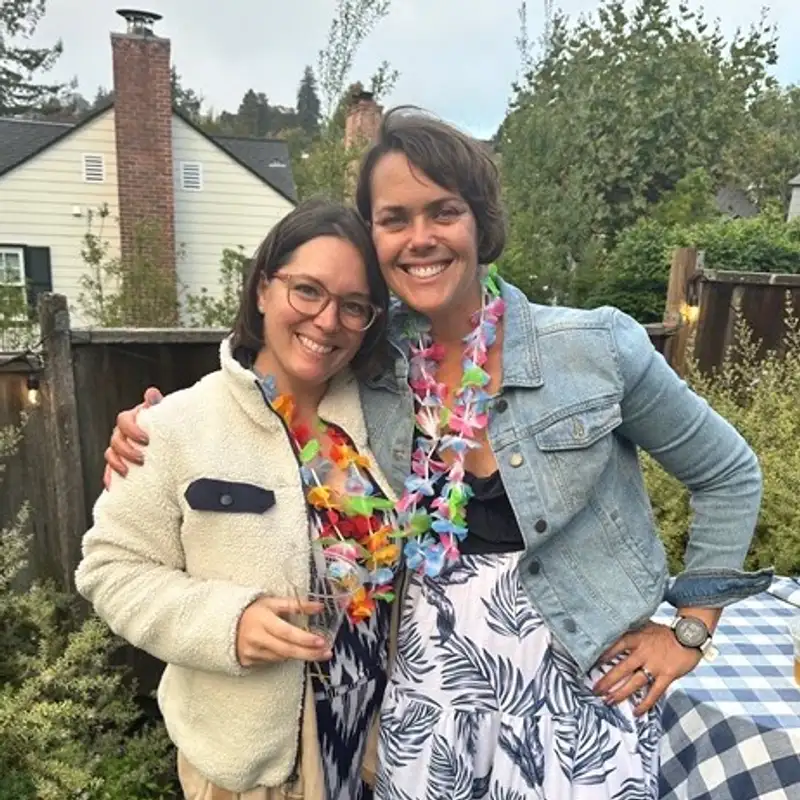
Angie Watson-Hajjem:They are two local Alameda moms who have started a movement called Alameda Unplugged, which provides support and resources to families who are looking for ways to help her kids have a healthier relationship with the digital world. So with that, Alex, Sarah, welcome to the Island City Beat Podcast. Thank you both for being here today.
Alex Jakubov:Thank you, Angie.
Sarah Qualters:Thanks for having us.
Angie Watson-Hajjem:Yeah, great to have you here. A lot of parents have great concerns and frustrations about social media and the influence that it has on our kids. I think many parents just feel like, oh my god, it's out of my control. I can't do anything about it. You guys did do something about it.
Angie Watson-Hajjem:You guys started Alameda Unplugged. So I would love to hear about the fire that really got this Alameda Unplugged started.
Sarah Qualters:Yeah, I'll start. This is Sarah. Thanks Angie. So I read this book last year called The Anxious Generation by Jonathan Haidt. It was highly recommended by several friends of mine.
Sarah Qualters:I read this book and it is all about what Alameda Unplugged was founded on, which is the relationship that children have with technology, as you shared, and how the detrimental effects that it's having on children as they age. So I read this book. I was really excited, but didn't really know what to do. And I recommended it to my book club. Alex is a member of my book club and a close friend.
Sarah Qualters:She read it and we both just felt like we wanted to do something with the information that it provided. And so we decided to start Alameda Unplugged based on three of the four principles that were written in Jonathan Haidt's book. And we felt empowered based on the resources that were in the book that we could share this with others so that they felt the same excitement about doing something to make a change in our community.
Angie Watson-Hajjem:And what was it in the book that really stuck out for you? Like we got to do something about it. It was something that you got that really just made kind of turn things around for you when it comes to social media and trying to do something about the effects of it on our kids.
Sarah Qualters:For me, was the research. It was very clear from all of the research that was shared in the book that this was a problem. And I honestly didn't realize it was as big of a problem as it was from the research. My kids are six and eight, so this discussion hadn't really started in my family yet. And so I was hoping that by doing this proactively, we could help avoid these problems that we read in the book.
Sarah Qualters:So I would say it was just the startling statistics throughout of how social media and smartphones are really making people feel more isolated, increased rates of depression, anxiety, and the list goes on and on.
Angie Watson-Hajjem:Yeah, yeah. So Alex, I know that you guys have several goals that you want people to try to embrace and think about. And one of them is not giving smartphones to our kids before eighth grade. Why is it important that we hold off on giving kids a smartphone before eighth grade?
Alex Jakubov:So it's actually waiting until ninth grade. So you want your kids to get through middle school. It's a really important time period. And I'm not a doctor or a researcher but the research that we have access to through these great resources and through the book tell you that around the preparedness of the child's brain, the development and the readiness for it. And really what it just comes down to is that it isn't fully formed yet and ready for that type of responsibility and for the opportunities that the smartphone itself presents.
Alex Jakubov:That's not to say that you shouldn't, if your child goes to soccer practice on their own and they're walking from your house to Rittler Field or something like that, right? That you might want to have a flip phone for them. But some of the sheer access to gaming and the internet itself, they're just not ready for it yet from their brain development.
Angie Watson-Hajjem:Yeah. And you guys also talk about helping our kids have more real world independence. What does that mean exactly?
Alex Jakubov:Yeah, so I was born in 'eighty six. I turned 40 this year. I was raised in most of my memories from young childhood adolescence take place in the 90s. So pre internet, pre smartphones and the things that I got to do, walk to my friend's house on my own, hang out with friends without having a parent hover when I was eight, nine, 10, 11, 12 years old. To me that's what the real world experience is about is about giving your child guardrail opportunities where they have the opportunity to use all the tools that you've been giving them since they were even younger and start practicing those so that by the time that they are an adult they've had more of that experience.
Alex Jakubov:And so it might be going to the park to play without a parent walking them. It might be walking home from school in the afternoon once they've hit fourth grade. It might be having a friend over and they're playing in the backyard and mom or dad or an older sibling isn't sitting there watching every little thing and also putting the rules in place the things that they're doing, right? Let them self govern, let them go play games and make up rules to the games and have disagreements with one another and negotiate with one another so that they can learn how to be a productive citizen, knows how to handle conflict.
Angie Watson-Hajjem:Yeah, it does seem that parents today in this generation seem to be more protective over the kids. Because I know when I was growing up, I'm older than you are, I grew up in the 70s, and I just remember just being out outside playing and going trick or treating, just ourselves, just my friends. And now parents go out with their kids when they go trick or treating. And I don't know if it's just people feel like it's a more dangerous world, but I do feel like we do have a lot of helicopter parents out there that probably impede kids from being independent and being out in the world and so forth. So it's something to really think about.
Angie Watson-Hajjem:I want to also talk about we want our kids to be different, but we have to be different also as parents. So I would love, Sarah, for you to talk about how do parents model the behavior that they want to see from their kids? Because you see parents all the time on the phones, and I see parents out with their kids in the park and they're on the phones. So what can parents do? What should they be doing?
Sarah Qualters:Yeah, that's our fourth goal in Alameda Unplugged and the one that Alex and I decided to add that wasn't explicitly called out in the book that I mentioned earlier. This was really Alex's idea and I loved it. And the whole sense is kids are watching what we do. It's not fair for us to walk the walk and not talk the talk. Vice versa, sorry.
Sarah Qualters:And so what we wanted to do is model that appropriate behavior of showing the good things with technology and leveraging it for its useful purposes, but not having it be a social distraction all the time. I recently heard this phrase that you shouldn't have your phone out if there are faces in front of you. And so it's phones down if faces are there. And I loved this idea. And the intent was you're out to lunch with your friends.
Sarah Qualters:Alex and I are sitting having lunch together. There's no reason for a screen to be in between me and Alex. There's a real face in front of me, and I should capitalize on that. So we're trying to encourage parents to do the same behavior that we are asking of their kids. So in practical terms, what that means for me and my family is we've been trying to put phones away for dinner time.
Sarah Qualters:So when we sit down for dinner, we actually call it distractions. So what that means is me and my partner, my husband, we put our phones away. It means that my six year old stops drawing because she loves to draw. Her notebook goes away. My eight year old loves reading.
Sarah Qualters:Her book that she's reading goes away. And we are trying to be more in the moment together when we are doing that. And so what we tell people is also, you might be a doctor who's on call who has to have your phone near you. Obviously, there is a very good reason that you should have your phone near you. And then we tell people to just dictate what they are doing with their kid.
Sarah Qualters:And so one example we say is, have to pick up your phone and maybe make a phone call at dinner because there's something happening with work or an important family thing. Just tell your family, hey, I'm not over here scrolling endlessly on Facebook. Excuse me, I need to take this call. It's important. I will be back in five minutes.
Sarah Qualters:Go take your call. Go do what you need to do. Come back and then reenter the conversation. And as long as you explain that, that's a great way to model healthy behavior with technology.
Angie Watson-Hajjem:Yeah, absolutely. Alex, what about you? How have your family members been modeling this behavior for your kids?
Alex Jakubov:So my mom was just in town from the East Coast while my husband was out of town for work. She was helping me. I start my days very early at four A. M. Working with Israel.
Alex Jakubov:I'm in cybersecurity. And she, the last time she was here was in July. And this was right around the time that Sarah and I were really, we were getting into the book and we're really starting to talk about all of this. So I'd made some conscientious decisions in the summer that we weren't doing any screens anymore for the kids. I think the best example I can give of how this has impacted my family is when they are having disagreements with one another and they're so I have a four and a six year old just a couple of years younger than Sarah's.
Alex Jakubov:And the two of them will go down to our basement and they'll be playing with something and there will be an argument of some sort. The trigger for most parents is you hear your kids arguing, you want to go get involved and you want to regulate and kind of declare who's right or wrong or both of them are wrong and correct the behavior. By four and six they've had a lot of examples for that already and so I just tell them, I'm not getting involved. The two of you need to work this out yourselves. And it took a couple of months of me reiterating that but they don't come to me anymore.
Alex Jakubov:And I can actually hear them when I'm drinking my coffee on Saturday morning while they're in the basement and I hear them, the little ones say, that's not fair. I don't like how you're playing with me right now. I'm not gonna play with you if you're gonna keep playing this way. And then the six year old will correct himself and or vice versa. And I think the just by making the decision that we weren't having devices and then for myself, similarly with Sarah, we don't have any devices at the table.
Alex Jakubov:My six year old pointed out, dad, you have a smartwatch. He's like, okay, all right. That's a different kind of technology or a different device. But we've had these conversations regularly. And I will tell my kids, hey, I've got to go step away to take care of an email real quick.
Alex Jakubov:I'll be back in fifteen minutes. If I'm not, come interrupt me. And by empowering them to also hold me accountable, I think that's been an important aspect of this.
Angie Watson-Hajjem:I love, Sarah, you were saying no screens if there's faces. And I was at a holiday party, and there was a room where there were a handful of young people, young adults, like late teens and 20s. And I couldn't believe this. All those kids were on their phone. I remember looking around, and I remember saying something like, you guys should really be talking to each other.
Angie Watson-Hajjem:And they just ignored me. They just kept on their phones. And I remember there was a parent there at the party. She looked at me kind of perplexed, like, why are you telling them to get off their phone? She thought that was perfectly normal for four kids to be hanging out on the phone so they can be talking to each other, so it was so crazy.
Angie Watson-Hajjem:So if you're a parent of a 16 year old kid who's constantly on the phone, that's the way they connect with their friends. They're part of the world around them. How do you get that kid to change that behavior? Because it's so ingrained. By the time they're in elementary school, a lot of kids have phones, and they are savvy when it comes to social media.
Angie Watson-Hajjem:So how do you start breaking that habit? Because it's just so deep.
Sarah Qualters:It's interesting. In the book, The Anxious Generation, there's a lot of research about the fact that kids are not happy with this behavior. There are a lot of instances where 16, 20 year old kids, they say, gosh, I wish that social media was never invented. I was listening to a podcast just the other day that said some startling statistics of about half of kids who are this age wish that social media wasn't invented because they feel they have to be there because everyone else is there, which is what we are trying to obviously change the norm is that's not where you have to be. But what's interesting also is the author of the book, he just came out with a brand new book and it's called The Amazing Generation.
Sarah Qualters:And it's actually a book that's targeted at children to speak to them in their language with appropriate language. It also is a graphic novel and it talks to children so that they understand what is happening in their brain, in their development, and why the choices they make matter and how they will be happy. And so I think it's really not beating around the bush and talking to children directly. Like, hey, after you spend an hour on social media, how do you feel versus that hour where you were playing soccer with your friend outside or doing things like that. And it's really just having that conversation one on one.
Sarah Qualters:So you gave the example, like a 16 year old, say, hey, you just spent a few hours scrolling on TikTok. Compare that to your soccer game that you went to this weekend. Compare that to the lunch date that you had with your cousin last week. And they will recognize like, yeah, actually playing soccer with my friends was a lot more fun. I feel better after that than I do.
Sarah Qualters:And so I don't think it's as much lecturing as having an open dialogue and asking questions.
Angie Watson-Hajjem:I like that because it really puts the ball in the child's corner of really having some consciousness about their cell phone usage and the effect that it's happening. It helps them think. Now, are some parents that say, I really want to have my kid have a cell phone because I want to make sure that they're in school, an emergency happens, and they can get a hold of me. I've got to get a hold of them. I wouldn't need to know about logistics and picking them up from soccer practice.
Angie Watson-Hajjem:So for some parents, having a phone is really about being practical and making life more convenient. So what do you say to parents who are really keen on, like, my kids got to have their phones. We really need to have that cue. They're in fifth grade, but they play soccer, and we need to make sure that they can get a hold of us. They've got to have a phone.
Angie Watson-Hajjem:So what is your argument to that What is your counter argument to that logic?
Alex Jakubov:Sure, they might need a phone. And it doesn't have to be a smart one in order to make a phone call or to text you. So that's the first thing that I say. And there are devices, there's something called a Wyze phone. It's Android based.
Alex Jakubov:It has an alternative operating system over it that's specifically designed to be less addictive compared to the normal Android or Apple visual appeal of the touch of the smartphone. But separately from that, like in a true emergency situation, if you talk to first responders, they actually, and the schools for that matter, if there's an active shooter on campus or if there's some other sort of emergency going on, they have protocols in place that do not rely on families having phone connections. And the first responders do not want families rushing to the school or rushing to call their kids because that gets in the way of them executing the actual things that they need to do to make sure that everyone is safe and that they get things back to a safe state. So I would encourage parents to think about the fact that we should trust that our systems are doing what they're supposed to be doing, and we hold them accountable to that. So show up to the city council meetings or call the local police station or the fire departments and ask these types of questions if you're not sure.
Alex Jakubov:A lot of them have this stuff detailed on their websites. So you can go and find that information yourself but why not pick up the phone and call and I think our you know I've done some of this with our local authorities and they really appreciate hearing from families and that we are making an effort to understand how it works here. A lot of us, I personally am a transplant Alameda, I did not grow up here. So I wasn't familiar with what some of the protocols are in certain situations like flooding, for example, when we had that tsunami warning, I had to familiarize myself because I didn't know from having grown up and being taught what the protocols are, where do I go? When do I go?
Alex Jakubov:How will I know that it's time?
Angie Watson-Hajjem:Tell me about the outreach that you guys are doing in Alameda and trying to get parents and others to take up this cause and really do work around unplugging from the digital world. Tell us a little bit about that and what the response has been at least you reaching out to folks here on the island.
Sarah Qualters:Yeah, Alex and I have full time jobs and this has been a labor of love, and we have really loved it. But we don't have, frankly, the bandwidth to go to every PTA, to go knock on the door of every business, every organization. And we quickly realized that once we started gathering this group together, that there are a lot of very engaged people who've read this book, read some research, who want to also help further the movement. And so what we did is we had an event at the library in person, and we called it our ambassador kickoff. And we said, if you are feeling empowered by this community, please come join us because we want to unleash that power and continue to spread word-of-mouth.
Sarah Qualters:We don't have a budget. We're not a nonprofit. We're just a community led organization. And so by having this event, we had about 25 people in the community show up and say, I want to help spread the word. And so we are just at the forefront of launching our ambassador program.
Sarah Qualters:And what that is, is basically having folks sign up that they can reach out to specific organizations or schools in the community. So we now have an ambassador who's assigned to most of the schools throughout Alameda, for example, a lot of the businesses, other nonprofits in the community as well. And their job is to talk one on one with that organization. So that is what we are doing now because word-of-mouth is really the best way to spread this. And we found that when you engage in conversation with folks, nine times out of 10 people say to me, oh my god, I have felt this way.
Sarah Qualters:OMG, I just didn't know what to do. And so we're saying what we want you to do is go to our website, sign up, say that you are a supporter of ours, and then tell your friend. Like that's the best thing that you can do to continue to spread the word.
Angie Watson-Hajjem:Yeah, so how would people get a hold of you, Alex, if they were listening to this and go, yeah, you know, we want kids to have less, you know, smartphone usage and be out in the world playing. What can they do? What how do they get a hold of you?
Alex Jakubov:So they can go to alamedaunplugged.org and we have links to third party research they can read. We have the links to the national nonprofit called Let Grow as well as Wait Until Eighth where they can take pledges and learn more specifically about those national efforts. And then there's a link on our site where they can essentially raise their hand and say, yes, count me in. And they quit, fill out a quick Google form. If they are looking to get more involved in that Google form, we ask them if they would like to get more involved and then we reach out to them.
Alex Jakubov:We have a couple of other folks from that ambassador event that we had that have stepped up and have said, we wanna be more involved. So we've got somebody that's helping us with communications and somebody that's doing more of the outreach and management of those people that are volunteering to go talk to schools. But the real thing is we have, this is not our jobs, right? So you don't necessarily need to contact us so much as just read for yourself and then have conversations with your friends and your and in your community. That's this is a you know, we we're we're already so isolated on social media.
Alex Jakubov:Get off of social media and go have a conversation with your friend. Go grab coffee at the local or high wire signal, whichever your favorite. Sorry all the others that I didn't shout out to but go to any of the local coffee shops and talk about it with one another and trade ideas and then encourage them to go talk to others.
Angie Watson-Hajjem:Yeah I mean things start small. You get a small group of people and then it grows and grows and maybe one day we'll have no phones in our schools at all. Kids won't be able to bring this. They won't be able to bring cell phones in in school and not have it in the classroom. I mean, happens slowly, but it really is people getting involved.
Angie Watson-Hajjem:Now, can people who live in Oakland or Berkeley, other cities around, can they also be part of Alameda Unplugged?
Alex Jakubov:So there's nothing really to be part of per se other than like it's part of building the community. But I have actually had several people from LinkedIn, people from former companies that I've worked with when we posted about this reach out and say, oh, I'd love to do this in Fremont. I'd love to do this in Mountain View. How do I get started? They're welcome to reach out to us on our website.
Alex Jakubov:We've got an email. They can also just copy it. Right? We're happy to have them use our website as a as a model Mhmm. For how they can do it in their town.
Alex Jakubov:I highly recommend that they not go it alone. I I could not have done this without partnering with Sarah for sure. And with having other friends support me in that. So sure, they should definitely, if you're in Oakland, check it out and then find a couple of people that are interested in doing it as well and get it going in Oakland. I would love to see that there.
Angie Watson-Hajjem:Yeah, that'd be wonderful. So Sarah, do you have any last words you want to say about our topic, about what you're doing in the world, what you would like to see from all of us who have concerns about our kids and social media?
Sarah Qualters:I have to reiterate that I could not have done this without Alex, so thank you I for those kind would just say it has been so exciting to build this community, and I've really found it to be I have gained as much from it as I feel like I have put into it. And so the excitement and power of this amazing community that we live in called Alameda has been really fantastic. I've talked to the mayor about this. I've talked to city councilwoman about this. I've talked to the head of the Alameda Free Library organization as well.
Sarah Qualters:And so it's just been so fantastic to see that I'm not alone in these thoughts. And I think that's been part of what has really driven me and Alex too, is just I felt like this, I learned something from reading it, and it's amazing to see the community get behind us in these principles with Alameda Unplugged. So I just feel so fortunate to live in a community that wants to make change.
Angie Watson-Hajjem:Yeah. And I tell you, I have a 20 year old, and I so wish that you guys were around when he was a teenager and middle school, elementary school, because I was one of those parents also. I would see him and his friends all on the phones and just felt overwhelmed, like I couldn't do anything. I had no control over it. But this really gives people a way to come together and think about making some changes, some positive changes for our kids and for ourselves as well.
Angie Watson-Hajjem:So the work that you guys are doing is just amazing. I really appreciate what you guys have created. I hope that more people get on board and get involved. It's really, really important.
Alex Jakubov:If there were ever a town in the Bay Area where something like this could absolutely be successful, it's Alameda.
Angie Watson-Hajjem:Alameda. Yeah, absolutely. I so, so agree with that. Well, thank you both, Alex. Thank you, Sarah, for coming on our Island City Beat podcast.
Angie Watson-Hajjem:It's been a pleasure talking to you and hearing about this wonderful movement that you guys just started right here on the island. And I just really wish you guys the very best in your efforts to help change our world when it comes to technology and our kids. It's really, really vital work you're doing. Thank you so much again.
Sarah & Alex:Thank you, Angie. Thank you.
Angie Watson-Hajjem:And thank you for joining us on the Island City Beat podcast. I hope you enjoyed this show and come back for more podcasts coming your way real soon. Until then, I'm your host, Angie Watson-Hajjem.
Angie Watson-Hajjem:Take Care. Goodbye.