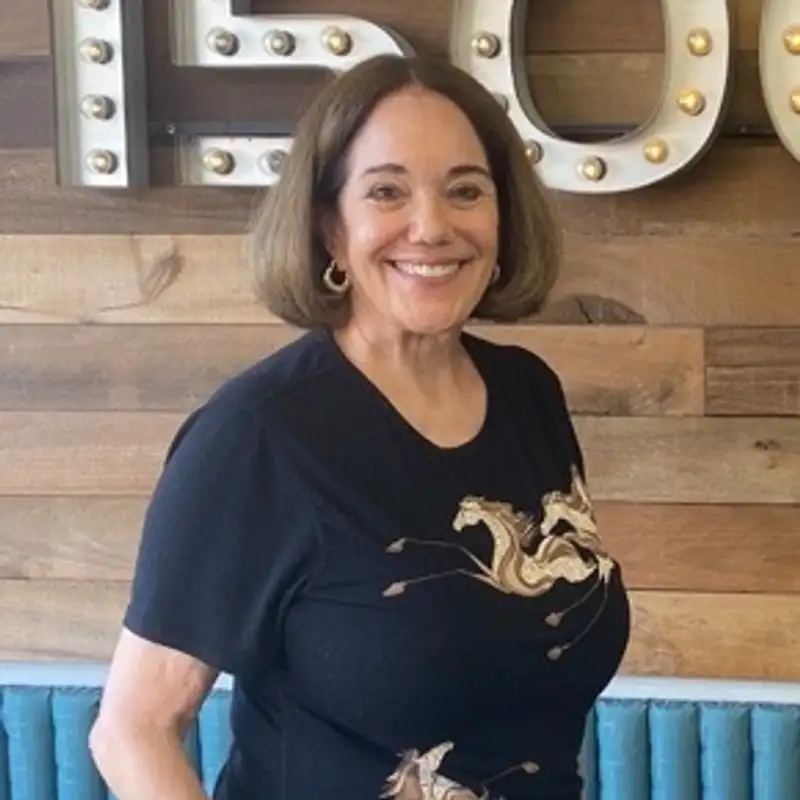
Hello Alameda! Welcome to the Island City Beat Podcast. I'm your host, Angie Watson-Hajjem. Today I am talking to Maria Bondonno. She is one of six candidates running for seat on the City of Alameda City Council.
Angie Watson-Hajjem:And I'm going to talk to Maria today about her vision for Alameda and just get her thoughts, positions on a number of issues that are really important to people here living on our island. So with that, let me say hello to Maria Bondonno. Hello, Maria. Welcome to the Island City Beat Podcast. Thank you so much for being here.
Maria Bondonno:Oh, thank you so much for inviting me. I really appreciate it. I appreciate the opportunity to talk to more people in Alameda so they can get to know me and know who I am and what I stand for, what I want to do and accomplish on the city council.
Angie Watson-Hajjem:Exactly. Absolutely. You are more than welcome. So Maria, in your bio, mentioned being the proud granddaughter of Mexican and Italian immigrants who came to this country in search for a better life, in search for the American dream, that immigrant story.
Angie Watson-Hajjem:I would love for you to tell us a little bit about your family lineage family history and a little bit about your personal history
Maria Bondonno:Okay well mom was Mexican She was born in Calexico which is on the border of California and Mexicali. So she was actually born in The United States. But then they lived back and forth between Calexico and Mexicali. And then they moved to San Diego, and they lived between San Diego and Tijuana. Because my grandmother was deported with her six children.
Angie Watson-Hajjem:Wow.
Maria Bondonno:So my grandfather stayed. He owned a barber shop in San Diego, but they for some reason, they did not deport him.
Maria Bondonno:I don't know how that happened. Nobody's clear on how that happened.
Maria Bondonno:But so my mother, they ended up staying with their father, going to school in San Diego, and then going back to Tijuana on the weekends, and then going back to Tijuana for the summers. So and then my dad is was actually born in a house, if you can believe it, in San Francisco, and he's a son of Italian immigrants. Unfortunately, both my parents have passed. My mom just passed in March 2025. So I spent a lot of time, like, the last five years with her, taking care of her.
Maria Bondonno:And I think I had really excellent parents. I'm very grateful.
Angie Watson-Hajjem:Oh, wonderful. I'm sorry about the loss of your mom. Yeah. I'm sure that was a hard hard loss. So you are actually originally from the Bay Area.
Angie Watson-Hajjem:Is that why you grew up here in the in the Bay Area? Tell us a little bit about that. Your growing up years here.
Maria Bondonno:Well, I was born in San Francisco.
Angie Watson-Hajjem:I was too. I was too.
Maria Bondonno:So you were born at the San Francisco Hospital?
Angie Watson-Hajjem:I wasn't. I was born in Kaiser in San Francisco.
Maria Bondonno:You're a native.
Angie Watson-Hajjem:I know
Maria Bondonno:I grew up mostly in the city, and then I went to San Francisco State. I studied international relations. I was very interested in what was happening in the world at that time. And I had a very good adviser. I wanted to be a lawyer since the time I was probably like 12 years old.
Maria Bondonno:But I had a very good adviser at SF State that told me that I should go to an Ivy League and get a master's degree before going to law school because he thought I was a little too young, maybe not ready. So I took his advice, I got a Cornell graduate fellowship. So I completed my master's in communications, which was a two year program at Cornell up in Ithaca, New York. And then I just sort of worked in New York for the next three years and decided, okay. I'm ready to go to law school.
Maria Bondonno:So I came back, I attended Hastings College of the Law, and that's where I graduated from.
Angie Watson-Hajjem:And you are the only lawyer that's running for City Council Why do you think that's important
Maria Bondonno:Well I think it's really important because I see the City Council as like the equivalent of the legislative body Like, I worked for the Office of Legislative Council in Sacramento for six years, and then I was recruited by the then president, the first woman president of the California Public Utilities Commission, Loretta Lynch, to work at the CPUC. And, of course, I took that offer because I knew it meant I could come back to the Bay Area. But I see the city council primarily, what they're doing is legal work. For example, when they're passing an ordinance, that's an amendment. It's either amending, repealing, or adding a section to the municipal code.
Maria Bondonno:And and resolutions are also a legal a legal action, if you will. So I think it's really important that people understand that they need someone with a legal background to know exactly what's going on because as you know, the way they write statutes and the law is very, very complicated.
Angie Watson-Hajjem:Yeah.
Maria Bondonno:And I did that for six years. So I understand.
Maria Bondonno:I understand it. I know how to look at the legislative history. And then having practiced at the CPUC for twenty plus years doing regulatory law, I think I'm really well prepared to understand what's happening
Angie Watson-Hajjem:And you spent six years working for legislature What were you doing at that time
Maria Bondonno:Well I was living in Sacramento working for the Office of Legislative Council which are the attorneys for the legislature, the assembly, and the senate. And so I was writing I was drafting approximately a 100 bills per legislative session, and then I would meet with the bill author, which would either be a member of the assembly or a senator. And we would talk about the bill and any legal issues that I thought came up with the language. Sometimes if it was a little bit controversial or, you know, the legislator needed more support, it would go to some sort of committee and I would testify at the committee hearing about the bill. Then also doing legal research and writing for the legislature.
Maria Bondonno:Yeah, it was a good six years.
Angie Watson-Hajjem:Great So I want to just dive right into our questions I have quite a few for you during our time together So I want to start off with housing because that's always a topic of great concern for folks especially those of us living here in the Bay Area it's a very expensive area for folks to live. Alameda a few years ago we were actually the first city in the East Bay to get our housing element plan approved That was wonderful I'm really proud of Element for doing that We've made some inroads in producing housing You see developments going up here and there but we are so far behind where we need to be I think we need to produce something like 5,000 or so units by the year 2031 and we're nowhere near that And so I would love for you to talk a little bit about what you feel that you could do what you feel like the City Council can do as a collective to really ramp up that affordable housing so we meet our goals so we have enough housing for people here in Alameda
Maria Bondonno:Right. Yeah. That's true. They haven't met their goals. And, you know, part of the problem is the financing.
Maria Bondonno:And that's why I'm actually in favor of Measure L. And I know a lot of people are not in favor of Measure L because they're thinking, well, I'm gonna have to pay more taxes. But the city at this point doesn't really have the money to move forward with those projects without measure l. So part of that money is gonna go toward the reshape project and building infrastructure, environmental concerns. Well, I think we'll talk about that a little bit later.
Maria Bondonno:But I'm really in favor of the mixed use housing. I'm an advocate for mixed use housing because you have residential on the top, maybe condos, townhouses, or apartments, and you have commercial on the bottom. And what you're creating is a neighborhood and a community. And you can have, like, low income, below market rate, section eight mixed in there, which is actually a requirement, but the city hasn't I mean, they're tangled up with this housing authority problem, which we'll probably talk about a little bit later.
Angie Watson-Hajjem:Yeah. Yeah. So tell me
Angie Watson-Hajjem:a little bit about measure L. I'm not familiar with measure L. Where exactly is this measure? What would it do if it passes?
Maria Bondonno:Well, Measure L is a $300,000,000 bond that would be used primarily to, let's say, buttress infrastructure, environmental concerns like sea rise, seismic retrofits, building seawalls, and other, you know, housing, putting more money toward the project at Alameda Point, etcetera, stuff like that.
Maria Bondonno:It's pretty much focusing on protecting the island from the effects of climate change.
Angie Watson-Hajjem:Great. So what do you know about social housing I know there's been some activists who have talked about it and I would love to hear your take on it And what I mean about social housing is housing where of course if it's affordable there's different kinds of social housing like community land trusts where a nonprofit would own the land and people would either live there as tenants or owners or limited equity cooperatives where people could buy a home but if they move out of the home it stays affordable Those are some examples of social housing don't know if you have experience with that or want to just chime in about what what your take is about social housing as a way of us producing more affordable housing for our community
Maria Bondonno:Well I'm familiar with below market rate housing And I'm also familiar with below market rate renting because my dad unfortunately ended up as a low income person. Actually, so did my mother. She owned a barber shop in San Francisco, but she didn't have a big retirement saved up. Both of them were living off of just their Social Security. My mom fortunately bought a house back in the eighties, so she was probably in a little better shape than my dad.
Maria Bondonno:But my dad was living at Independence Plaza, and his rent was reduced based on his income. Mhmm. So I'm in favor of those type of programs. I also have some friends that are living in brand new buildings. I have a friend in San San Luis Obispo who's living in a brand new apartment building, but she's actually receiving section eight.
Maria Bondonno:And the the county of San Luis Obispo required the new builders to accept a certain amount a certain number of section eight persons, and she's just had some health issues that put her in that position. She's an extremely bright woman. Know her from Cornell University. So I'm in favor of those type of programs.
Angie Watson-Hajjem:Sure. So Alameda we have some pretty good protections for tenants overall I think the city council has been pretty good about protecting you know our tenants regarding rent increases and so forth putting caps on them But we're hearing stories of landlords trying to get around those tenant protections And I know I have one friend who lives here at Alameda in an apartment complex here where the owner is trying to charge tenants upfront fee to use the laundry there as a way to get more money from the tenants. What can City Council do about these kind of things?
Maria Bondonno:Well, that really doesn't sound right, But I think the City Council, they really need to investigate those practices and determine whether they comply with our ordinance. At the same time, I'd want to see the facts of the individual case before concluding that a particular fee violates the law. Mhmm. But I I would say that if there are loopholes in the ordinance, then those need to be fixed. And I think that type of fee is really ridiculous.
Angie Watson-Hajjem:Yeah. Yeah. I think so too. ICE has arrived in California. ICE has arrived here in Alameda.
Angie Watson-Hajjem:Immigrants, both those who are here, who are documented those who are not are being targeted by this government. We know all the horrible stories of what's happening to members of our city and I would love for you to talk about what you would do as a City Council Member what the City Council Membership needs to do to help protect our vulnerable residents here. You have stories about people just being snatched away, put in jail without due process. And you have parents who are afraid to go to PTA meetings because they're afraid they may be picked up. It's just a horrible scheme here, like a nightmare that we're living under. What is the role of possibility of the City Council to protect?
Maria Bondonno:Well, first, I want to say that California has the Values Act, which was known as SB 54, and that's been in effect since 2018. And so it bars state and local police from using any money or staff to investigate, interrogate, detain, or arrest people for immigration enforcement. And then also, Alameda, fortunately, is a sanctuary city. So I would say as far as ICE coming into Alameda and trying to arrest people or, you know, take them away, detain them, that the Alameda police, especially around voting, they have a duty to protect the public safety, and they have a duty to protect people's constitutional rights, lawful access to the ballot while following California and federal law. So I think if there's a concern about that, I would want the city attorney and the police department to establish really clear protocols in advance so that the officers understand what their legal authority is and the residents understand their rights.
Maria Bondonno:I don't agree that ICE has any right to come into Alameda and interfere with people who are trying to vote.
Angie Watson-Hajjem:We've heard about the DOJ possibly sending ICE to voting sites And so we'll see how that turns out
Maria Bondonno:I don't know if I've heard about that here in California I know that been talked about in other states
Angie Watson-Hajjem:Yeah yeah One of the things that we've been doing which is really fun here at the Island City Beat Podcast we've been going out to talk to local business owners about being a business owner about the joys and challenges of that And there are definitely challenges that our businessmen and women are having here I know there was this adorable vintage store that would pass by all the time and I'd be walking up Central Avenue one day I was walking I saw that there was a sign and it said Moving last day December this was last year and I stopped into the store I said oh my god are you closing up this adorable little shop And he said he was and I asked why He said a big part of it was because his rig went up and he just couldn't afford his business it's just such a shame This is adorable little shop So I know that the City Council of course has been able to implement some protections for tenants tenant rights and protections against excessive rent increases Is there anything Maria that City Council could do regarding commercial rents and helping keep businesses here open?
Maria Bondonno:Well, they could think about having something similar to the rent stabilization program applied to commercial rents. But of course, the landlords will not like that. That would be a stretch, I think. But I would look at something like permitting time, unnecessary regulatory barriers, access to existing grants for small businesses, business assistance like small business administration programs.
Maria Bondonno:And I think the city council should effectively connect small businesses with, like, available financing, technical assistance, or whatever they need to kinda try to keep them in business. You know? I live close to Webster Street, and I walk on that street all the time. And I've seen several businesses close You know, post pandemic, and it's really sad.
Maria Bondonno:It is sad.
Angie Watson-Hajjem:It is really sad. Yeah. Park Street as well. There were a lot of empty storefronts. Yeah.
Maria Bondonno:Yes. So I think the city should assist small businesses in whatever manner they can
Angie Watson-Hajjem:What are your thoughts about public banks I know this has been a topic that's getting more attention I know I was listening to an interview on KQED a few weeks back and it looks like San Francisco is looking into our birthplace Maria looking into getting a public bank set up there other cities too Oakland Richmond Berkeley are looking into this Would you support Alameda creating a public bank here on our island
Maria Bondonno:Well yeah I think I probably would but I think there'd be a lot of questions to ask first like what financial commitment would Alameda make? What's the liability or risk that Alameda or Alamedans would assume? What governance authority would Alameda receive? What measurable benefit would Alameda residents and businesses receive? And what are all the, you know, what are the alternatives?
Maria Bondonno:So I'm interested in the concept, but before committing Alameda part to participate, I'd really wanna understand the financial structure, governance, risk to the city, and the tangible benefits to Alameda residents and businesses. Mhmm. And that's where I think my background in evaluating legislation and public policy, would help.
Angie Watson-Hajjem:So you would be open to looking at it, but you do want to some investigations, some research, asking some questions, but you're you're open to the possibility of that.
Maria Bondonno:Yes. I mean, it sounds like a good idea, but it really has to be looked at very closely.
Angie Watson-Hajjem:We have our Alameda City Food Bank here. It's been here since 1977, and last year, 2025, it served about 12% of our population and I'm sure this year was even more so If there was some kind of an economic crisis and let's say there was a food shortage and the food bank could not supply the food that was needed for the residents here What could the city council do about that What would you think would be helpful to make sure that our residents here you know had food
Maria Bondonno:Yeah, Well I think they would definitely have to reach out for state some type of state assistance and also federal assistance And I mean if there's some sort of disastrous event, I think FEMA would come into play, but also, you know, trying to get money from the state. So if, you know, if people are unable to get food or to buy food here in Alameda, there's gonna have to be some assistance coming in probably through state and federal government like FEMA, maybe the Red Cross, other organizations that respond to disasters. I hope that Alameda is never in that situation.
Angie Watson-Hajjem:Absolutely. Let's hope that doesn't ever happen. Yeah. So another topic besides housing that is often in the forefront of our discussions about our communities is the issue of crime And I think generally people feel that Alameda is a pretty safe city mean things do happen I know we had that shooting at South Shore a few weeks back and I know personally I have two friends who were attacked they were robbed broad daylight So we do have crime here in Alameda But I would love to hear you just talk a little bit about your thoughts about crime, your perception about crime. Do you think it's a problem here in Alameda?
Angie Watson-Hajjem:And if so, what would you think are some of the things that we can do to mitigate crime and prevent crime, you know, from happening?
Maria Bondonno:Well, I think crime is a problem anywhere it happens, you know, like it doesn't really anywhere it happens. Crime is not good. But I think here in Alameda, public safety and quality of life go together. So I think we need to have, like, a police department that has compassion for people and also accountability to Alamedans.
Maria Bondonno:But as far as, like, are you talking about, like, arresting people or what specifically are you are you asking?
Angie Watson-Hajjem:I guess what I'm trying to get at is so we all know that there is crime in Alameda and everywhere else So how can we or what can we do as a community to prevent crime from happening What are those things that you feel like could be put in place so that we don't have the community activity that sometimes pops up.
Angie Watson-Hajjem:And then what would be the answer to when we do have crime what is the answer to combating that crime I mean is it just the police or other things that we could look to help deal with the crime in our city.
Maria Bondonno:Okay thank you for clarifying that question. So yeah I think that Alameda needs to strengthen community policing and use data to focus resources where they're needed most When I'm talking about data, I'm not talking about flock cameras. I'm not in favor of those at all. But they do have other means of getting of of accumulating data and figuring out where the hotspots are, so where they should focus more resources. And then I think as far as, like, the issue of homelessness goes, they need to address that by connecting people with services, you know, while still protecting the safety of Alamedans or neighborhoods, parks, business districts, etcetera. But I do I am in favor of wraparound services for the homeless or other people who are in need.
Maria Bondonno:And, you know, wraparound services, they don't, like, house you for a week, and then you're back out on the street. They actually, like, put you through a program if you need to detox from drugs or whatever. So I've seen those programs work in other counties, and I think, you know, we've had a start at it, but I think we could do a little bit better.
Angie Watson-Hajjem:Mhmm. Mhmm. And we also have I mean, we have a care team that is supposed to go out when people are struggling and so to help folks with different things that come up different crises that come up So I want to talk about energy independence So we have our own electric company Alameda Municipal Power There's a variety of different opinions that people have about AMP. AMP says that they are for solar energy and I guess they are to a certain extent but it's kind of nuanced so I don't always know just where they stand so I would love to hear you talk a little bit about well first of all your impression of AMP also do you think that the Alameda City Council could do maybe push AMP to embrace solar energy a little bit more than they are like what could the role be in bringing solar energy, making it a bigger part of AMP?
Maria Bondonno:Yeah. Well, I think the the question shouldn't simply be whether solar sounds good. I think we need to ask AMP to evaluate, like, generation potential cost, grid connections, battery storage, environmental considerations
Angie Watson-Hajjem:Mhmm.
Maria Bondonno:And the value of using that land for solar compared with alternative uses. And you can see that I worked for the CPUC. Yes. So if the numbers and resilience resilience benefits make sense, then the city council I would give the city council a factual basis for deciding whether to proceed. And if that factual basis is in the positive, then
Angie Watson-Hajjem:I'm in favor of solar, you know, anywhere and everywhere if possible. Would you support our our resolution outlining the benefits of AMP in building a large scale solar farm on the former naval air station?
Maria Bondonno:Well, I would have to know the exact specifics, like what I just went over. Mhmm. But, yes, I would tend to be in favor of that. But as an attorney, I can't say until I actually see the language.
Angie Watson-Hajjem:Yeah. Yeah. So I see you as someone that is not gonna make a commitment.
Angie Watson-Hajjem:Going to do the research first they're going to be asking the questions yeah .
Maria Bondonno:Exactly, that's true
Angie Watson-Hajjem:I was wondering because we kind of touched on it earlier about the Housing Authority, and there was this controversy, this disagreement that the Housing Authority had with the City Council about these vouchers. The City Council wanted to use these vouchers for the new development, the Star Dust garden apartments complex over in the city on the base APC the House of Authority is saying no you can't use these vouchers in this way And there's just so it's live back and forth Looks like the City Council went on and.
Angie Watson-Hajjem:Voted to have the money set aside so financially that project is going to happen, they were able to vote to give that financial you know boost to. Element of points to build housing over there But I guess the question I have really is so there has been it seems at different times tension between the housing authority and the city council And some people think that the city council should take ownership, I guess, over the housing authority, take more control over it. What do you think about that? Because it looks like this problem may be solved, but there may be other ones. I'm sure there will be in the future.
Angie Watson-Hajjem:So what do you think needs to be done about that?
Maria Bondonno:Well, I know that with the reshape program, the problem was over. It was a blockage over a dispute with the Alameda Housing Authority, about 25 vouchers for the first phase Star Dust Gardens. And they were saying that they had to be tenant based. And they were saying that that HUD wouldn't let them convert those vouchers into project based ones tied to the new building. So the problem really wasn't with the city council.
Maria Bondonno:It was really with Alameda Housing Authority and HUD. And the city council, I guess, found some sort of solution. But I would really wanna understand more about what happened with the subsidy and the housing authorities' legal and financial constraints and its effect on the project before, like, coming to a, you know, some sort of conclusion.
Angie Watson-Hajjem:Yeah. Would you be open to the council maybe taking ownership over the housing authority, though? That be considered?
Maria Bondonno:It's really hard to answer that question without really knowing more. It's something that if it came up at the Council, I would look at it. I would do a deep dive into it and figure out did the benefits outweigh the things that aren't beneficial? Yeah. But it's really hard to answer a question like that without having all the facts.
Maria Bondonno:Sure. The law, you know, and to really know what's going on.
Angie Watson-Hajjem:That's fair. Absolutely. I mean, I appreciate that. I mean, yeah, absolutely. So data center, the other thing, hot topic that, cities are fighting against.
Angie Watson-Hajjem:Would you, support data center coming here to Alameda?
Maria Bondonno:No. No, I wouldn't. Okay.
Angie Watson-Hajjem:Very clear about that. No research needed on that one. It's very clear.
Maria Bondonno:No I Didn't need any research there. Yeah. Right. No. Because I don't think Alameda wants to become that type of a city that is, like, catering to high-tech, and it doesn't really go with the character of the neighborhoods.
Maria Bondonno:I think Alameda one of the beautiful things about Alameda is, number one, we're so close to the to San Francisco, which is still one of the greatest cities in the world. You know? Think so too. Yes. Yes.
Maria Bondonno:San Francisco is like a diamond. And and here in Alameda, though, you get the vibe of, like, a small town vibe. Like, you know, you know your neighbors. When you walk down the street, there's people who say, hi. How you doing?
Maria Bondonno:They talk to you. Mhmm. So I just don't wanna see Alameda. There's a lot of people in Alameda now that are into software and high-tech, and they wanna bring of these industries into Alameda. And I just don't really wanna see Alameda becoming like a mini Silicon Valley.
Maria Bondonno:So I would oppose in, you know, a data center. And not to mention that it's going to use a tremendous amount of energy and pollute the water. There's just so many downsides to having that in the city. My answer is no, I'm not for that at all.
Angie Watson-Hajjem:Okay a lot of environmental issues that come up with these data centers and so forth Maria just in your candidacy I'm just curious what motivated you to get this race? Why are you here and what do you want to bring to our beautiful city here in Alameda?
Maria Bondonno:Well, after I lost my mom, I retired a little bit early to take care of my mom, but then I went back to work as a retired annuitant. And when the opportunity, you know, came up, I thought, well, I'm not I'm I'm free now, you know, unfortunately, in a way, but I'm free now. And it's something that I've always thought about. I've always thought that I would like to get more involved in local politics Mhmm. And just make a contribution to wherever I'm living.
Maria Bondonno:And so I've been in Alameda for twenty years. I bought my condo here. It's very small. It's 597 square feet, but I love it. It's my little haven, you know, from get away from the rest of the world.
Maria Bondonno:So I just really wanted, like, try to contribute some good to the city and to the citizens of Alameda. It's just kinda in my nature. I I I never went to a big law firm to make the big bucks. I've always been a public servant, and it's just what what I like to do.
Angie Watson-Hajjem:Mhmm. Mhmm. And what would you say to people as far as supporting you? What why should someone support you as our next city council member?
Maria Bondonno:Because I have the legal background to understand the intricacies of what's really going on with the ordinances and the resolutions, the contracts, etcetera, that the city council is managing or entering into. And none of the other candidates have that legal background. So I think people really need to understand that the city council, and I know I'm repeating myself now, is essentially the equivalent of the legislative body of the city.
Angie Watson-Hajjem:Mhmm.
Maria Bondonno:So it's like working for the legislature if the city had a legislature.
Angie Watson-Hajjem:Mhmm.
Maria Bondonno:And so I think that that's really that's really important that they have an attorney on the city council. I just can't see the city council without an attorney.
Angie Watson-Hajjem:Now this question is going to be a hardball one, and you may have to do a little thinking about this. But I want to ask you, what are the one or two things that you love doing here in Alameda in your free time What
Angie Watson-Hajjem:do you just enjoy doing
Maria Bondonno:Well I like walking on the shoreline you know so I go out and I walk you know, down central and make a left, and I go along the shoreline. I'll walk all the way down to the end and back, and that's like a four mile walk, which is really good. It's very good for my health, but also it's just beautiful. And I love, like, looking at over at San Francisco, and I see the fog. And I'm like, I'm so glad I'm in Alameda.
Maria Bondonno:Yeah. So I really enjoy that. I like going out to restaurant. I like that I can walk. You know?
Maria Bondonno:I don't have to drive everywhere. I can walk to a restaurant. I can walk to the nail salon. I can walk to the post office. You know?
Maria Bondonno:So it's really great. And when my dad was alive, we really had a lot of fun going all over Alameda to the restaurants. We would walk, and I would make him walk because he needed to walk. Mhmm. So I just really like that about living here.
Maria Bondonno:So I really enjoy living here. I have no intention of leaving Alameda.
Angie Watson-Hajjem:Yeah. It's a neat little city. It definitely is. Yeah.
Maria Bondonno:It really is unique. Yeah.
Angie Watson-Hajjem:Yeah. Do you wanna give out your website for folks who might be interested in connecting with you?
Maria Bondonno:Oh, sure. It's, it's h t t p s colon backslash backslash Maria, m a r I a, Bondonno, b o n d o n n o, number four, City Council dot com.
Angie Watson-Hajjem:All right wonderful Well Maria thank you so much for taking time to talk to me and for our listeners to get to know you a little bit more This has been really wonderful I really appreciate it I wish you the I good really news
Maria Bondonno:like your podcast It's very, very good, so I'll be
Angie Watson-Hajjem:following you.
Angie Watson-Hajjem:Oh, yay. Wonderful. I love to hear that.
Maria Bondonno:Thank you. Yeah. So thank you so much. I really appreciate the time to to be able to talk about the issues. It's really important.
Angie Watson-Hajjem:Yeah. Yeah. Thank you so much. We we appreciate having you here.
Maria Bondonno:Okay.
Angie Watson-Hajjem:Alright. Thank
Maria Bondonno:Thank the other person there that's handling things.
Angie Watson-Hajjem:Yeah. Well, thank the whole crew. There's a lot of people that make this all happen So we'll give thanks to all the podcast crew Thank you Maria
Maria Bondonno:Okay Okay
Angie Watson-Hajjem:All right And thank you all those of you who are listening to our podcast and following us We really appreciate your support Hope you enjoy this edition of the Island City Beat Podcast. Hope you come back for another show coming your way very soon Until then I'm your host Angie Watson-Hajjem. take care everyone. Goodbye
Maria Bondonno:Bye bye